A notice is taped to your door. You're already behind on rent because work slowed down, or maybe you asked for repairs and then suddenly got told to move out. Your stomach drops, and the questions start fast. Do you have to leave right away? Can the landlord lock you out? What happens to your furniture, your clothes, your child's school supplies?
Dealing with a landlord dispute or eviction can be stressful, but understanding your rights under Texas law can make all the difference. Texas moves fast in eviction cases. State law allows a landlord to start with a Notice to Vacate, move the case into court, and, if the landlord wins, reach physical removal in a short period. That speed is one reason so many renters feel overwhelmed.
Regarding what happens if you get evicted in Texas, the short answer is this: the process has stages, deadlines, and rights at each stage. Some of the most important protections are easy to miss, especially the separate five-day deadlines and the rules about what must happen to your property after a lockout. For a broader overview of Texas eviction laws, it helps to start with the big picture and then work through the timeline one step at a time.
Introduction
A lot of tenants first read an eviction notice in a panic. They assume the paper on the door means the landlord can change the locks tomorrow. That isn't how Texas law works, but the process does move quickly enough that waiting even a few days can hurt your position.
Texas has become a high-volume eviction state. Eviction filing rates reached about 7.8% of renter households statewide in 2024, with Houston at 9.2% and some low-income zip codes above 20% according to Marketplace Homes' report on the Texas post-pandemic eviction surge. That means many renters are facing a court process that is common, fast, and often confusing.
Practical rule: An eviction notice is serious, but it is not the same thing as a sheriff or constable removing you today.
Think of the process like a countdown clock with checkpoints. The landlord must give notice. Then the landlord files in court. Then a hearing happens. Then, only after a judgment and another waiting period, can a writ lead to physical removal. Knowing those checkpoints can help you protect your tenant rights, spot legal mistakes, and decide when to call a Texas landlord tenant lawyer or eviction attorney.
Understanding the Texas Eviction Process
Texas evictions are governed by Chapter 24 of the Texas Property Code. For most residential cases, the landlord must begin with a Notice to Vacate under Section 24.005. In plain English, that notice tells you the landlord wants possession back and gives you a short period to leave before a court case is filed.

The notice stage
Under Section 24.005, the usual minimum is a 3-day Notice to Vacate for nonpayment or a lease violation unless the lease validly sets a different period. That detail matters. Some tenants think any text message counts. Some landlords think a vague note is enough. Usually, the primary dispute starts with whether the notice was valid and properly served.
If you want a simple checklist, The Notice to Vacate: Requirements and Timing explains what a valid Texas notice must contain before an eviction can be filed.
The court filing stage
If the tenant doesn't move out by the end of the notice period, the landlord can file an eviction case, often called a forcible detainer, in Justice of the Peace Court. This is the only lawful path. A landlord can't skip court and use self-help measures to force a tenant out.
A common example looks like this:
- Missed rent payment: A tenant misses rent on the first.
- Notice delivered: The landlord serves a notice to vacate.
- Deadline passes: The tenant stays.
- Case filed: The landlord files in JP court for possession.
The key issue in eviction court is usually possession of the property, not every dispute the parties may have with each other.
The hearing stage
At the hearing, the judge listens to both sides. The landlord may offer the lease, payment records, and the notice. The tenant may show proof of payment, notice defects, or other defenses. Often, many people lose their case because they didn't file a response, gather documents, or appear.
A lot of readers get confused here. They think eviction court is informal enough that they can just explain things on the spot. Sometimes that works. Often it doesn't. JP court is designed to move quickly, so your paperwork and timing matter.
Legal Timeline and Key Texas Property Code Requirements
The most important thing to understand about the Texas Property Code eviction system is speed. Under Section 24.005 and SB 38, Texas eviction hearings are set within 10 to 21 days of filing, and the total process from notice to writ execution typically spans about 30 to 35 days, making Texas the fastest eviction state in the U.S., as summarized in this Texas eviction process timeline guide.

The dates that matter most
The timeline usually works like this:
| Stage | What it means |
|---|---|
| Notice to Vacate | Landlord gives the required notice before filing |
| Court filing | Case is filed in Justice Court after notice expires |
| Hearing window | Court sets the trial within the required filing window |
| Judgment and enforcement | If the landlord wins, the case can move toward a writ |
This is why delay is dangerous. A tenant may feel like there's time to “work it out,” but the court calendar keeps moving.
The two separate five-day windows
One of the most overlooked parts of what happens if you get evicted in Texas is that there are two different five-day deadlines that can affect your rights.
- After service of court papers: A tenant may have a five-day window to file an answer after being served. Missing that can lead to a default judgment.
- After judgment: A tenant has a separate five-calendar-day appeal window to move the case to County Court.
Those are not the same deadline. Many people hear “five days” and assume it refers only to appeal. It doesn't.
Missing the answer deadline can cost you the chance to fight before trial. Missing the appeal deadline can cost you the chance to stop removal after judgment.
For a practical breakdown of the overall schedule, how long eviction takes in Texas is a useful starting point.
Immediate Steps for Tenants and Available Defenses
When you get a notice or court papers, your first goal is simple. Slow the panic and start building a record. Good defenses are often lost because the tenant waited too long to gather proof.
What to do right away
Start with these steps:
- Read every page carefully. Look for the notice date, court name, hearing date, and address.
- File an answer on time. If you've been served, don't assume showing up later is enough.
- Save your evidence. Gather the lease, rent receipts, bank records, texts, emails, photos, and repair requests.
- Track your timeline. Write down when notice was posted, when papers were served, and when court is set.
- Get legal advice quickly. Fast cases reward quick action.
In Dallas County, landlords won 69% of eviction cases when tenants lacked legal representation, compared with 7% when tenants were represented, according to The Texas Tribune's reporting on Texas evictions and legal access. That gap doesn't mean every tenant should fight every case. It does mean legal help can change outcomes.
Common defenses tenants often miss
Some defenses are factual. Others are procedural.
- Improper notice: The landlord didn't give the required notice or the notice was legally defective.
- Payment dispute: You paid, tried to pay, or the landlord refused payment.
- Retaliation concerns: If you recently complained about conditions or exercised a legal right, the timing may matter under Section 92.331.
- Lease confusion: The landlord may be relying on a lease term that doesn't say what they claim it says.
- Service problems: You may not have been properly served with the court papers.
A simple example helps. Say your landlord posted a notice after a rent dispute, but your lease records show the payment was made and the landlord's portal reflects it. That isn't just “your side of the story.” That can be evidence.
When to involve legal help
Some tenants can negotiate directly. Some cases need a lawyer immediately, especially if there's a fast hearing, a disability accommodation issue, retaliation facts, or confusion over notices and service. For people reviewing possible defenses before court, eviction court defenses in Texas and what works can help organize the issues.
If you want legal guidance as one option, The Law Office of Bryan Fagan, PLLC handles Texas landlord-tenant disputes involving notices, evictions, lease issues, and possession cases.
What Happens After a Judgment and Writ of Possession
If the judge rules for the landlord, the case isn't over that second. There is still a short legal sequence before physical removal can happen.

The period after judgment
Texas law does not let the court issue a writ immediately. A Writ of Possession cannot be issued before the waiting period after judgment. If no effective appeal stops the process, the landlord can request the writ, and then a constable carries it out.
The constable posts a final 24-hour notice at the property. If the tenant still hasn't moved, law enforcement can return and supervise the physical removal of the tenant and belongings.
Here's a short explainer if you want to see the sequence visually:
What happens to your belongings
This is one of the least understood parts of Texas eviction law. Many tenants think their property can be thrown away immediately. That's not what the statute says.
Under Texas Property Code Section 24.0061(d)(2), landlords must place removed property in a nearby public area, and tenants may sue for damages if belongings are improperly discarded or sold, as explained in this summary of Texas eviction laws and property handling rules.
Your furniture, bags, documents, and household items don't lose all legal protection just because a writ is executed.
Remedies if property is mishandled
If property is wrongly taken, sold, or disposed of, a tenant may have claims under the Property Code. Depending on the facts, that can include seeking damages or using a Writ of Retrieval in the right circumstances.
A practical example: if a constable-supervised move-out happens and the landlord later keeps tools, electronics, or important records instead of handling the property lawfully, the tenant may have grounds to challenge that conduct.
Landlords and property managers sometimes also need to locate people after a move-out to resolve abandoned property, debts, or post-judgment issues. In that context, this guide on BatchData on skip tracing for pros gives a plain-English overview of how contact-location tools are used in real estate and collections work.
Long-Term Consequences and Options to Mitigate Damage
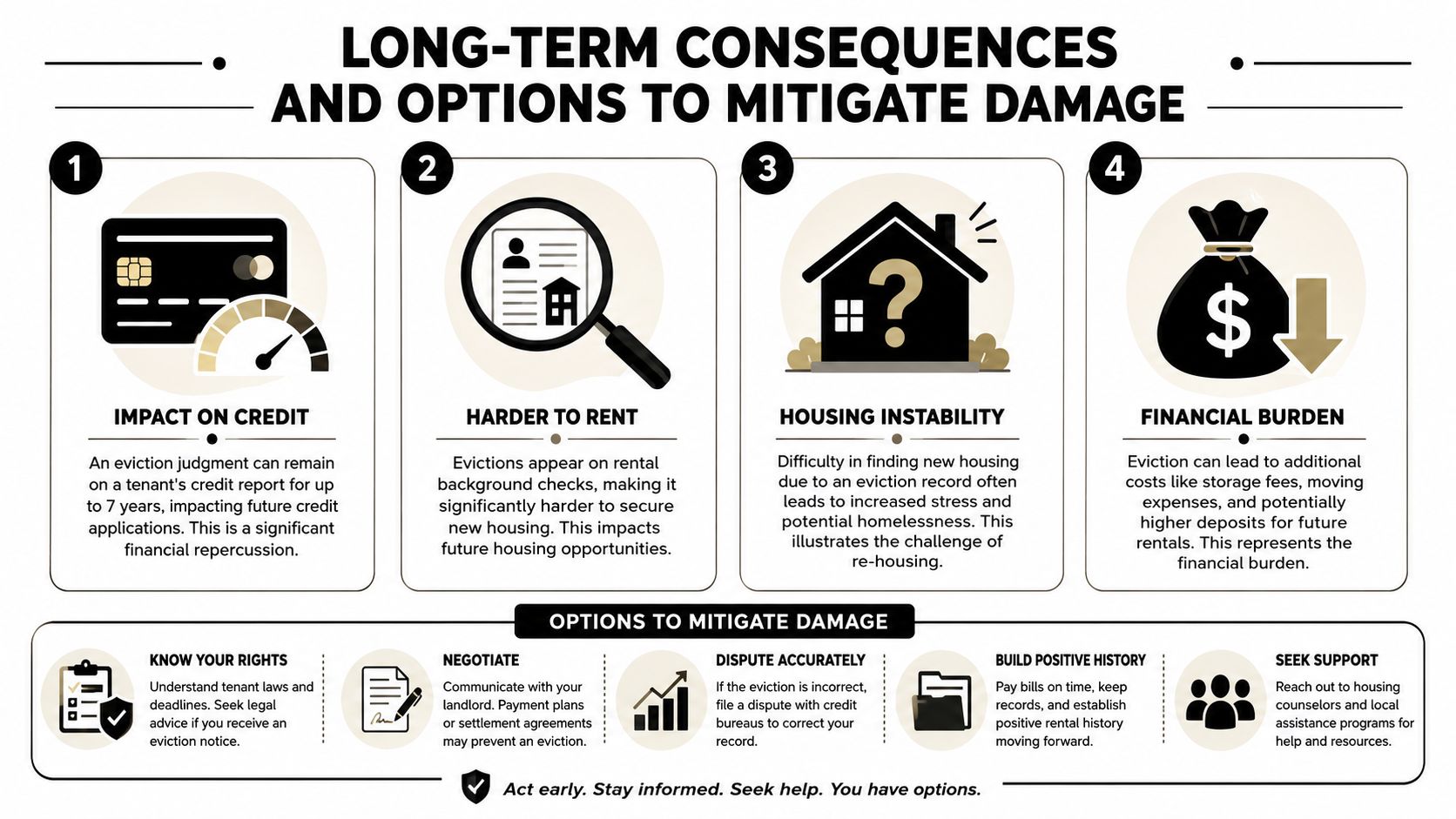
An eviction case can affect more than your current address. Even when the move-out itself is over, the record may follow you into your next housing search, credit application, or lease review.
How an eviction can affect your future
The practical consequences often include:
- Rental screening problems: Future landlords may see the filing or judgment and ask for an explanation.
- Higher move-in hurdles: You may be asked for a guarantor, stronger income proof, or different lease terms.
- Extra moving costs: Storage, replacement items, transportation, and rushed housing changes add pressure.
- Stress on work and school: Changing addresses fast can disrupt jobs, child care, and school routines.
The impact varies. A dismissed filing is different from a final judgment. A negotiated move-out can look different from a forcible removal. That's why the details matter.
Ways to reduce the damage
If an eviction case is still pending, a negotiated resolution may protect you better than a final court loss. In some situations, tenants and landlords can agree on a move-out date, payment plan, or agreed dismissal. Not every landlord will do that, but it's often worth exploring early.
After a case ends, focus on rebuilding your rental file:
- Keep proof of income ready
- Gather references from prior landlords if available
- Prepare a short written explanation of the case
- Show stability with recent payment records
- Ask whether a prospective landlord accepts a guarantor
A future landlord is often looking for context, consistency, and evidence that the prior dispute won't repeat itself.
If the case involved procedural mistakes, wrongful conduct, or property issues, legal advice may also help you decide whether to challenge parts of what happened rather than living with the result.
Conclusion and Free Consultation CTA
If you're facing eviction, the hardest part is often the speed and confusion. The most important protections usually come down to timing. Read the notice carefully. Track the court date. Don't miss the answer deadline. Don't miss the appeal deadline. And if a judgment has already been entered, pay close attention to what the constable and landlord do with your belongings.
The Texas Property Code gives landlords a fast process, but it also sets rules they must follow. A valid notice matters. Court process matters. Property handling after a writ matters. Those details can make the difference between an orderly resolution and a harmful, avoidable loss of rights.
If you need help understanding what happens if you get evicted in Texas, a short legal review can clarify your options quickly. That may include evaluating defenses, checking whether the notice was proper, preparing for court, or protecting your property after judgment.
If you need help with an eviction, lease issue, or rental dispute, contact The Law Office of Bryan Fagan, PLLC for a free consultation today.