Skip to content
Dealing with a landlord dispute or eviction can be stressful, especially when you return home and discover that your belongings are gone. A couch, clothing, documents, electronics, and family keepsakes can represent much more than their resale value. They may be the items you need to work, sleep, move, or keep your household functioning.
Texas law provides a specific remedy when a tenant's personal property is removed after eviction and then wrongfully withheld. Texas Property Code Section 24.0062 can turn a dispute over stored belongings into a measurable claim for the property, documented losses, attorney's fees, and court costs. This guide explains how wrongful eviction damages in Texas under 24.0062 may work, what evidence matters, and what steps a tenant or landlord should take next.
When a Lockout Turns Into a Damage Claim
Maya arrives at her duplex after a dispute over late rent. A padlock covers the door. Her couch and several boxes have been moved to a storage unit, and her landlord has sent a text saying, “come get it or I'm selling it.” Maya isn't sure whether this is part of the eviction process, a storage arrangement, or an unlawful lockout. She only knows that she can't reach her belongings.
That situation raises two separate questions. One concerns the tenant's right to possess the home. The other concerns what happened to the tenant's personal property after removal. Those questions can overlap, but they aren't automatically the same claim. Texas Property Code Section 24.0062 addresses the second problem when a tenant's property is handled by a warehouseman after removal from the premises.

A tenant may have a claim when property was withheld after the tenant made a timely demand and paid what the law required. If the tenant proves the claim, the prevailing party may recover actual damages, reasonable attorney's fees, and court costs. If the property has already been sold, the tenant may recover the property's value instead. Texas Property Code Section 24.0062 makes the dispute concrete. The issue isn't only whether a lockout felt unfair. The issue may include the value of a missing couch, damaged boxes, replacement necessities, and documented legal expenses.
Practical rule: Treat every message, photograph, receipt, storage notice, and demand as potential evidence. A fast-moving eviction dispute can create facts that are difficult to reconstruct later.
A lockout may also involve separate claims or defenses concerning the eviction itself. Texas generally requires at least three days' written notice to vacate before a forcible detainer suit, unless the written rental agreement sets a different period. The notice rule appears in Texas Property Code Section 24.005, but a defective notice doesn't automatically decide what happens to personal property.
The following video provides additional context about Texas eviction procedures and possession disputes:
If a landlord physically blocks access without following the proper process, review the facts with a Texas landlord lockout lawyer. The important point is that the lockout may be only the beginning. Property handling can create its own measurable dispute, and Section 24.0062 may provide a path to recovery through Justice Court.
What Texas Property Code 24.0062 Actually Says
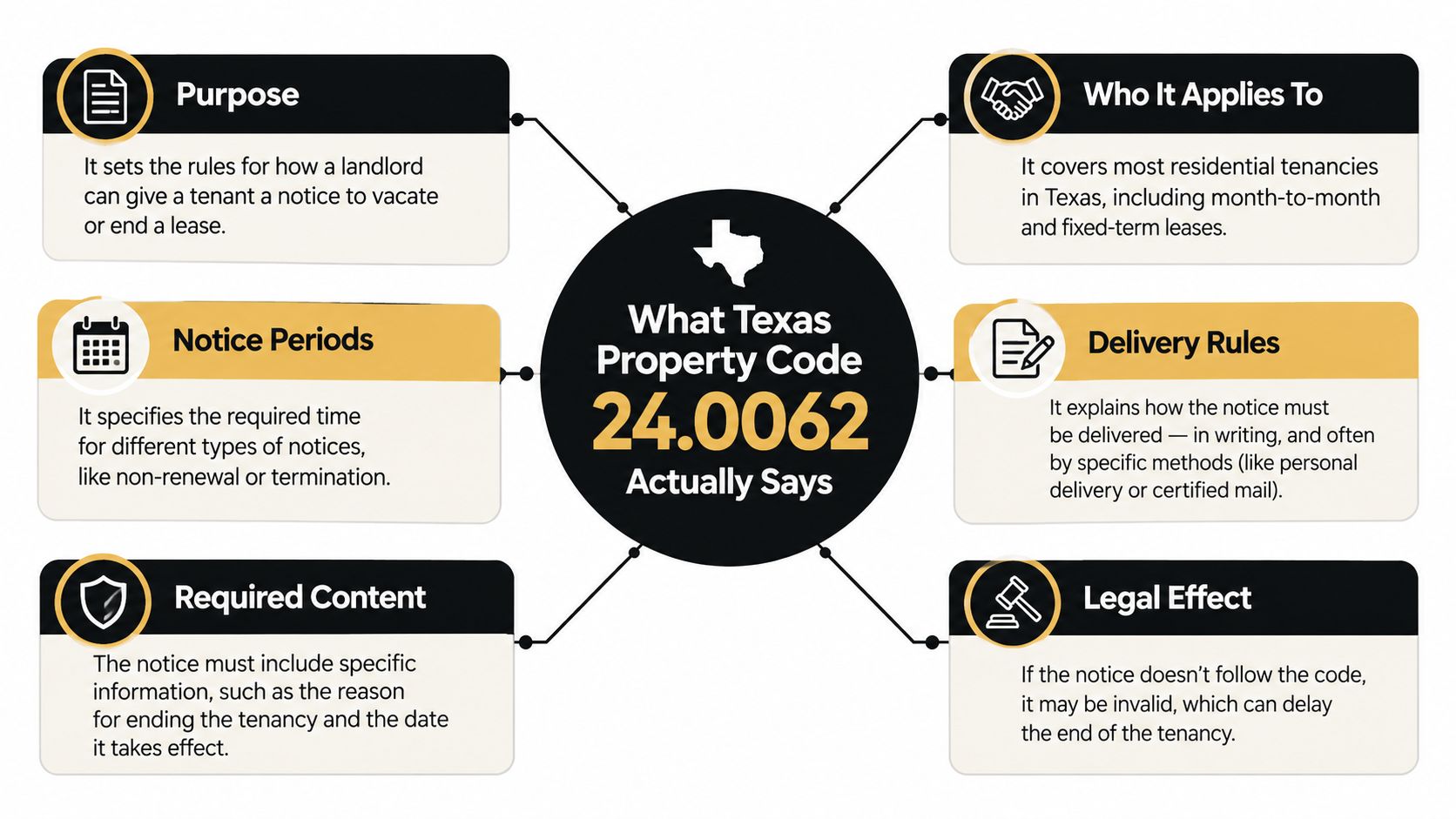
Section 24.0062 focuses on a specific post-eviction situation. A tenant has been removed from the premises, the tenant's personal property is handled by a warehouseman, and the tenant seeks to recover that property. The statute gives the tenant a remedy when property is wrongfully withheld after a timely demand and payment.
In plain English, the law asks several practical questions:
- Was the tenant's property removed and placed into storage?
- Did the tenant make a timely demand to recover it?
- Did the tenant pay or offer the charges the law allows?
- Did the warehouseman or responsible party continue withholding the property?
- Was the property sold before the tenant could recover it?
The answers determine whether the tenant may seek return of the goods, their value, actual damages, reasonable attorney's fees, and court costs. The statute also limits a warehouseman's recovery to reasonable moving and storage charges. If a court finds those charges unreasonable, the charges may not be recoverable.
The statute deals with personal property
A couch, boxes of clothing, household goods, and other belongings are generally different from the real estate itself. The tenant's argument should identify each item clearly and explain why it was not abandoned. Photographs, purchase records, messages, and a written inventory can help establish that the items belonged to the tenant and remained important to the household.
A landlord or warehouseman also needs to distinguish between lawful storage and wrongful withholding. A storage charge may be permitted when it is reasonable, but the charge doesn't give someone unlimited authority to keep property indefinitely or dispose of it without following the statutory process.
Commercial tenants should be careful before assuming residential rules apply. Commercial Lease Disputes in Texas involve different treatment of commercial tenancies under Chapter 93, so the lease and the type of premises matter.
The demand is central
A tenant should make a written demand that identifies the property, requests its return, and addresses the applicable moving or storage charges. Keep proof of delivery. A text message may be useful evidence, but a clear written demand with a complete item list is easier to present in court.
Section 24.0062 is a statutory remedy. It can provide a direct path to damages when belongings are withheld, including a claim for the value of goods that have already been sold. It doesn't mean every eviction automatically creates liability. The tenant still needs evidence showing wrongful withholding and compliance with the demand and payment requirements.
The Damage Categories You Can Recover
A couch held back after an eviction can become a dollar claim, but the court needs more than one large estimate. Build the claim like an itemized ledger: identify the property, calculate each related loss, and separate remedies that arise under different laws. Section 24.0062 can provide actual damages, reasonable attorney's fees, and court costs when the tenant prevails. If the belongings were sold, the tenant may seek their value instead of their return. Texas Law Help explains the personal-property remedy and the path to Justice Court under Section 24.0062.
Actual damages
Actual damages must connect to a specific financial loss. For a missing living-room set, useful proof may include receipts, photographs, comparable replacement prices, and evidence of the item's age and condition. The original purchase price may not establish the current value by itself, particularly if the item was older or worn.
Other losses may qualify when they resulted from the property being withheld or damaged. Examples include emergency storage, necessary replacement clothing, moving expenses, or costs caused by damage to belongings. List each expense separately with its date, amount, reason, and supporting record. A bank statement, receipt, invoice, or message can help turn a general complaint into a documented loss.
Property value after a sale
A sale changes the remedy. If a landlord or warehouseman has already sold the property, the tenant cannot obtain the same items through physical return. Section 24.0062 allows the tenant to seek the property's value instead.
Describe each item with enough detail to distinguish it from similar goods. A couch's brand, size, age, condition, and features may affect its value. The same applies to household boxes containing clothing, electronics, or furniture. Comparable listings, purchase records, photographs, and testimony about condition can support the valuation. A statement that an item was “expensive” usually needs more detail.
Fees and costs
A prevailing party may recover reasonable attorney's fees and court costs under the statute. Recovery is not automatic merely because the tenant consulted or hired a lawyer. Preserve the engagement agreement, invoices, court filings, and records showing the legal work performed and why it related to the claim.
Texas law also contains landlord-tenant remedies with different formulas. Retaliation under Texas Property Code Section 92.333 can include a civil penalty of one month's rent plus $500, along with actual damages, court costs, and reasonable attorney's fees, reduced by delinquent rent owed. An illegal lockout remedy under Texas Property Code 92.0081 describes a different civil penalty of one month's rent plus $1,000, together with actual damages and attorney's fees. The legal theory matters because these remedies should not create duplicate recovery for the same loss.
| Damage Component | What It Covers | Typical Range |
|---|---|---|
| Property or property value | Return of withheld belongings, or their value if sold | Fact-specific, based on proof of ownership, condition, and value |
| Related actual damages | Documented moving, storage, replacement, or property-loss expenses | Fact-specific |
| Attorney's fees | Reasonable legal fees when the statute allows recovery | Fact-specific |
| Court costs | Recoverable costs awarded by the court | Determined by the court |
For a couch and household boxes, a reasonable estimate might combine supported property value, documented moving expenses, and qualifying legal costs. Do not add an invented penalty or assume every expense will be awarded. The strength of the claim depends on tying each requested amount to evidence.
Section 24.0062 does not replace every other possible claim. Texas Property Code Section 24.008 states that an eviction suit does not bar separate claims for trespass, damages, waste, rent, or mesne profits. Those claims may need to be pleaded in the alternative so the tenant seeks the proper recovery without receiving double compensation for the same item.
How to File a 24.0062 Claim in Justice Court
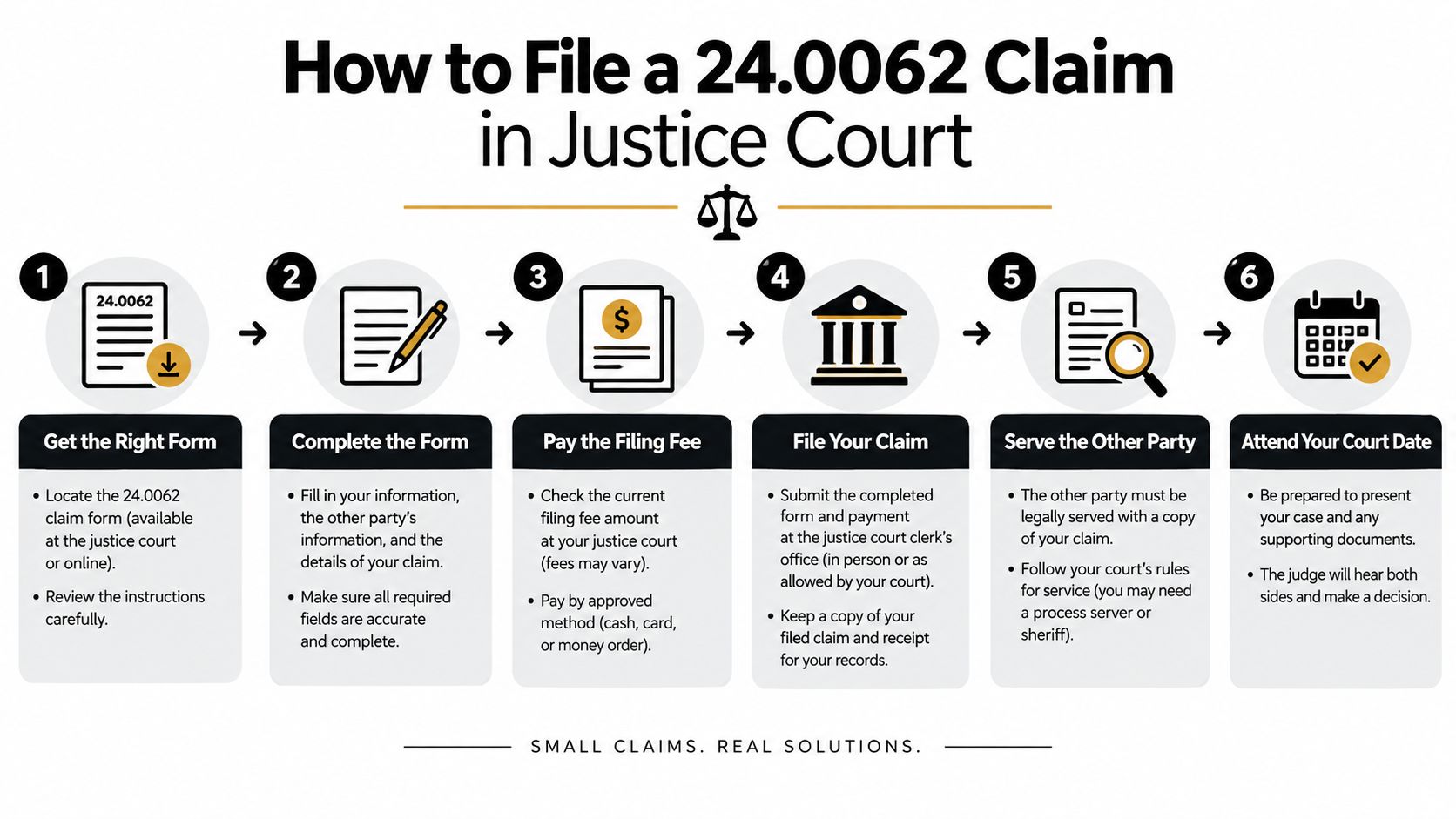
A tenant who believes property was wrongfully withheld should begin before filing. Organize the facts, send a written demand, and preserve proof that the demand was delivered. The demand should identify the belongings, request their return, and address any lawful storage or moving charges the tenant must pay or tender.
Prepare the evidence first
Create an inventory with one line for each item. Include photographs, approximate age, condition, receipts, replacement comparisons, and any message discussing the item. Save the lease, eviction papers, writ-related notices, storage documents, payment records, and communications with the landlord or warehouseman.
The tenant must be able to explain why the property was not abandoned and why the withholding became wrongful. A vague statement that “my things were taken” is harder to prove than a dated inventory supported by photographs and messages.
File in the correct court
Texas Law Help identifies Justice Court as the forum where a tenant can sue under Section 24.0062(i) and seek damages under Section 24.0062(k). Venue and court procedures matter, so verify the correct precinct where the rental property is located and ask the clerk about the appropriate petition and filing costs.
The case should state the facts in a direct sequence:
- The tenant occupied the premises.
- The property was removed or placed into storage.
- The tenant made a timely written demand.
- The tenant paid or tendered the required amount, if applicable.
- The property was withheld, damaged, or sold.
- The tenant suffered identified losses.
Prepare for the hearing
After filing, the landlord or responsible party must receive proper service. At the hearing, the justice of the peace will consider the documents and testimony. The tenant carries the practical burden of presenting a coherent record showing ownership, demand, payment or tender, refusal, and loss.
Bring organized copies of the inventory and supporting documents. Use a short timeline. Explain the value of each major item without exaggeration. If the opposing party says the property was sold, request evidence of the sale and the amount received.
Missing a court date can seriously harm a claim. If the case involves a disputed writ, a large amount of property, damage allegations, or counterclaims, consult an eviction attorney before filing. A lawyer can also assess whether a separate court is needed for claims outside Justice Court's authority.
A separate issue may arise when a tenant is still contesting the possession process itself. Information about the Texas writ of possession five-day rule may help explain why eviction deadlines and property-recovery issues should be reviewed together, even though they involve different legal questions.
Real-World Scenarios of Wrongful Property Handling
Consider a Houston tenant who keeps a dated photo inventory after a lockout. The inventory lists a laptop, a living-room set, clothing, and sealed boxes. She has receipts for the laptop and furniture, saves the landlord's texts, and sends a written demand within days asking for access and return of the property.
The landlord cannot produce a clear lease termination or lawful removal justification and does not show that the tenant's property was properly returned. The tenant presents the inventory, receipts, demand, and delivery proof in Justice Court. If the court finds wrongful withholding, the tenant may pursue actual damages, court costs, and reasonable attorney's fees under Section 24.0062. The result depends on the evidence and the court's findings, not only on the fact that a lockout occurred.
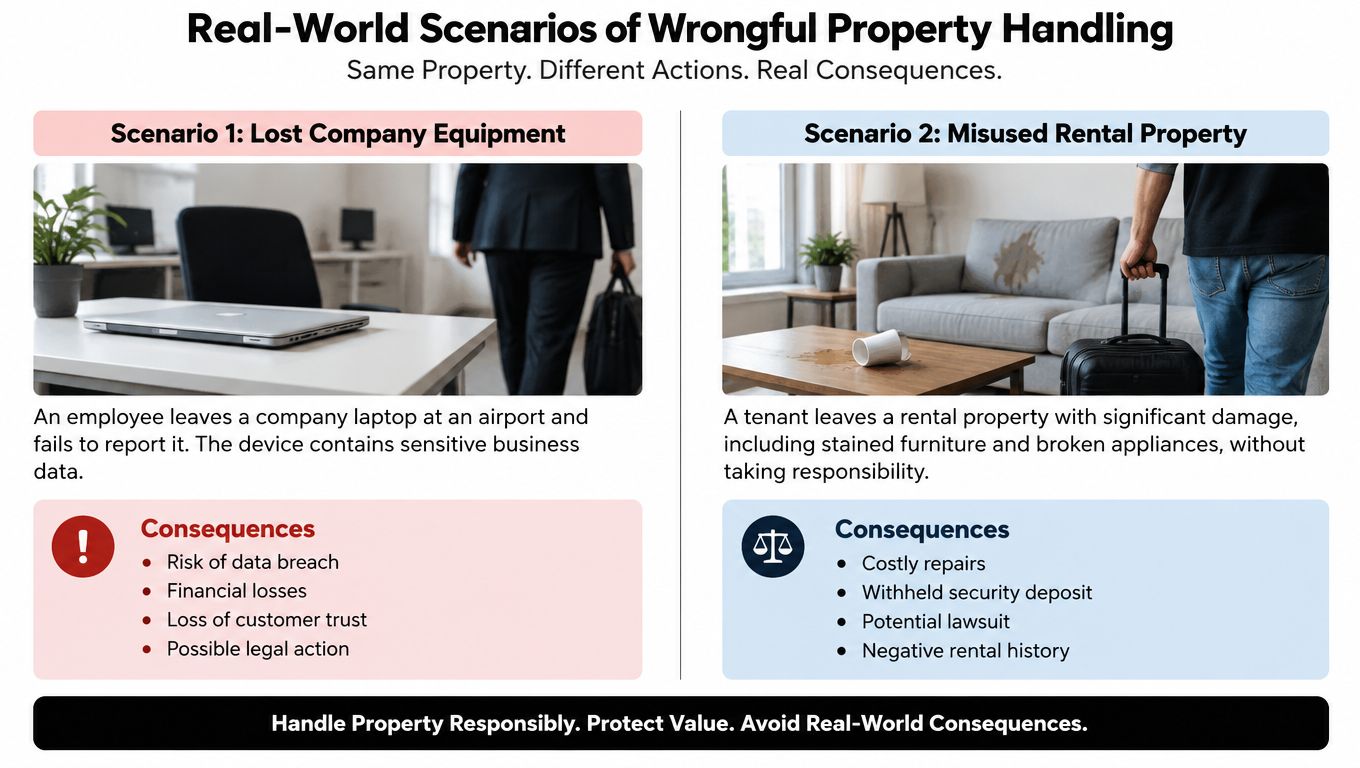
Now compare an El Paso tenant who waits six weeks before acting. The tenant can describe the missing property only in general terms. The landlord produces a signed lease termination and a storage ledger showing that the items were offered for pickup. Without a reliable inventory, timely demand, or proof that the landlord refused a proper request, the tenant may be unable to prove wrongful withholding.
The contrast is practical:
- Document ownership: Keep receipts, photographs, serial numbers, and comparable prices.
- Document timing: Save the date of removal, storage notices, demands, and responses.
- Document access: Record whether the landlord gave a location, appointment, payment instructions, or a meaningful opportunity to retrieve the items.
- Document condition: Photograph damage before moving or replacing anything.
A tenant doesn't need perfect records to bring a claim. But the more clearly the evidence answers what was taken, who owned it, what it was worth, and how the landlord responded, the easier it is for a Justice Court to evaluate the dispute.
Common Landlord Defenses and How Courts Treat Them
A landlord or warehouseman may argue that the tenant never made the required demand. That defense can be significant because Section 24.0062 ties the remedy to a timely demand and payment or tender of applicable charges. A tenant who cannot show what was requested, when it was requested, and how it was delivered may face difficulty proving wrongful withholding.
Another defense is that the tenant was lawfully removed and the property was handled under the eviction process. A valid writ may explain why the property was moved, but it doesn't automatically resolve whether the belongings were later stored, made available, or withheld properly. The court may still examine the post-removal conduct and the reasonableness of moving and storage charges.
Evidence matters on both sides. A landlord should preserve the writ, inventory, storage ledger, notices, photographs, and records showing when and how the tenant could recover the property.
The parties may also disagree about what the property was. A landlord may say an item was abandoned, attached to the premises, worthless, or not present. The tenant may say it was personal property that remained in the home and was never abandoned. Photographs, witnesses, lease language, and ordinary household use can help the court decide the issue.
A landlord can also dispute the amount of damages. The tenant should expect questions about age, condition, resale value, and whether a claimed expense was necessary. A careful valuation is more persuasive than an inflated demand.
Section 24.0062 limits warehouseman recovery to reasonable moving and storage charges. If the court finds those charges unreasonable, the charges may not be recoverable. The result turns on the evidence, so neither side should assume that a label such as “storage fee” ends the inquiry.
Your Next Steps and When to Call a Lawyer
Start with preservation. Photograph the space if you can do so lawfully, make a detailed inventory, and save every text, email, voicemail, storage notice, receipt, and court document. Write down the dates and names of everyone involved while the events are fresh.
Then take these steps:
- Identify the property: List each missing, damaged, or sold item separately.
- Value the loss: Gather receipts, photographs, replacement comparisons, and proof of condition.
- Send a written demand: Request return of the property and address the charges or tender required by the statute.
- Keep delivery proof: Save confirmation, certified-mail records, email records, or other evidence showing receipt.
- Track the court deadline: Don't wait until evidence disappears or property is sold. Confirm procedural and limitations deadlines with the court clerk or a lawyer.
- Attend every hearing: Missing court can prevent the judge from hearing your evidence.
A Texas landlord tenant lawyer becomes especially important when the property value is substantial, the landlord claims the items were abandoned, property was damaged or sold, a constable was involved, or the landlord asserts counterclaims. Legal advice can also help when the dispute involves both a lockout and a separate claim for property damages.
The Law Office of Bryan Fagan, PLLC offers a free consultation to review eviction records, property inventories, written demands, and potential remedies. A free case review can help you understand whether the facts fit Section 24.0062, what evidence is missing, and what action makes sense before the court process moves forward.
If you need help with an eviction, lease issue, or rental dispute, contact The Law Office of Bryan Fagan, PLLC for a free consultation today.
The Law Office of Bryan Fagan, PLLC helps Texas tenants, landlords, and property managers evaluate eviction-related property disputes, lease issues, and landlord-tenant claims. Visit The Law Office of Bryan Fagan, PLLC to request a free consultation and discuss your timeline, evidence, and options for pursuing or defending a Section 24.0062 claim.