You arrive home after work, key in hand, and find that it no longer turns. A notice is taped to the door, your belongings are inside, and the landlord or property manager isn't answering. A landlord lockout in Texas can feel like an eviction already happened, but Texas law gives you important protections and immediate options.
A landlord generally can't use a lock change to permanently remove you from a home. Even when a residential lockout may be allowed, the landlord must follow statutory requirements and provide a way for you to regain access. Your next steps matter, so document what happened, request a key in writing, and act quickly if access is refused.
What to Do When You Come Home to Changed Locks
Start with the facts, not an argument. Take clear photographs of the changed lock, the notice, the entire door, and the property's exterior. Record the date and time, save the notice, and write down the names of anyone who saw you try to enter.
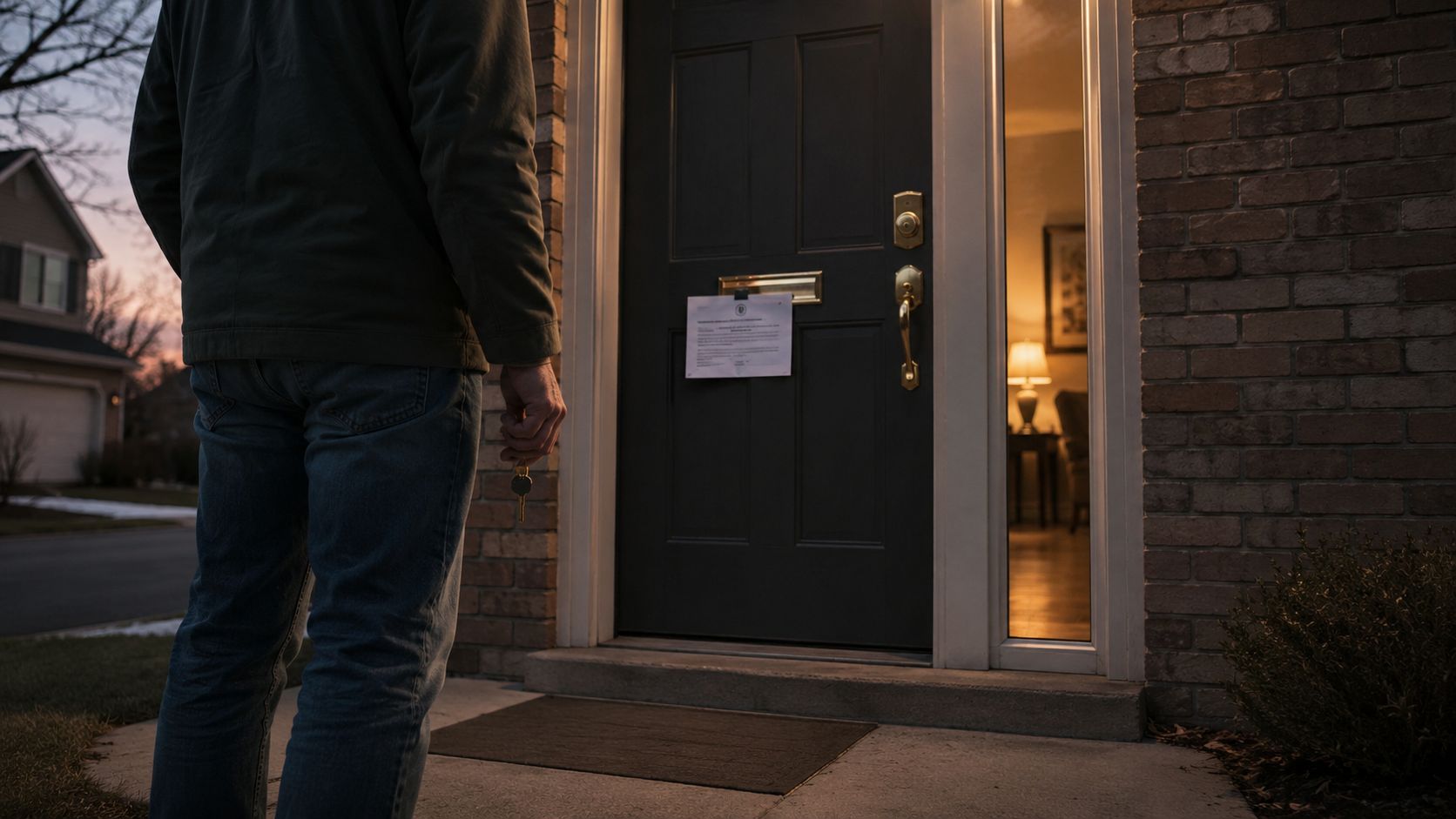
Read the notice carefully. It may identify the reason for the lockout, the location or phone number for obtaining a key, and the landlord's instructions for contact. Don't assume that an alleged rent balance gives the landlord permission to keep you out. A residential lockout isn't a substitute for eviction, and the landlord generally must preserve your access rights under the Texas Property Code.
Your immediate priorities
Ask for the key in writing. Send a text message and an email if you have both. State that you're the authorized tenant, that you've been locked out, and that you're requesting immediate access and a key. Keep your message factual and avoid threats.
Protect essential needs. If medication, identification, work equipment, or a child's necessities are inside, say so in your written request. If you need a temporary place to stay or help getting to a safe location, arrange that while preserving every receipt and message connected to the lockout.
Don't force entry. Breaking a window, damaging a door, or confronting the landlord can create separate problems. Let law enforcement or the court address the access dispute.
Get legal guidance promptly. If your landlord refuses to provide a key or claims you must pay money before you can enter, review the facts with a Texas landlord-tenant lawyer. You can also read about what tenants should do after an illegal eviction in Texas while gathering your documents.
If you need immediate help with the physical lock itself, a 24/7 emergency lockout aid resource may help you secure access-related assistance. A locksmith can't decide whether the landlord violated the Texas Property Code, so treat that as a practical service issue, not a replacement for legal advice.
Protect your position: Keep the original notice, screenshots, call logs, receipts, and every written exchange. A clean timeline is often more useful than an angry explanation.
What the Texas Property Code Says About Landlord Lockouts
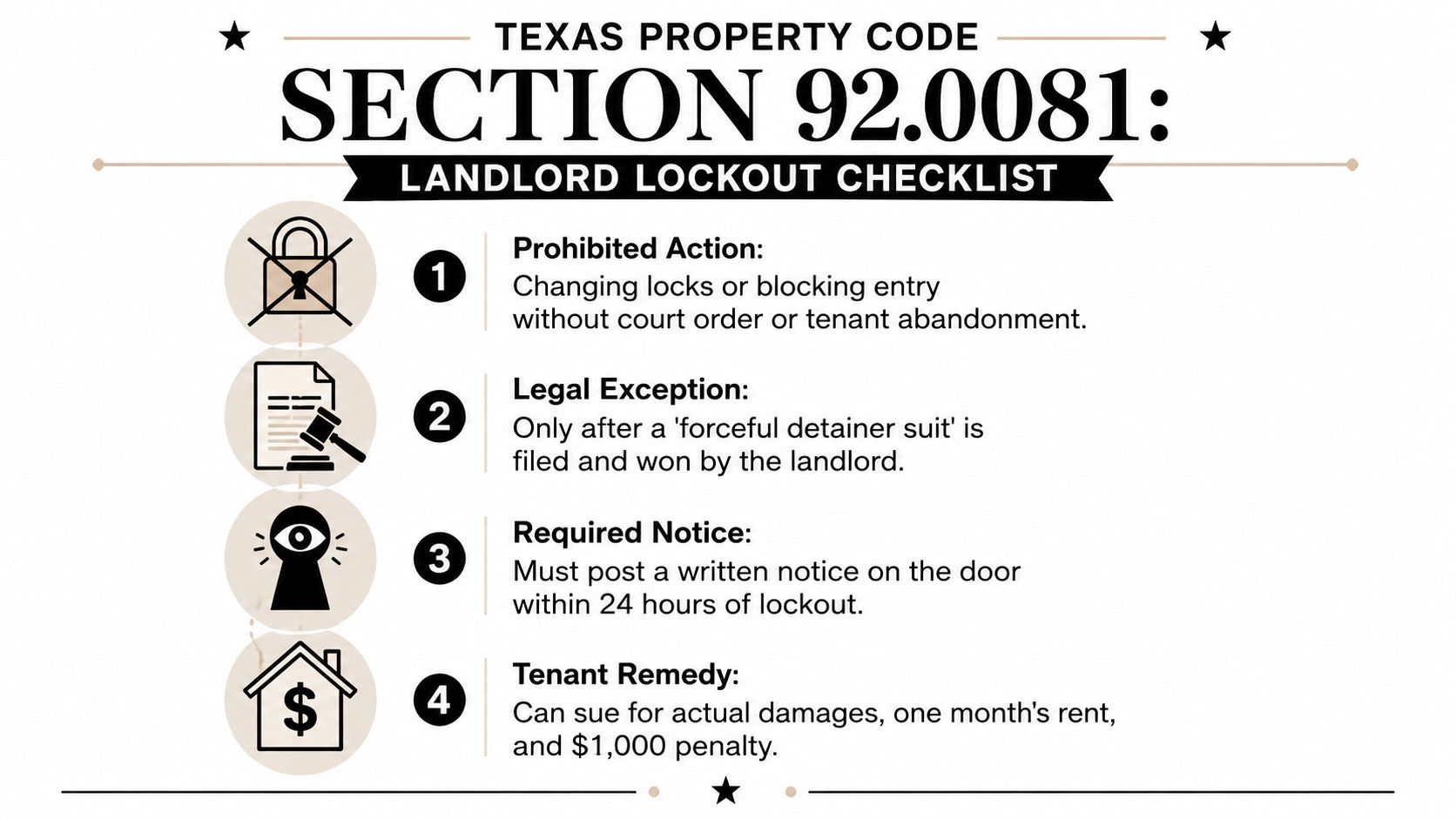
For residential rentals, Texas Property Code Section 92.0081 permits a landlord to change locks only in narrow circumstances. The statute addresses situations involving rent delinquency, bona fide repairs or construction, emergencies, or abandonment. The exact lease language and notice procedure still matter.
A lockout for unpaid rent isn't a permanent removal. The residential framework requires advance written notice before a lawful lock change, a notice posted at the rental unit, and a method for the tenant to obtain a key. The landlord must provide the tenant a key upon request, which means the lock change doesn't erase the tenant's right to enter.
A lockout is not an eviction
An eviction is a court-based process. A landlord who wants permanent possession generally must use the eviction procedure rather than changing locks and refusing to let the tenant return. A posted lockout notice doesn't itself give the landlord permanent possession, and a tenant may retain statutory rights even after the locks change.
The current Texas lockout framework is centered on Property Code Sections 92.0081 through 92.009. Section 92.0081 addresses when and how a landlord may change residential locks. Section 92.009 provides tenant remedies when the landlord doesn't follow the requirements, including a court process to recover possession and potential monetary relief. The Texas Property Code and tenant rights resource can help you review the broader statutory context.
A practical overview of how Texas Property Code Chapters 91 through 94 and Chapter 24 govern the rental relationship is available in Texas Landlord-Tenant Law: An Overview. Use the statute and your lease together. Neither party should rely on a general belief that rent delinquency, a notice on the door, or a lock change automatically settles the dispute.
Questions that often decide legality
Ask whether your lease addresses the landlord's right to change locks, whether the landlord gave the required advance written notice, whether the stated reason fits a statutory circumstance, and whether the landlord provided a usable way to get a key. Also determine whether the landlord is trying to make the lockout permanent.
The answer isn't based only on whether you owe rent. A landlord may have a limited remedy in some circumstances, but that remedy remains subject to notice, key delivery, and access requirements.
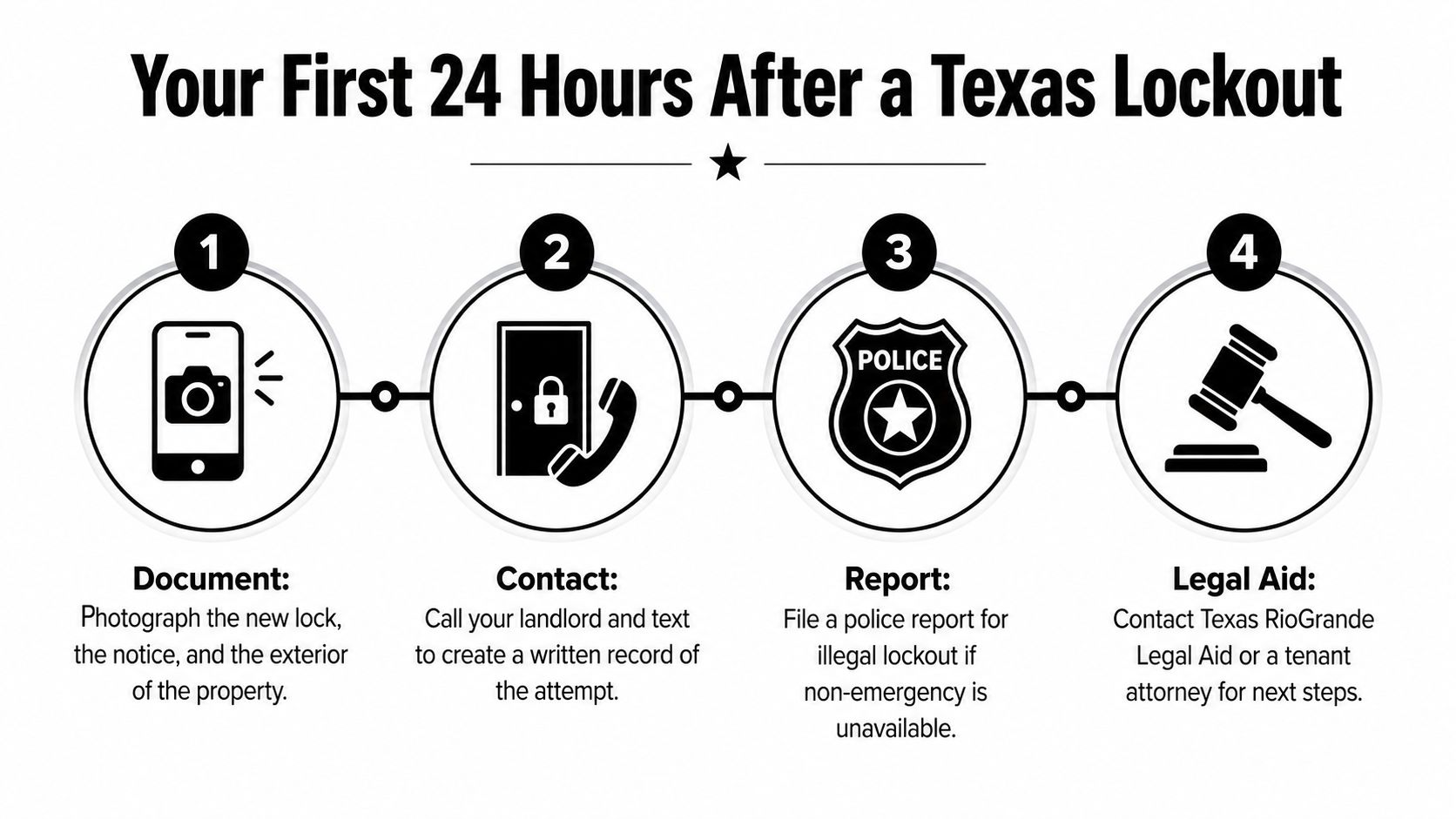
Your First 24 Hours After a Lockout
Treat the first day as an evidence and access emergency. Your goal is to create a reliable record, request entry clearly, and move toward court relief if the landlord won't comply.
First, document the scene
Photograph the lock, notice, door, and exterior. Capture the notice in full so the date, language, phone number, and instructions are readable. If the notice is missing, photograph the door and write that no notice was posted when you arrived.
Save text messages, emails, voicemails, rent records, and prior notices. Ask witnesses to write down what they saw while their memory is fresh. Don't edit screenshots or delete messages, even when the exchange makes you angry.
Next, make a written demand
Call the landlord or management office, but follow the call with a text or email. Say that you've been locked out and request a key and access. If the landlord says you must pay before receiving a key, preserve that response. Don't agree to surrender the lease or sign a move-out statement without understanding its effect.
If the property contains your personal belongings, list the most important items. If you have a written or oral lease authorizing you to live there, locate it now. Gather rent receipts, the lease, identification, and proof of your address in one folder.
Then, choose the right emergency channel
Contact local law enforcement through the appropriate non-emergency process when the lockout appears unlawful, especially if you need help documenting a dispute or there are immediate safety concerns. Officers may keep the peace and make a report, but they may not resolve the civil possession dispute at the property.
If the landlord won't restore access, ask the justice court in the precinct where the rental is located about a writ of re-entry. This court order can require the landlord to let you back in when the lockout is unlawful. A Texas tenant attorney or Texas RioGrande Legal Aid can help you determine what filing and evidence are appropriate.
The Texas guidance on illegal lockouts and utility shutoffs also addresses why self-help lockouts and utility interruptions are restricted under Chapter 92.
Don't wait for the landlord's story to improve. Preserve the evidence while the lock, notice, and messages still show exactly what happened.
Finally, prepare for the court process
A sworn request should identify the rental, your right to occupy it, the lockout facts, your attempts to obtain a key, and the harm caused by the denial of access. Bring the lease, photographs, written communications, notices, and witness information. If a court issues a re-entry order, follow the service and enforcement instructions rather than attempting to enforce it yourself.
A landlord may still pursue an eviction based on an alleged lease violation or unpaid rent. A lockout claim and an eviction case can involve different issues, so don't ignore court papers or assume one dispute cancels the other.
Calculating Damages and Legal Remedies Available to You
If a residential landlord violates Section 92.0081, Texas law provides more than a request to regain entry to the door. Under Section 92.009, a tenant can use the statutory re-entry process to seek possession and may pursue actual damages, one month's rent plus $1,000, court costs, and reasonable attorney's fees, minus delinquent rent owed. See the statutory text in Texas Property Code Section 92.009.
The remedy has two parts. First, you need access restored or another appropriate possession remedy. Second, you need to identify the financial harm and the statutory amounts that may apply. The court will evaluate the facts, the landlord's conduct, the evidence, and any rent or other amounts legally owed.
Texas Lockout Damages Breakdown
| Remedy Type | What It Covers | How It Is Calculated |
|---|---|---|
| Actual damages | Direct losses caused by the lockout | The documented amount of the proven loss |
| Statutory amount | A civil remedy tied to the residential lockout violation | One month's rent plus $1,000 |
| Court costs | Eligible costs of pursuing the claim | The amount allowed by the court |
| Attorney's fees | Reasonable legal fees connected to the claim | The amount the court determines is reasonable |
| Offset | Delinquent rent owed by the tenant | Amounts owed may reduce the recovery |
Keep evidence of temporary lodging, transportation, missed work, replacement necessities, and damage to personal property, but don't assume every expense will automatically be awarded. Documentation should show the amount, date, connection to the lockout, and reason the expense was necessary.
How the court process fits together
A writ of re-entry is focused on restoring possession. A damages claim addresses the financial consequences of the violation. Your attorney may recommend pursuing one or both remedies based on the facts, the lease, the notice, and the landlord's conduct.
A written demand can help clarify the dispute, but it shouldn't delay emergency relief when you can't enter your home. If the landlord offers access only after you sign away claims, ask a Texas landlord-tenant lawyer to review the proposal first. Issues involving a broader lease violation may also require analysis under landlord breach of lease law.
Residential vs Commercial Lockout Rules in Texas
Don't apply residential lockout rules to a store, office, warehouse, or other commercial space. Texas treats commercial lockouts differently, and the lease often plays a larger role in defining the landlord's rights and the tenant's obligations.
For a commercial property, Property Code Section 93.002 allows a landlord to lock out a tenant who is delinquent on rent. The landlord must post a notice explaining where the tenant can obtain a key, and the key must be provided during regular business hours after the delinquent rent is paid. If the commercial lockout is unlawful, Section 93.003 allows the tenant to seek recovery of possession. See the statutory framework in Texas Property Code Section 93.003.

| Issue | Residential | Commercial |
|---|---|---|
| Governing framework | Property Code Section 92.0081 and related residential remedies | Property Code Section 93.002 and Section 93.003, along with the lease |
| Rent delinquency | A possible ground for a limited lockout, subject to statutory requirements | A possible ground for a lockout when rent is delinquent |
| Key access | The landlord must provide a key upon request | The notice must identify where to obtain a key, with delivery governed by the commercial rule |
| Possession remedy | Statutory re-entry process and related remedies | Recovery of possession when the lockout is unlawful |
| Evidence | Lease, notices, photographs, and written demands | Lease, rent ledger, notices, access records, and business losses |
A restaurant that loses access to its kitchen, or a small office that can't reach its records, should preserve evidence of the interruption and review the lease immediately. Commercial tenants may also need to evaluate their broader commercial property access control arrangements, but access technology doesn't answer whether a lockout complied with Texas law.
Residential tenants should avoid borrowing commercial advice, and commercial tenants should avoid assuming residential statutory damages apply to their lease. The property type, lease language, rent status, notices, and landlord's conduct all matter.
How Landlords Can Avoid Costly Lockout Mistakes
A self-help lockout is usually the wrong substitute for an eviction case. Residential landlords must follow the limited lockout rules and cannot use a changed lock to permanently remove a tenant. If permanent possession is the goal, the safer path is to serve the required notice to vacate, file a forcible detainer suit, obtain a judgment, and use a writ of possession through the proper process.
Keep the lease, rent ledger, notices, delivery records, photographs, and communications together. Before changing a lock, confirm the property type, review the lease, verify the statutory requirements, and consult counsel. A mistake can expose the landlord to re-entry litigation, actual damages, the statutory amount of one month's rent plus $1,000, court costs, and reasonable attorney's fees, subject to the statutory offset for delinquent rent. Those consequences can exceed the short-term benefit of trying to pressure a tenant into moving.
Property managers should give one person responsibility for notices and access requests. Staff should never promise that a tenant must pay before receiving a key unless the applicable law and lease support that position. Landlords and tenants can also review lease disputes, eviction questions, and lockout claims with a Texas landlord-tenant lawyer before the conflict grows.
The Law Office of Bryan Fagan, PLLC helps Texas landlords and tenants evaluate lockouts, lease disputes, evictions, and possession issues under the Texas Property Code. Schedule a free consultation by visiting The Law Office of Bryan Fagan, PLLC to discuss your immediate options and protect your property rights.