Skip to content
Dealing with a landlord dispute or eviction can be stressful, especially when a notice appears on your door and you're unsure what happens next. For a landlord, a defective notice can delay possession and force the eviction process to start over. For a tenant, understanding the notice to vacate requirements under Texas Property Code Section 24.005 can help you recognize whether the notice follows the law.
A notice to vacate isn't just a demand to leave. Its wording, delivery method, timing, and recipient can determine whether a justice court allows an eviction case to proceed. This guide explains the rule in plain English for renters, landlords, and property managers. It also shows how the three-day notice, service hierarchy, unconditional language, and pay-or-vacate process work together.
When a Notice to Vacate Changes Everything
Maria has missed rent, and her landlord has taped a yellow envelope to her apartment door. Across town, David has returned home to find a similar envelope waiting for him while his landlord's truck pulls away. Both tenants now face a document that may start the legal process for recovering possession of a rental property.
Under Texas Property Code Section 24.005, a landlord generally must give at least three days of written notice to vacate before filing a forcible detainer lawsuit, unless the lease establishes a shorter or longer period. The rule can apply to tenants under written or oral rental agreements, tenants who stay after a lease ends, tenants at will or by sufferance, and people who obtained possession through forcible entry.
The notice is the legal trigger, not a casual warning. The Texas Supreme Court's court guidance emphasizes that the three-day period starts on the day the notice is delivered. That means a landlord who files too soon may lose the case even when rent is unpaid or the lease violation is real.
Practical rule: The notice must tell the tenant to surrender possession. It can't make moving out dependent on paying rent, completing repairs, signing paperwork, or meeting some other condition.
A notice that says only “vacate” is different from a notice that says “pay rent or vacate.” The latter is generally treated as a pay-or-quit notice under Section 24.005(b), which carries its own drafting concerns. The distinction matters because courts examine whether the landlord clearly demanded possession and followed the applicable statutory path.
Tenants and landlords can review a plain-language overview of what a notice to vacate means in Texas. If you've received one, preserve the envelope, photograph the document where you found it, and write down the delivery date. If you served one, keep proof showing exactly how and when delivery occurred.
What Texas Property Code 24.005 Actually Requires
Section 24.005 is compact, but each part can affect whether an eviction case survives. A valid notice should be written, directed to the tenant in possession, tied to the correct premises, and clear about the demand and deadline.
The safest approach is to read the lease first. The statute supplies a default three-day period, but the parties may agree in writing to a different notice period. A lease provision can therefore change the timing that applies to a particular dispute.
The core parts of the notice
A practical notice should identify the property and the people whose possession is at issue. It should also state the landlord's intent to recover possession and be signed by the landlord or an authorized representative, such as a property manager or attorney.
The demand should be direct. “You must vacate the premises within three days after delivery of this notice” is easier to evaluate than language asking the tenant to complete repairs, pay a separate charge, or negotiate an arrangement before leaving.
For nonpayment, the notice may use a pay-or-vacate format. That document should identify the delinquent rent and provide a clear choice that matches the statutory basis being used. A landlord shouldn't mix several demands together in a way that makes the tenant's obligation unclear.
| Required Element | Section 24.005 Requirement | Practical Effect if Missing |
|---|---|---|
| Written notice | The notice must be in writing. | A verbal demand may not satisfy the pre-suit requirement. |
| Correct tenant | Address the tenant in possession and account for named occupants under the lease. | The landlord may have to serve again or face a defense. |
| Correct premises | Identify the rental property clearly, including the unit when applicable. | Uncertainty can undermine the notice. |
| Clear possession demand | Require the tenant to surrender possession within the applicable period. | A vague request may fail to start the eviction process. |
| Unconditional wording | A vacate-only notice should demand possession without attaching another condition. | Conditional language can make the notice defective. |
| Statutory timing | Give the applicable period, with the statutory default being three days unless changed in writing. | Filing before the deadline can result in dismissal. |
| Authorized signature | The landlord or authorized agent should sign. | An unauthorized signer may not be able to establish authority. |
| Proper service | Deliver the notice through a method allowed by Section 24.005. | The landlord may be unable to prove effective delivery. |
A useful reference for the drafting stage is The Notice to Vacate: Requirements and Timing, which focuses on what a valid Texas notice must contain before an eviction can be filed.
Texas tenants can also learn more about the three-day eviction notice process. The important point is that a notice isn't valid merely because rent is owed. The document and service must comply with the law and the lease.
Why small details matter
If several tenants are named in the lease, serving each named tenant is the safer practice. When minors occupy the property, the relevant parent or guardian should also receive notice. A landlord who serves the wrong person, omits an important tenant, or relies on an unauthorized signer may need to begin again.
For tenants, a defect doesn't erase the underlying rent balance or lease dispute. It may, however, provide a defense to a particular eviction filing or require the landlord to issue a corrected notice.
How to Properly Serve a Notice Under 24.005
A well-written notice can still fail if the landlord can't prove proper delivery. Section 24.005(f) provides a delivery hierarchy that can include personal delivery, mail, and door-affixation in circumstances recognized by the statute.
Personal delivery is usually the clearest option. The landlord, authorized agent, or an adult acting at the landlord's direction can deliver the notice to the tenant or an appropriate person at the premises. The deliverer should record the date, time, location, recipient, and what happened if the recipient refused to accept the paper.
Mail is another statutory method. The statute identifies registered or certified mail with return receipt requested. A landlord should keep the mailing receipt, tracking information, and returned receipt or envelope because the delivery record may become important in justice court.
The door-posting rules require care. Where the statutory security or access conditions exist, the landlord may place a sealed envelope on the outside of the main entry door and mail a copy the same day. The outside-door method requires the tenant's name and address on the envelope, prominent language such as “IMPORTANT DOCUMENT,” and mailing by the required deadline. When those prerequisites are met, the notice is deemed received regardless of when the tenant reads it.
Evidence can decide the dispute
A photograph of a posted notice, a delivery affidavit, or a certified-mail record can help establish the service date. Tenants should preserve the envelope and photograph the notice before removing it. Landlords should document the method instead of relying on memory.
Ordinary email or a text message shouldn't be assumed to satisfy Section 24.005. Electronic communications may be relevant to a dispute, but the statute's listed delivery methods and any lease requirements must be reviewed carefully before relying on them.
If the landlord needs to verify ownership or management information before preparing documents, a resource that helps users find property owner details fast may be useful. Ownership information doesn't replace proper notice, but correct party identification can prevent avoidable confusion.
Service isn't complete just because someone says a notice was sent. The landlord must be able to connect the document, recipient, method, and delivery date.
Writing a Valid Notice With Sample Language
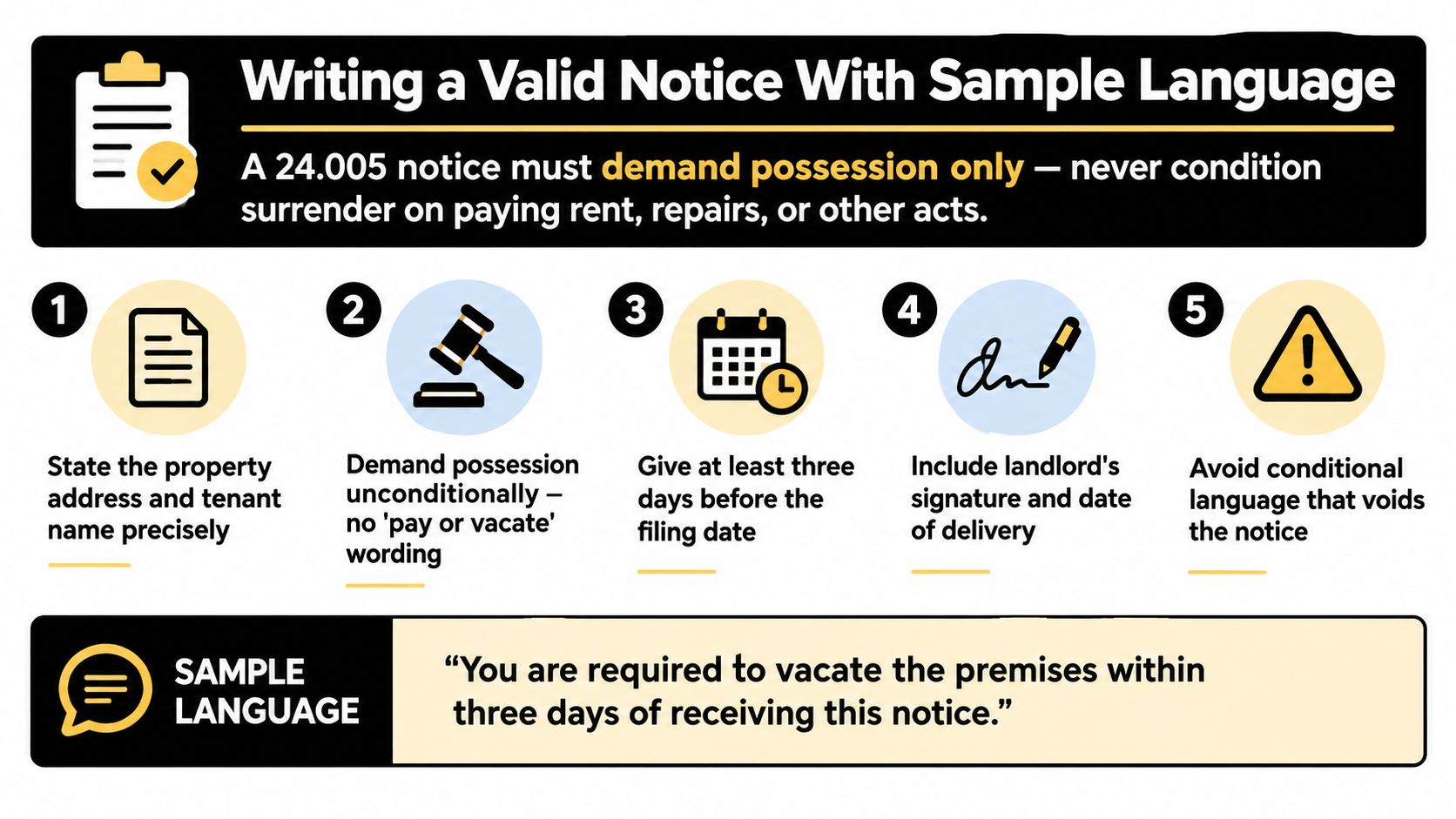
The central drafting rule is simple: a Section 24.005 notice must demand possession clearly. A vacate-only notice shouldn't say that surrender depends on paying rent, fixing a leak, signing a release, or performing another act. A separate pay-or-vacate notice can address unpaid rent under Section 24.005(b), but it must still state the tenant's choice and deadline plainly.
Vacate-only template
For a holdover tenant or another situation where the landlord seeks possession without making payment a condition, a practical outline can use this sequence:
- Date: State the date the notice is prepared.
- Tenant names: Use the names shown on the lease.
- Property address: Include the complete address and unit number.
- Statutory basis: Identify Section 24.005(a) when appropriate.
- Demand: State that the tenant must vacate and surrender possession within three days after delivery, or within the longer period required by the lease.
- Landlord signature: Sign and identify the landlord or authorized agent.
- Service certificate: Record who delivered the notice, the method, and the date.
Sample language:
You are required to vacate and surrender possession of the premises at [property address and unit] within three days after receiving this notice. This demand is made under Texas Property Code Section 24.005(a). If you do not surrender possession within the applicable period, the landlord may file a forcible detainer action.
Pay-or-vacate template
For unpaid rent, use the same sequence, but identify Section 24.005(b), the payment demand, and the exact balance. Break the amount down by month and category rather than using a rounded figure or a vague phrase such as “all amounts owed.”
Sample language:
As of [date], you owe [exact amount] in rent, consisting of [amount] for [month] and [amount] for [month]. Under Texas Property Code Section 24.005(b), you must pay the stated delinquent rent or vacate and surrender possession of [property address and unit] within three days after receiving this notice. If you do neither, the landlord may file a forcible detainer action.
Don't use phrases such as “if you fix the leak,” “within a reasonable time,” or “upon receipt.” Those expressions can create uncertainty or add a condition to the demand.
Printable compliance check
Before delivery, confirm:
- Named tenants: Every relevant tenant is identified.
- Correct address: The street address and unit match the lease.
- Legal basis: The notice identifies the applicable statutory path.
- Clear wording: The demand is unconditional when using a vacate-only notice.
- Correct deadline: The notice gives the applicable period.
- Exact payment demand: A pay-or-vacate notice states the amount and breakdown.
- Authorized signature: The signer has authority.
- Allowed service: The delivery method follows Section 24.005.
- Proof preserved: The landlord retains dated evidence of delivery.
Real Scenarios Where Notices Succeed or Fail
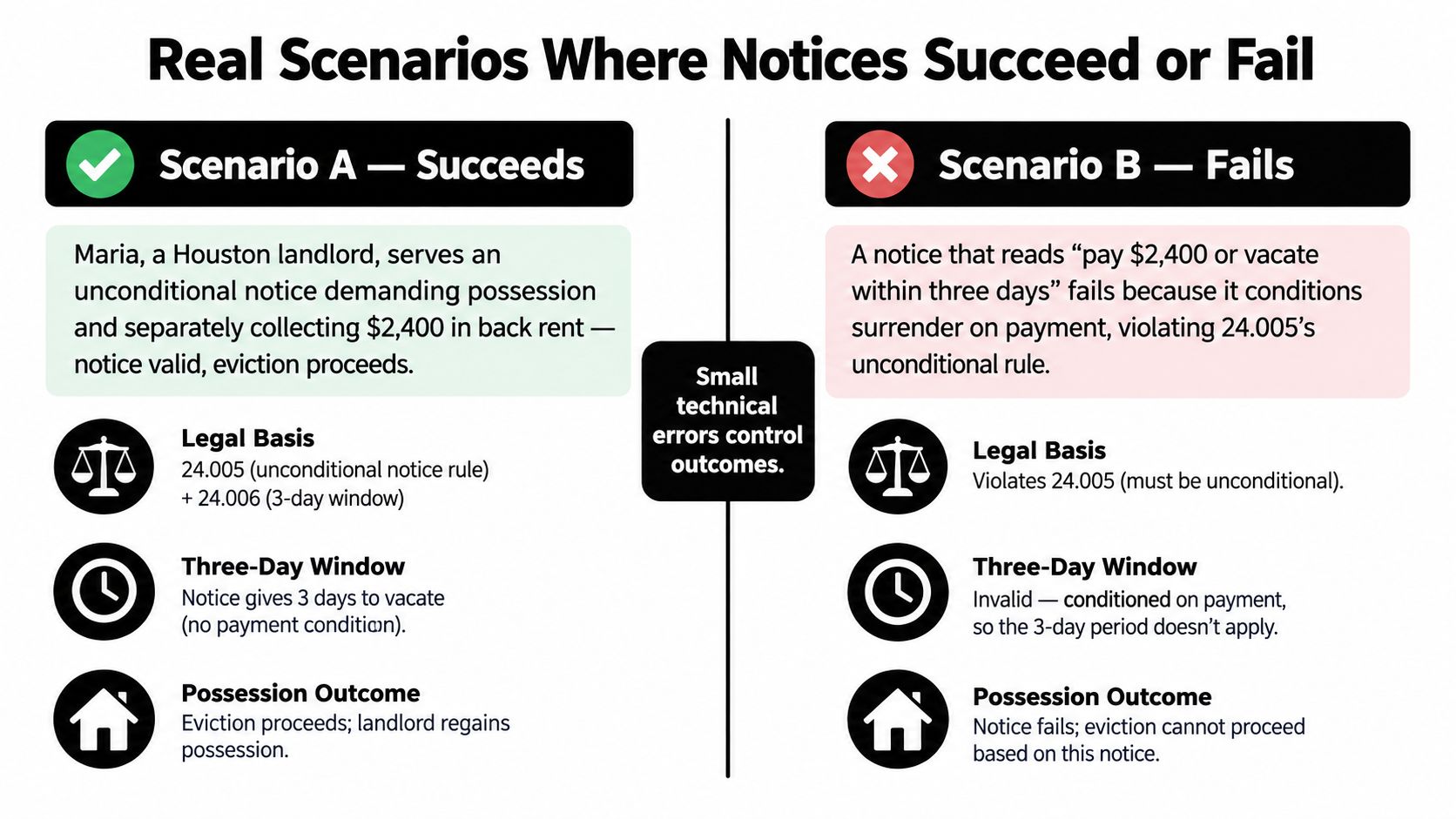
Maria owns a Houston rental and sends a pay-or-vacate notice for $2,400 in unpaid rent. The notice names the tenant, states the property address, explains the payment demand, and gives the tenant the applicable deadline. Maria personally delivers it to the tenant's wife at the rental and records the delivery. After the deadline passes, she files the forcible detainer case.
That scenario illustrates a notice designed around the pay-or-vacate mechanic. The document doesn't pretend to be a simple unconditional demand for possession. It identifies the payment alternative and connects the demand to the statutory basis.
David's situation is different. His Dallas landlord tapes a letter to the door asking him to “please move out within a reasonable time.” The letter names only one roommate, says the tenants must complete repairs before leaving, and demands “possession or full settlement.”
Those phrases create several problems. The deadline is vague, the notice appears conditional, and the document doesn't identify every relevant tenant. If the posting method also fails to satisfy Section 24.005(f) or (f-1), the landlord may be unable to prove effective service.
The contrast is useful because the decisive issue isn't always whether the tenant owes money. Courts may focus on whether the landlord:
- Used the right language: The demand must match the legal theory.
- Named the right people: The notice should address the tenants whose possession is at issue.
- Used a lawful delivery method: The landlord must establish service under the statute.
- Waited long enough: Filing before the notice period ends creates a timing defense.
A tenant who receives a defective notice shouldn't ignore it. The landlord may correct the defect and serve a new notice. A landlord who spots an error should consider correcting it before filing rather than hoping the court overlooks it.
What Happens After the Three-Day Window
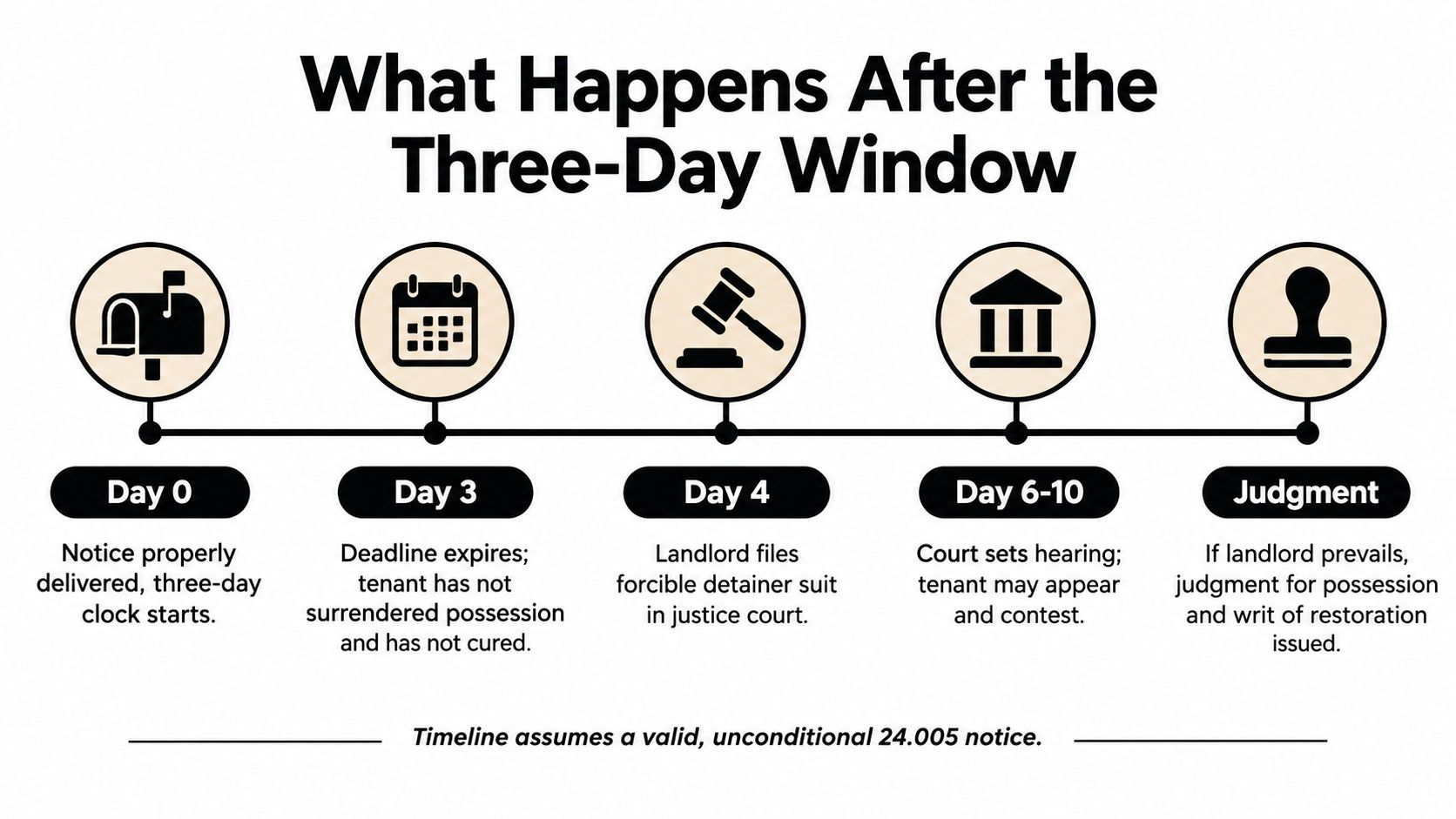
Once the applicable notice period expires, the landlord may file a forcible detainer action if the tenant hasn't surrendered possession and, in a pay-or-vacate matter, hasn't made the required payment. The case belongs in the justice court serving the precinct where the property is located.
The lawsuit asks the court to decide possession. The court generally isn't the place to resolve every related claim about repairs, damages, or the complete rent ledger. A tenant may have separate claims or defenses, but the hearing's immediate question is who has the right to possess the premises.
The tenant's response
A tenant should read the petition, note the hearing information, and appear on time. Potential issues can include defective notice language, an improper delivery method, incorrect tenant identification, or filing before the deadline. Repair and habitability evidence may also matter depending on the facts and the legal defense being raised.
Other protections can affect the analysis. Retaliation under Section 92.331, federal protections for qualifying servicemembers under the Servicemembers Civil Relief Act, and facts involving discrimination or protected complaints may require focused legal review. A tenant should gather the lease, rent records, photographs, repair requests, notices, and messages.
A landlord faces risks too. Accepting partial rent after serving notice can affect the right to proceed, depending on the circumstances and any reservation of rights. Failing to appear can also undermine the case even if the notice was properly prepared.
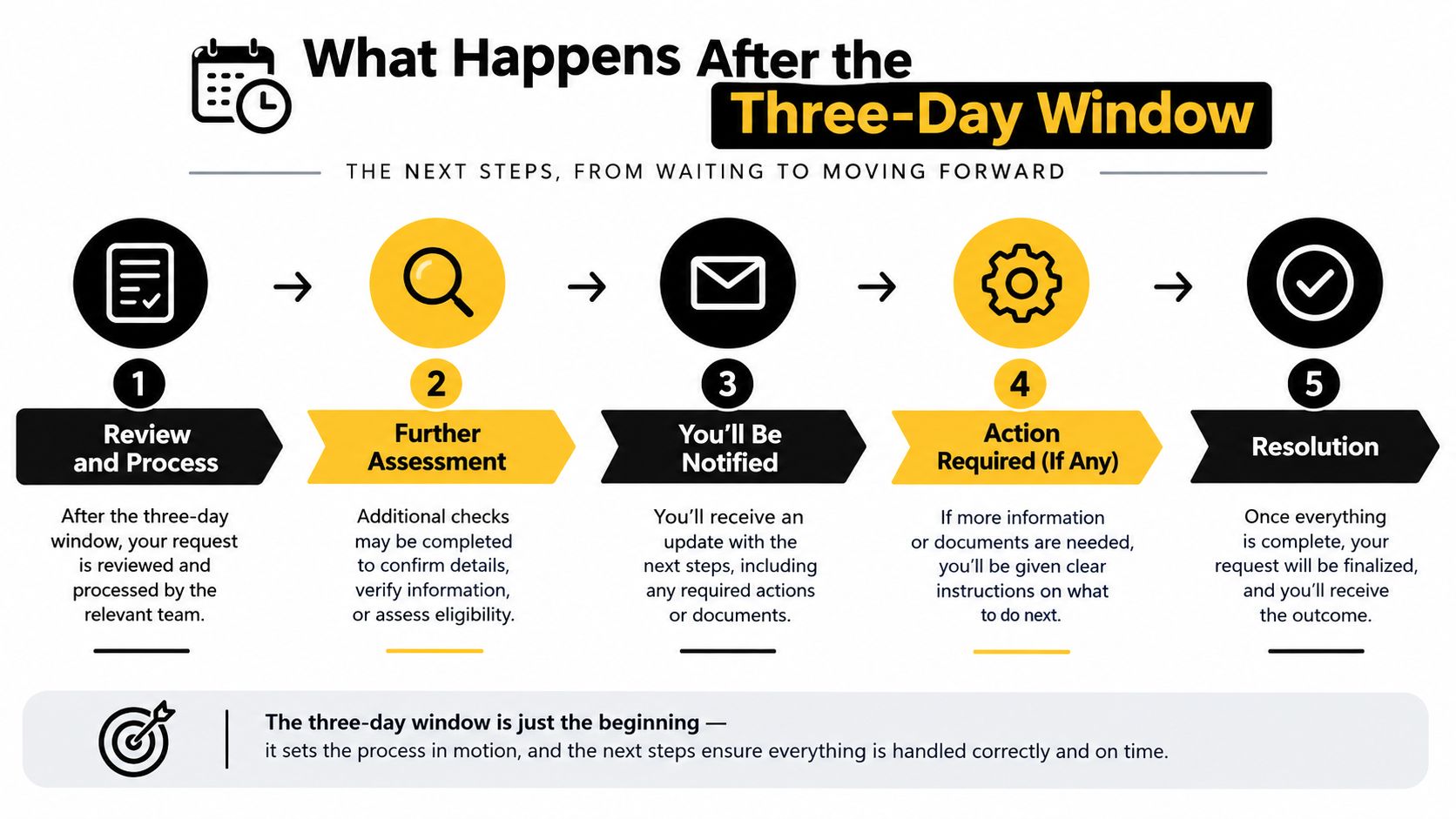
If the landlord prevails, the judgment can lead to a writ of possession carried out by the constable. A tenant planning to leave may also want to document the property's condition and arrange a thorough move-out. For cleaning assistance during that transition, tenants and owners can consider Gmaids move in move out cleaning, while keeping separate photographs and records for any security deposit dispute.
Landlords preparing to file can review the firm's resource on filing an eviction in Texas justice court. The filing is only one step. The notice, proof of service, lease, payment records, and courtroom presentation must fit together.
Avoiding Costly Mistakes and Getting Help
The safest way to handle a Section 24.005 dispute is to slow down before serving or responding. Read the lease, identify the correct tenants, choose a permitted service method, and preserve evidence from the start.
For landlords
- Check the lease: Confirm whether it changes the statutory default notice period.
- Use precise language: Don't combine a possession demand with unrelated conditions.
- Document delivery: Keep photographs, mailing records, affidavits, and delivery dates.
- Verify the deadline: Count from the legally effective delivery date.
- Avoid premature action: Don't file before the applicable period expires.
- Review payment decisions: Consider how accepting rent may affect the existing default.
For tenants
- Save the document: Keep the original notice, envelope, and photographs.
- Check the names: Look for missing or incorrect tenants.
- Check the method: Compare the delivery method with Section 24.005.
- Gather evidence: Preserve the lease, rent records, repair requests, and communications.
- Attend court: A notice defect is most useful when properly raised in the case.
A Texas landlord tenant lawyer or eviction attorney can review the notice before a filing or help a tenant prepare a response. The Law Office of Bryan Fagan, PLLC assists landlords and tenants with evictions, lease disputes, repairs, property damage claims, and other Texas Property Code issues.
If you need help evaluating a notice to vacate, responding to an eviction, or protecting your rights as a landlord or tenant, schedule a free consultation with The Law Office of Bryan Fagan, PLLC. Bring your lease, notice, payment records, and delivery evidence so the firm can explain your options and help you choose a practical next step.