Skip to content
Orders arrive, your family starts packing, and the lease suddenly becomes a serious problem. You may need to report elsewhere, move dependents, or leave a rental home before the contract ends. At the same time, your landlord may be worried about unpaid rent, vacancy, property condition, and how quickly the home can be prepared for a new tenant.
Texas law gives qualifying servicemembers a structured way to end a residential lease. But Texas Property Code Section 92.017 isn't an automatic cancellation button. Eligibility, written notice, military documentation, rent-cycle timing, waiver language, and move-out obligations all matter. A careful approach protects your tenant rights while giving the landlord a clear record to manage the property responsibly.
Why Deployment Triggers a Different Path for Your Texas Lease
Consider a tenant who signs a Texas apartment lease and later receives orders requiring a qualifying deployment. The tenant can't leave the keys on the counter and assume the lease has ended. At the same time, the landlord generally can't treat the deployment as an ordinary decision to break a lease and demand every remaining payment without examining the statutory protection.
Section 92.017 exists for this kind of conflict. It recognizes that military service can change a tenant's housing needs for reasons outside the tenant's ordinary control. The law creates a process for ending the residential lease while preserving enough notice for the landlord to plan for possession, inspection, repairs, and re-rental.
A legal route, not an informal favor
The practical difference is important. A tenant who qualifies must still invoke the right correctly. A landlord who receives proper notice and supporting documents must also handle the termination under the statute instead of imposing an ordinary early-termination penalty.
For example, a servicemember may receive orders after moving into a rental with a spouse or other dependent. The household may need to relocate, but the lease may have substantial time remaining. Section 92.017 can provide a route to terminate future rent liability, provided the tenant satisfies the qualifying conditions and follows the notice procedure.
That doesn't mean the tenant can ignore rent due before the effective termination date. It also doesn't erase responsibility for the condition of the property, unpaid amounts that are otherwise legally owed, or a failure to surrender possession as required.
Practical rule: Treat military lease termination as a documented legal transaction. A phone call may start a conversation, but it shouldn't be your only proof.
Who needs to pay attention
Servicemembers and qualifying dependents should review the lease, orders, and notice requirements before making moving arrangements. Landlords and property managers should review the same materials before rejecting a request, billing a fee, or starting an enforcement action.
The issue can become more complicated when the home is connected to a military installation, when the tenant lives with family or relatives, or when the lease contains a waiver provision. The waiver framework can affect the analysis in specific situations, so online advice that describes Section 92.017 as an unconditional right may leave out a critical part of the decision.
The right strategy is calm and chronological. Identify the basis for termination, collect the documents, calculate the effective date, deliver the notice in a provable way, and preserve every response. That record is useful whether the parties agree or a Texas landlord tenant lawyer later needs to evaluate the dispute.
What Texas Property Code Section 92.017 Actually Requires
Section 92.017 gives a servicemember or certain dependent a statutory right to end a residential lease early when the servicemember enters military service during the lease, or signs the lease while already serving and later receives qualifying orders. A deployment must last at least 90 days, and the tenant must provide written notice together with documentation showing military status or the qualifying orders. The Texas Landlord-Tenant Law: An Overview places this rule within the broader framework of Texas Property Code Chapters 91 through 94 and Chapter 24, which govern the rental relationship.
The eligibility questions
Before sending a letter, work through these questions:
- Does the tenant fall within the protected class? The statute covers a servicemember and certain dependents in the circumstances identified by the law.
- What event supports termination? The relevant event may involve entering military service during the lease, signing while already in service and later receiving qualifying orders, or receiving orders for a qualifying deployment.
- Does the deployment meet the statutory threshold? The deployment must last at least 90 days.
- Can the tenant prove the basis? The notice should include written documentation of military status or the applicable orders.
- Has the tenant sent a clear written termination notice? The notice should identify the lease, rental address, tenant, legal basis, and intended surrender arrangements.
These requirements work together. Orders without a clear notice may create confusion. A letter that claims military status without supporting documentation may invite a dispute. A tenant who delivers everything but miscalculates the effective date may move too soon or continue paying longer than necessary.
Why the lease doesn't end immediately
For a lease requiring monthly rent, termination becomes effective 30 days after the first date the next rent payment is due after the landlord receives the notice, according to the Texas guidance on ending a residential lease. The rule ties the end date to the rent cycle instead of making termination immediate.
That timing gives both sides a predictable date. The tenant can plan travel, utilities, movers, and the final inspection. The landlord can schedule access, document the condition, arrange repairs, and begin marketing the property when appropriate.
A landlord shouldn't assume the lease ends on the day the notice is delivered. A tenant shouldn't assume the notice date is the move-out date. The effective date must be calculated from the actual delivery date and the lease's rent schedule.
What the law protects
A valid termination ends the tenant's obligation for rent for periods after the effective date. The statute also requires the landlord to refund prepaid amounts covering time after that date. Violations can result in a civil penalty equal to one month's rent plus $500, as well as other available relief under the law and the circumstances of the dispute.
The statute is specific, but leases and facts vary. If the landlord disputes the orders, the tenant is unsure whether a dependent qualifies, or a waiver appears in the lease, legal review can prevent a preventable mistake.
How to Issue a Military Lease Termination Notice in Texas
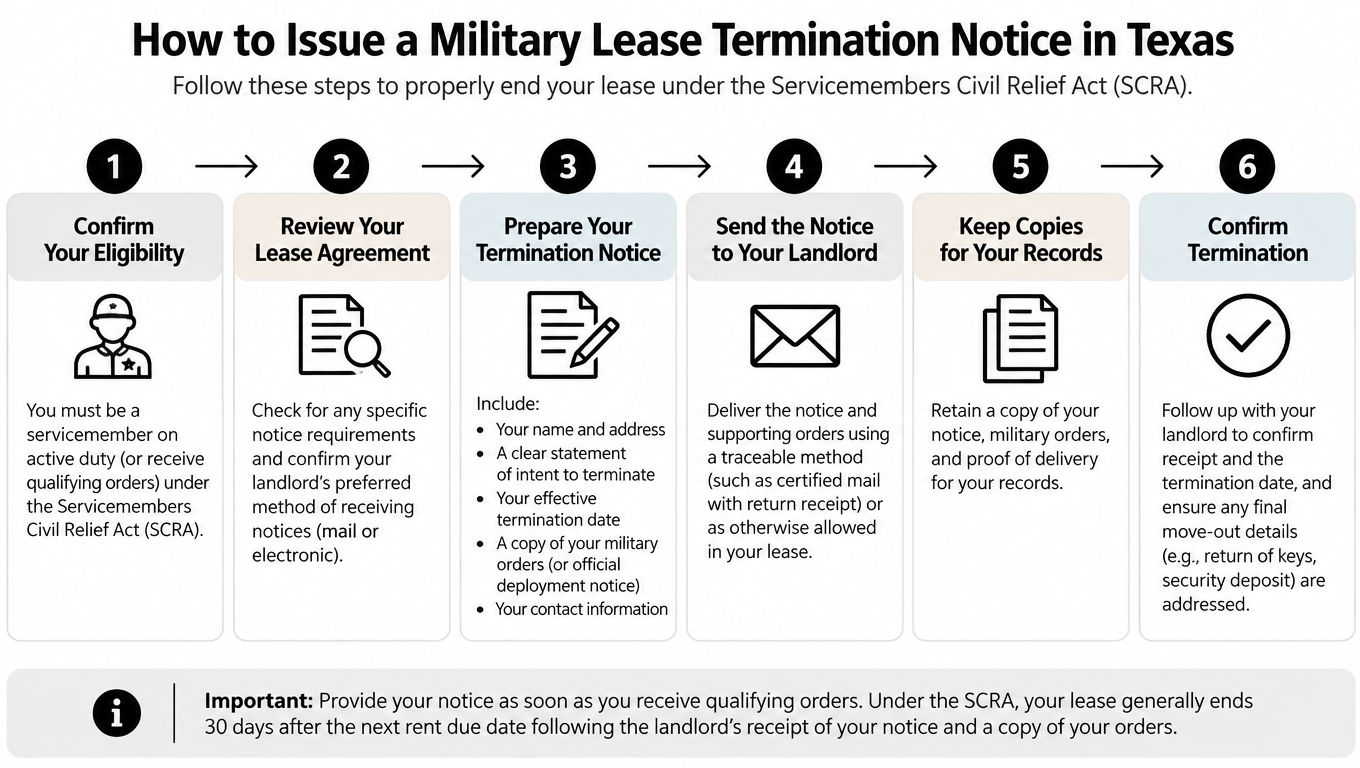
A strong notice does more than announce that you're moving. It creates a clear file showing who is terminating, which property is involved, why the statute applies, what documents support the request, and when the tenant expects to surrender possession.
Build the notice carefully
Use a written document addressed to the landlord or the notice recipient identified in the lease. Include the tenant's name, the rental address, the lease date if available, the statutory basis for termination, the relevant orders or military-status documentation, and a request for written confirmation of the effective termination date.
State that you're requesting termination under Texas Property Code Section 92.017. Don't describe the move as a personal decision to break the lease, and don't use uncertain language that could make the notice sound conditional. If you're unsure how to organize the letter, review this guide on how to write a lease termination letter.
Follow a reliable delivery process
A practical process looks like this:
- Review the lease. Find the landlord's notice address, management contact, rent due date, and any military-related provisions.
- Collect supporting records. Keep copies of the orders or other documentation showing the qualifying basis and military status.
- Draft a complete notice. Identify the lease and property, invoke Section 92.017, and explain that you're requesting the statutory termination.
- Deliver it through a trackable method. Follow the lease's notice provisions and use a method that creates delivery evidence, such as a trackable mail service or a verifiable electronic process when permitted.
- Calculate the termination date. Use the rent-cycle rule and don't treat delivery as immediate cancellation.
- Preserve the file. Save the notice, attachments, delivery confirmation, landlord response, payment records, photographs, and key-return evidence.
A tenant should also ask the landlord to confirm the date in writing. If the landlord doesn't respond, that silence doesn't automatically invalidate a properly delivered notice, but it makes proof even more important. Continue meeting obligations through the effective date and avoid creating a separate payment or possession dispute.
A landlord who receives a complete notice should review the statutory conditions rather than reject it reflexively. If the landlord believes the orders don't qualify or a waiver controls, the landlord should communicate that position promptly and obtain legal advice before charging a fee or treating the tenant as unlawfully absent.
Here's a short video overview of the notice process:
When the Right Is Not Absolute and Waivers Matter
Many online explanations present Section 92.017 as though every servicemember can end every Texas lease just by showing orders. That shortcut can create trouble. The statute provides meaningful protection, but the facts and the agreement still matter, especially when a waiver or exception may apply.
Read the waiver language, don't guess
Texas guidance and military materials recognize that certain rights may be waived in specific situations. A waiver isn't automatically effective merely because a landlord typed a sentence into a lease. The waiver must be separate, written, and compliant with federal law. The exact wording, document, timing, and surrounding circumstances deserve close review.
A tenant shouldn't sign a waiver assuming it will never matter. A landlord shouldn't rely on a generic clause without confirming that the clause addresses the applicable protection and satisfies the governing requirements. A disputed waiver can become the central issue even when the tenant has genuine military orders.
A lease clause can raise a legal question, but it doesn't answer that question by itself.
On-base and near-base housing
Housing located on a military installation can involve arrangements that differ from an ordinary off-base residential lease. A home near an installation may still be an ordinary private rental, but proximity alone doesn't resolve whether a waiver or exception applies.
The tenant should identify who owns and manages the home, what agreement was signed, whether the housing is provided through a military-related arrangement, and whether family members or relatives occupy the premises. Those details can change the analysis. The safest approach is to compare the actual lease and housing arrangement with the statutory and federal requirements instead of relying on the property's location.
| Situation | What to examine |
|---|---|
| Off-base private rental | The lease, qualifying orders, written notice, documentation, and rent-cycle date |
| Near-base private housing | Whether the property is simply a private rental or part of a special housing arrangement |
| On-base or installation-related housing | The governing agreement, any separate waiver, and the federal-law requirements for that waiver |
| Family or relatives in the home | Who signed the lease, who is a dependent, and how the household is identified in the documents |
What works and what fails
A tenant who sends a complete notice with supporting records and asks for a written date is taking a strong practical step. A tenant who relies on a verbal conversation, deletes messages, or moves out without documenting surrender creates avoidable uncertainty.
For landlords, careful review works better than an automatic refusal. Charging an early-termination fee before resolving the waiver and eligibility issues may expose the landlord to a statutory dispute. When the documents are unclear, a Texas landlord tenant lawyer can evaluate the arrangement before either side takes an irreversible position.

Landlord Duties, Deposits, and Moving Out Right
Once the termination is valid, the dispute usually shifts from eligibility to performance. The tenant must leave the home properly, and the landlord must account for money held or collected for periods after the lease ends.
A practical move-out timeline
When notice is delivered: Keep the original notice, attachments, and proof of delivery. The landlord should record receipt and calculate the statutory termination date from the rent cycle.
Before surrender: The tenant should remove personal property, clean the premises, document the condition with photographs or video, and return keys or access devices in a way that can be verified. The landlord should communicate inspection and access arrangements without treating the military termination as an ordinary breach.
At the effective termination date: The tenant's future rent obligation ends under the valid statutory termination. Rent that accrued before that date remains a separate issue, and property damage or other lawful charges aren't transformed into an early-termination penalty.
After surrender: The parties should exchange a forwarding address and preserve the final accounting. Military guidance tied to Texas law says the landlord must refund prepaid rent and the security deposit after a valid military lease termination, with the refund or return handled within the same timing structure connected to the statutory lease ending. The Texas guidance on returning a security deposit can help explain the broader deposit process.
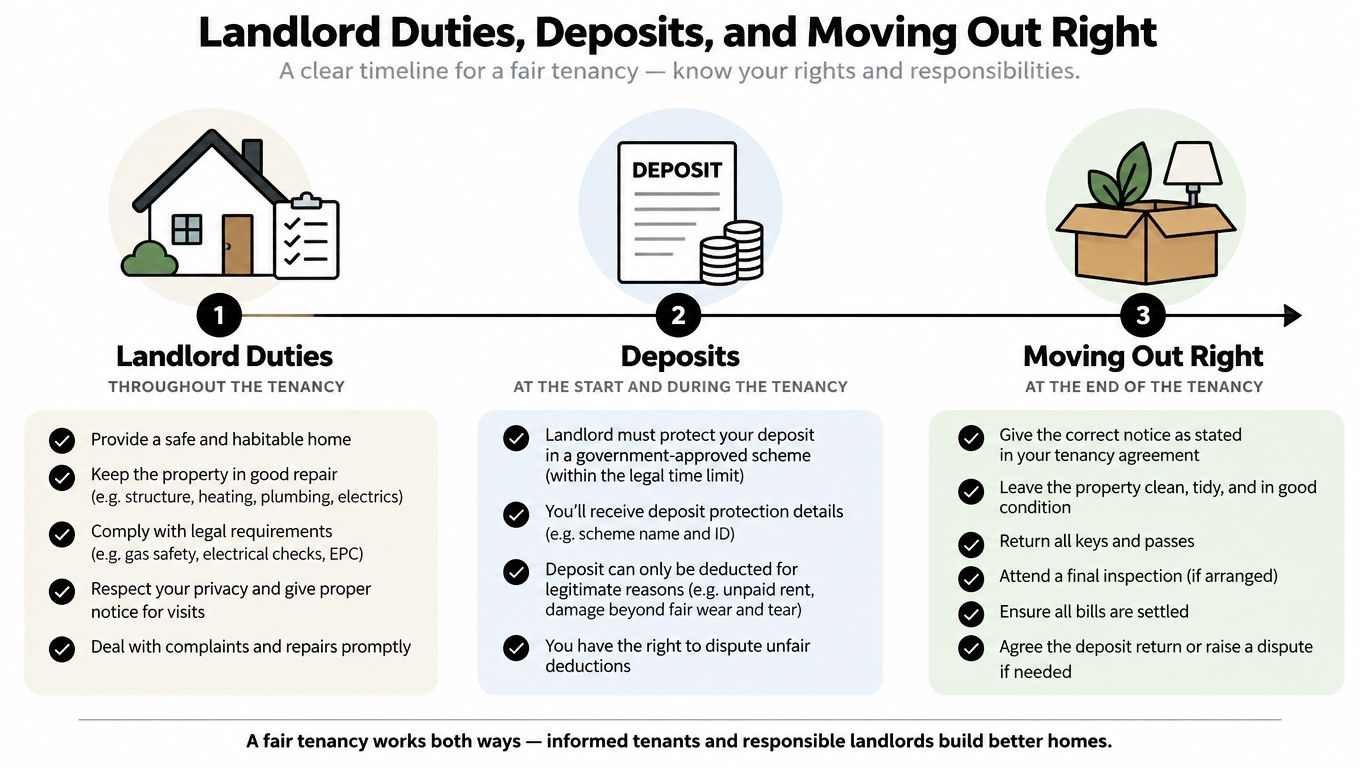
Move-out reminder: A military termination protects against future rent liability under the statute. It doesn't give either party permission to skip documentation, property care, lawful accounting, or the agreed surrender process.
Handling disputed deductions
A landlord may need to address legitimate amounts connected to the tenancy, but the landlord shouldn't label a charge as a cleaning fee, administrative fee, or re-leasing cost if its real purpose is to punish the tenant for invoking Section 92.017. The tenant should request an itemized explanation and compare each deduction with the lease, property condition, payment history, and termination date.
If money is withheld improperly, send a written demand that identifies the termination notice, the effective date, the prepaid amounts, the deposit, the forwarding address, and the requested correction. Keep the demand factual. A clear paper trail often resolves misunderstandings and gives an attorney the material needed to assess a potential claim.
Next Steps and When to Call a Texas Tenant Lawyer
Start with your documents. Gather the lease, military orders, written notice, delivery confirmation, rent ledger, photographs, inspection records, key-return proof, forwarding address, and every landlord communication.
Then identify the exact disagreement:
- Eligibility dispute: The landlord says the orders or deployment don't qualify.
- Timing dispute: The parties calculate different termination dates.
- Waiver dispute: The landlord relies on a separate agreement or lease clause.
- Money dispute: Prepaid rent or the security deposit isn't returned or is reduced without a clear explanation.
- Possession dispute: The landlord claims the tenant surrendered late, or the tenant believes the landlord treated a valid termination as a breach.
A tenant may be able to resolve a straightforward matter by sending a complete notice and following up in writing. Legal help becomes more valuable when a landlord threatens eviction, demands future rent, relies on a questionable waiver, refuses to acknowledge the notice, or withholds funds after a documented move-out. Landlords also benefit from advice before rejecting a statutory request or filing a case based on an incomplete understanding of the servicemember's rights.
The Law Office of Bryan Fagan, PLLC helps Texas tenants and landlords evaluate lease terminations, deposits, evictions, and related rental disputes through practical legal guidance. A consultation can clarify what the documents show, what risks exist, and which next step is proportionate to the problem.
If your military orders have created a lease dispute, The Law Office of Bryan Fagan, PLLC can review the notice, waiver language, termination date, and deposit issues with you. Visit The Law Office of Bryan Fagan, PLLC to schedule a free consultation and get a clear plan for protecting your rights under Texas law.