Skip to content

Dealing with a landlord dispute or eviction can be stressful, but understanding your rights under Texas law can make all the difference. This article explains seven examples of landlord harassment, from illegal lockouts to repeated threats, and identifies the parts of the Texas Property Code that may protect you. Each example starts with a realistic tenant situation, then explains the legal context, evidence to collect, and practical steps to take before a deadline passes. A Texas landlord tenant lawyer can help you sort out your options, and the Texas Property Code is the starting point for many of them. You can also browse the liability management playbook for broader property-risk practices.
1. Illegal lockout of a tenant who is current on rent
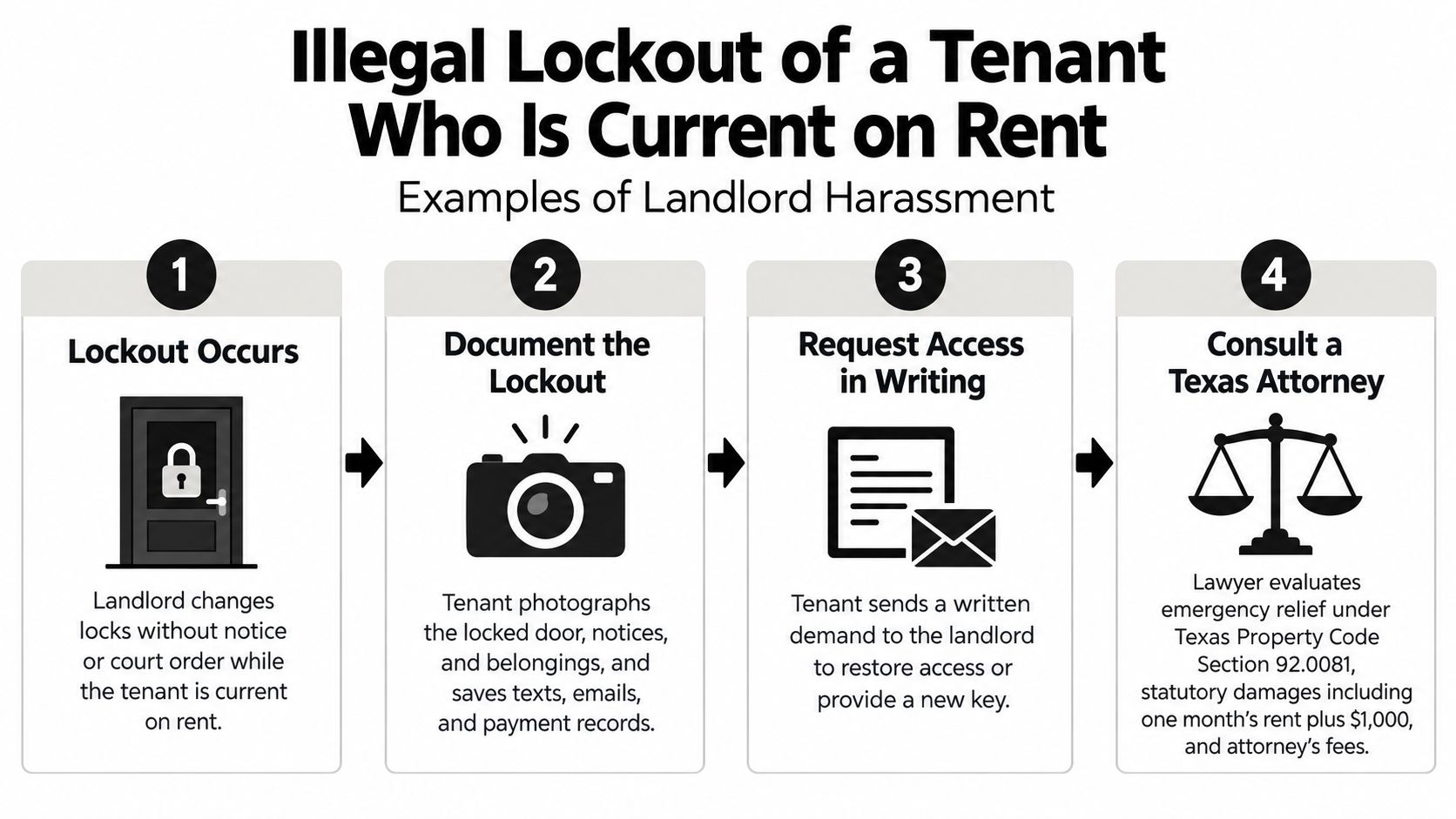
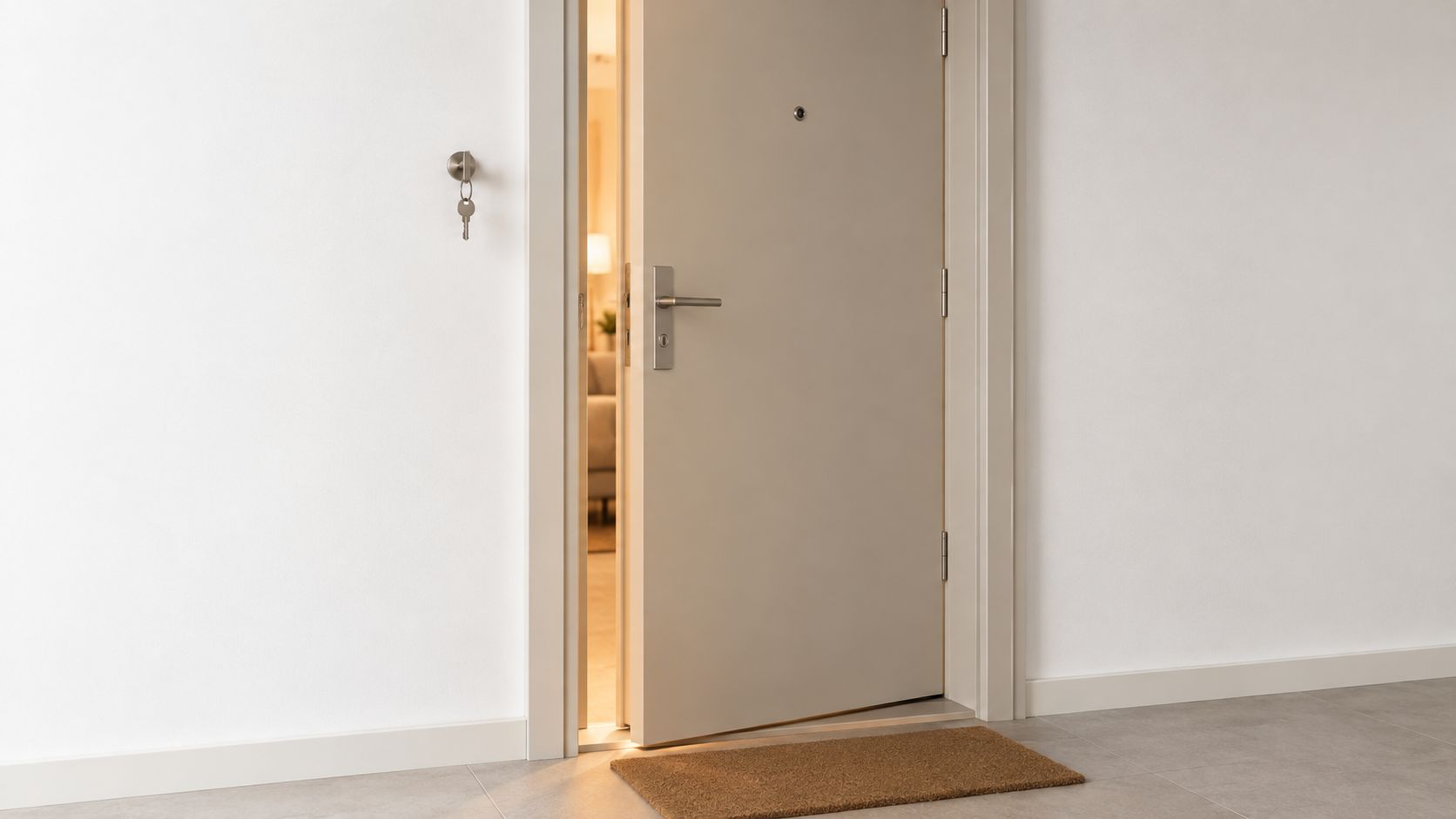
You come home from work and find that the locks have been changed. You're current on rent, you weren't given a new key, and no court has ordered you to leave. A landlord generally can't use a lockout to bypass the Texas eviction process.
Texas Property Code Section 92.0081 limits when a landlord may change locks or otherwise shut out a tenant. Even when rent is overdue, the landlord must follow specific notice and key-delivery rules. A lockout after a dispute over repairs, fees, or a broken appliance may be an example of landlord harassment, especially when the landlord uses it to pressure you into leaving.
A Houston tenant who pays by money order returns to find the locks changed after complaining about a dishwasher. In Dallas, a tenant who is two weeks behind may still have rights if the landlord removes the door, changes the locks, and refuses to provide a key without following the required process.
What to preserve and do first
Take photographs and video of the locked door, notices, and any belongings left outside. Save payment records, money-order receipts, texts, emails, and messages showing your rent status or the reason for the lockout.
Practical rule: Don't force your way inside or damage the property. That can create a separate allegation against you and weaken your position.
Call the police non-emergency line to create a record, although officers may treat the situation as a civil dispute. Contact an attorney quickly, keep proof of your rent payments, and review The Notice to Vacate: Requirements and Timing to understand what a valid notice must contain before an eviction can be filed. For more information about possible remedies, see Texas illegal lockout protections and damages.
A lockout can escalate quickly. Legal advice can help you decide how to protect access, belongings, and your claims without taking a step that creates more risk.
2. Repeated unannounced entry and invasion of privacy
A landlord may need access to make repairs, inspect a property, or show the unit to a prospective renter. That doesn't mean unlimited access. Repeated entries without warning, especially when they have no legitimate purpose, can interfere with your privacy and quiet enjoyment.
Texas doesn't set one detailed notice period for every landlord entry. Your lease usually controls. Many leases require reasonable notice except in an emergency. If a landlord ignores that clause, enters repeatedly for no valid reason, or moves your belongings, the conduct may support a breach-of-lease or privacy-related claim.
A San Antonio tenant finds the landlord inside three times in one month to check a plumbing issue that has already been repaired. An Austin tenant returns home and discovers that the landlord used a spare key, moved items, and commented on guests.
Build a clear entry record
Review the access clause in your lease. Then record each date, time, stated reason, whether you were home, and whether the landlord gave notice. Save messages where the landlord admits entering without notice or offers no legitimate reason.
Send a calm written request that future entries follow the lease. Don't change the locks unless your lease allows it or a lawyer advises you to do so. A lock change can create a new dispute if it prevents lawful access for repairs or emergencies.
For a broader explanation of access rules and quiet enjoyment, see A Landlord's Right to Enter in Texas. The purpose and timing of each entry matter. A properly noticed repair visit is different from repeated, unexplained access while you're away.
3. Utility shutoff used to pressure a tenant to leave
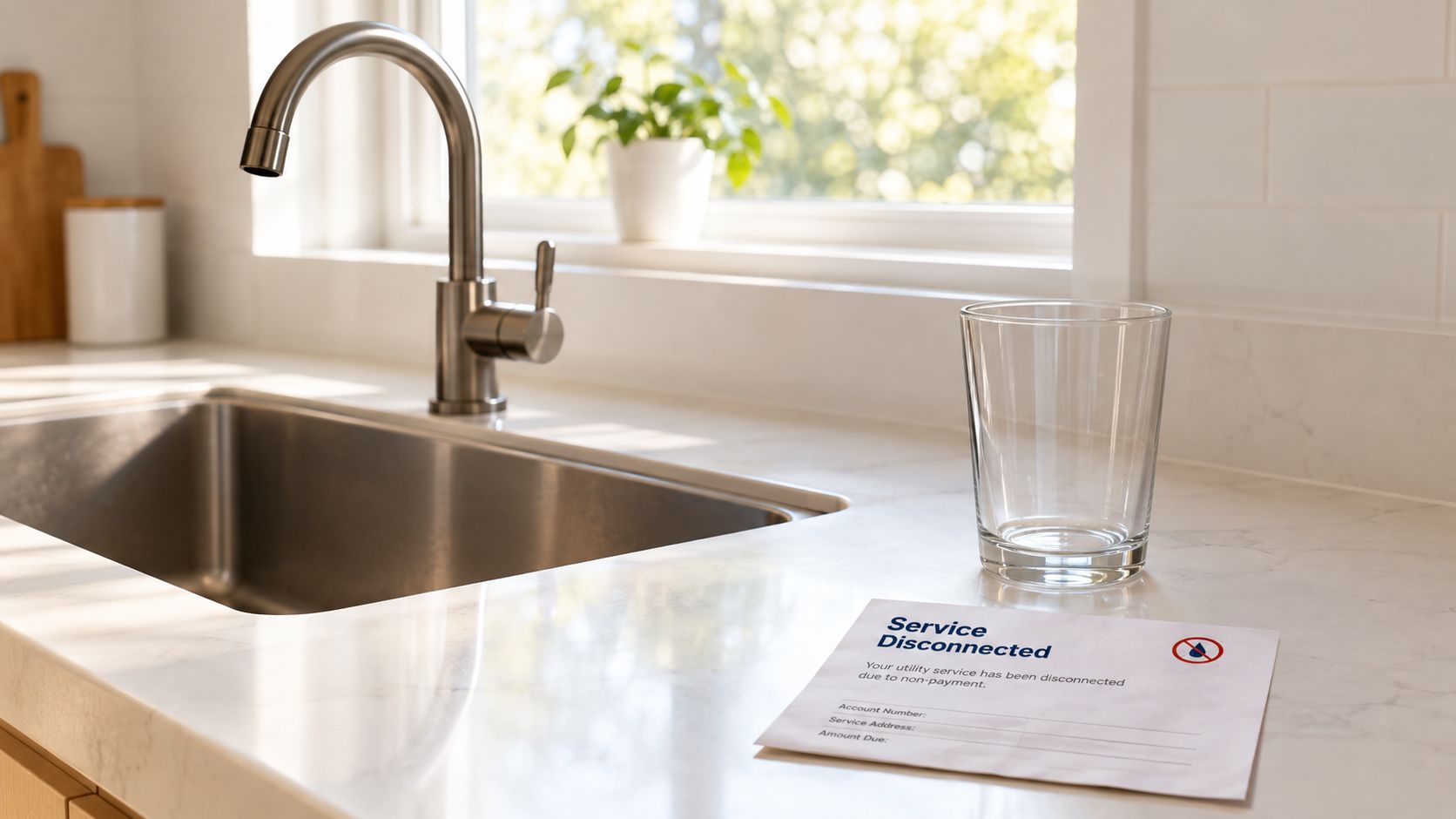
Losing water, electricity, or gas can make your home unsafe. The problem is especially serious when the landlord is responsible for the utility under the lease and cuts service to force you out instead of using the eviction process.
A Dallas landlord stops paying the water bill even though water is included in rent. The tenant has no running water for ten days. In Fort Worth, a landlord asks for electricity to be disconnected after a dispute about late fees and tells the tenant to “just move out.”
The legal analysis depends on the lease, who must pay the bill, why service ended, and whether the landlord intentionally caused the interruption. Texas Property Code Chapter 92 may provide repair and habitability remedies, but you shouldn't assume that every outage permits you to stop paying rent or deduct costs without following the required steps.
Create proof of the outage
Call the utility company and ask whether the account is in the landlord's name, whether a shutoff was requested, and what caused the interruption. Keep bills, disconnection notices, messages, temporary-housing receipts, and receipts for food spoiled during the outage.
Notify the landlord in writing and state what service is missing and how it affects health or safety. Keep a daily record of the condition. Don't withhold rent without legal advice, because that may create a separate nonpayment case.
If the facts suggest intentional pressure, review Texas remedies for a landlord utility shutoff. A Texas landlord tenant lawyer can help separate a utility-company problem from conduct that may amount to unlawful interference or retaliation.
4. Retaliation after requesting repairs or reporting code violations
You send a written repair request. Soon afterward, the landlord announces a nonrenewal, raises the rent, or sends a sudden lease-violation notice. The timing doesn't automatically prove retaliation, but it deserves close attention.
Texas Property Code Sections 92.331 through 92.335 protect tenants who act in good faith. Protected conduct can include requesting repairs, reporting housing or building-code problems to a government agency, exercising a legal right, or taking other conduct covered by the statute. Section 92.331 prohibits actions such as filing an eviction, reducing services, raising rent, terminating the lease, or engaging in bad-faith conduct that materially interferes with lease rights during the statutory protection period, generally six months after the protected action.
Follow the timeline
Write repair requests by text or email and keep proof of delivery. Save inspection records, complaint confirmations, notices, rent records, and messages sent after the complaint. Ask the landlord to state the reason for a rent increase, nonrenewal, or alleged violation in writing.
Continue paying undisputed rent and following the lease. Texas Property Code Section 92.332 preserves lawful action based on delinquent rent, intentional property damage, threats to safety, or a material lease breach. An aggressive response isn't automatically retaliation if the landlord can prove an independent legal reason.
Timing matters, but timing alone isn't the whole case. Compare the stated reason with the records, the lease, and how the landlord treated similar tenants.
If the facts point to retaliation, read Texas landlord retaliation and tenant rights. A serious plumbing problem, such as a slab leak, may also require prompt professional attention, including professional slab leak solutions.
5. Threats, intimidation, and repeated harassing communications
A landlord sends message after message, insults you, threatens your family, or appears at your door to frighten you into moving. The conduct may not include a formal eviction, but it can still create serious fear and pressure.
A Houston landlord sends repeated texts in one day, including insults and a threat to make the tenant regret staying. A Dallas landlord threatens to contact immigration authorities because the tenant keeps reporting property problems. Threats tied to immigration status, safety, rent, or continued possession should be preserved carefully.
Texas Property Code Chapter 92 governs many landlord-tenant duties, but threatening or abusive conduct may also implicate other Texas laws. Threats of violence may require immediate police attention. Serious conduct may support civil claims, depending on the facts.
Preserve the pattern without escalating it
Save texts, voicemails, emails, social media posts, notices, and call logs with dates and times visible. Tell a trusted person what's happening. Keep responses short, factual, and calm, and consider asking the landlord to communicate only in writing.
- Record each contact: Note who contacted you, what was said, and whether anyone witnessed it.
- Protect immediate safety: Call 911 if you face an immediate threat or believe violence may occur.
- Keep original files: Don't edit screenshots in a way that removes dates, sender information, or surrounding messages.
- Avoid retaliation: Don't respond with threats or insults that could be used against you.
A silent panic alert system may be another personal-safety resource to consider, such as this guide to silent panic alert systems. It doesn't replace legal advice or emergency assistance, but careful documentation can help a lawyer assess whether the communications form a legally actionable pattern.
6. Harassment based on family status, disability, or national origin
Harassment becomes more serious when the landlord targets you because of who you are or because you requested a disability-related accommodation. Federal fair housing law protects against discrimination based on race, color, religion, sex, familial status, national origin, and disability under 42 U.S.C. Section 3604. Texas provides similar protections through Chapter 301 of the Texas Property Code.
A Fort Worth landlord tells a family with young children that the building “is not for kids” and begins issuing unsupported noise complaints. In Austin, a landlord learns that a tenant uses a wheelchair, threatens to make the property difficult to live in, and refuses a reasonable accommodation request for a designated parking space.
Harassment can include slurs, threats, unequal enforcement of rules, refusal to consider an accommodation, or pressure to leave after the landlord learns about a protected characteristic. You may be able to contact the U.S. Department of Housing and Urban Development, the Texas Workforce Commission Civil Rights Division, or a court, depending on the facts and deadlines.
Compare treatment and preserve exact words
Write down the exact statement, date, location, witnesses, and what happened afterward. Keep accommodation requests, lease notices, inspection records, and enforcement communications. Compare how the landlord treated you with how other tenants were treated in similar situations.
Ask for disability-related accommodations in writing. Keep proof that the landlord received the request and any response. Filing deadlines for administrative complaints can be short, so don't wait while trying to collect perfect evidence.
7. Serial baseless lease violation notices and pressure to vacate
A landlord sends one notice about grass, another about a guest, and another about a fee that the lease doesn't authorize. Each notice may appear minor, but repeated unsupported notices can create pressure and may form part of a broader harassment pattern.
A Houston tenant receives five violation notices in six weeks for rules that aren't in the lease, including a claim that a bicycle on the porch is a hazard. A Dallas tenant receives a notice to vacate that allows only one day to leave even though the lease doesn't provide shortened notice for the alleged violation.
A landlord may enforce real lease terms. The issue is whether the notice accurately identifies the violation, follows the lease and Texas law, and supports a lawful eviction. A landlord generally must provide proper written notice, allow a cure when required, and obtain a court order if the tenant doesn't leave voluntarily. A notice alone doesn't remove your right to respond.
Match every notice to the lease
Read the lease and compare each allegation to the exact language. Save the original notices, envelopes, emails, photographs, payment records, and your written responses. Ask whether a claimed fee is authorized and whether the landlord applied the same rule to other tenants.
Respond in writing when a notice is false or unclear, but don't admit facts you dispute. Continue complying with valid lease duties. If you receive a court citation or eviction petition, don't ignore it. Missing a court date can result in a default judgment.
A notice is evidence of what the landlord claims. It isn't proof that the claim is true.
Comparison of 7 Landlord Harassment Examples
| Issue | 🔄 Implementation Complexity | ⚡ Resource Requirements | 📊 Expected Outcomes | 💡 Ideal Use Cases | ⭐ Key Advantages |
|---|---|---|---|---|---|
| Illegal Lockout of a Tenant Who Is Current on Rent | 🔄 Medium, clear statutory ban but may require emergency court action | ⚡ Low–Medium: dated photos/video, payment records, police report, prompt attorney contact | 📊 High: likely court order restoring access; damages, attorney's fees, statutory penalty (typically 1 mo. rent + $1,000) | 💡 When landlord changes locks or denies access despite tenant being current on rent | ⭐ Strong statutory remedy (Tex. Prop. Code §92.0081); fast emergency options |
| Repeated Unannounced Entry and Invasion of Privacy | 🔄 Medium, fact-specific; lease terms control entry rules | ⚡ Low: entry log, copies of lease, written notices to landlord; attorney if pattern persists | 📊 Moderate: breach of lease claim, injunction or damages if pattern documented | 💡 Landlord repeatedly enters without notice or for non‑emergencies | ⭐ Lease-driven standards; documentation can establish a pattern |
| Utility Shutoff Used to Pressure a Tenant to Leave | 🔄 Medium–High, habitability issues and causation can be complex | ⚡ Medium–High: utility bills, disconnection notices, receipts for expenses, health documentation, attorney | 📊 Moderate–High: repair remedies, rent reduction, damages, possible emergency relief under Chapter 92 | 💡 Landlord stops paying or orders disconnection to force vacancy or make unit unlivable | ⭐ Remedies under Chapter 92; potential for monetary and repair remedies |
| Retaliation After Requesting Repairs or Reporting Code Violations | 🔄 Low–Medium, statutory protections with defined time window (≈6 months) | ⚡ Low: written repair requests, inspection reports, timeline, attorney consultation | 📊 High: strong presumption if adverse action follows protected complaint; statutory and actual damages, attorney's fees | 💡 Non‑renewal, rent hike, or lease violations shortly after a protected complaint | ⭐ Clear statutory protection (Tex. Prop. Code §§92.331–92.335) and recoverable remedies |
| Threats, Intimidation, and Repeated Harassing Communications | 🔄 Medium–High, may involve both civil and criminal claims | ⚡ Medium: comprehensive message backups, witnesses, police reports, attorney; safety measures | 📊 Variable: criminal charges possible; civil remedies (injunctions, emotional distress, damages) depending on severity | 💡 Persistent threats, abusive texts/calls, or conduct causing fear for safety | ⭐ Potential for criminal enforcement plus civil relief; strong evidentiary value of records |
| Harassment Based on Family Status, Disability, or National Origin | 🔄 High, involves fair housing laws and administrative procedures | ⚡ High: detailed documentation, HUD/TWC complaints, reasonable‑accommodation requests, legal counsel | 📊 High: administrative investigations, damages, injunctive relief, attorney's fees under FHA and state law | 💡 Disparate treatment or hostile conduct tied to protected characteristics | ⭐ Dual federal (FHA) and state (TX) protections and multiple enforcement pathways |
| Serial Baseless Lease Violation Notices and Pressure to Vacate | 🔄 Medium, requires compiling timeline and defending eviction process | ⚡ Medium: save all notices, written responses, proof of compliance, court appearance, attorney | 📊 Moderate: defenses to eviction, possible damages if notices form a harassment/retaliation pattern | 💡 Repeated unsupported violation notices or unauthorized fees intended to force move‑out | ⭐ Eviction requires court process; repeated baseless notices can be challenged as harassment |
Protect your rights before the pattern grows
Harassment rarely looks dramatic at first. It may begin with one unfair notice, a missed repair, or an unannounced visit. Over time, those events can create pressure to leave, interfere with your use of the home, or make a legitimate lease dispute harder to understand.
Start a dated record as soon as the problem appears. Save the lease, notices, payment records, repair requests, photographs, videos, messages, call logs, inspection reports, and witness information in one place. Write down what happened while the details are fresh, including the date, time, location, people involved, and your response.
Respond in writing when possible. Keep your message factual and avoid threats or personal attacks. If you're reporting repairs or code concerns, describe the condition clearly, request action, and preserve proof that the landlord received the request. Continue paying undisputed rent and following valid lease terms unless a lawyer gives you different advice.
Texas law does not treat every unpleasant interaction as unlawful harassment. A landlord may usually enforce a valid lease, pursue unpaid rent, address a real safety issue, and send lawful notices. But the landlord must document an independent reason and avoid self-help measures, discriminatory conduct, and retaliation.
Tenants should act quickly after a lockout, utility interruption, threat, discriminatory statement, or eviction notice. Landlords and property managers should review the lease, use consistent policies, respond to repair complaints, and preserve records showing legitimate reasons for decisions. A Texas landlord tenant lawyer or eviction attorney can evaluate the timing, evidence, lease language, and available remedies.
If you need help with an eviction, lease issue, or rental dispute, contact The Law Office of Bryan Fagan, PLLC for a free consultation today.
The Law Office of Bryan Fagan, PLLC helps Texas tenants and landlords evaluate harassment, retaliation, repairs, lease violations, evictions, and related property disputes. Schedule a free consultation to discuss your evidence, deadlines, and practical legal options with a Texas landlord tenant lawyer.