A Texas sublet request lives or dies on paper. The lease controls the move, and a tenant who guesses wrong can turn a short-term fix into a fight over rent, possession, and breach.
Texas law does not treat silence as consent. Texas Property Code § 91.005 requires the landlord's prior consent before a tenant rents the leasehold to someone else during the lease term, so the safe move is to treat approval as something you must obtain, not something you can assume. For renters, that means reading the lease before anyone starts packing. For landlords and property managers, that means putting the approval process in writing and applying it the same way every time.
The hard part is not the rule, it is the wait. Tenants want to know how long a landlord can sit on a request, what a reasonable screening process looks like, and what happens when the landlord just stops responding. Those are the pressure points that decide whether a sublet moves forward or stalls out.
A sloppy move can still cost real money. Deposit disputes, lease breach claims, and arguments over who owes rent are common when the sublet starts before consent is clear. The practical sequence is straightforward. Get the lease. Send the request in writing. Wait for written approval before anyone moves in.
| Rule | Texas Default | Practical Effect |
|---|---|---|
| Subletting | Prior landlord consent is required | Do not start a sublease without written approval |
| Silent lease | Silence is not permission | Treat silence as a warning, not a green light |
| Approval timing | No statewide deadline is set | Follow up in writing and document nonresponse |
| Consent form | No statewide standardized form | The lease or a separate written consent controls |
That same clause-by-clause discipline applies in managing property rules, because private restrictions only matter when the written process is followed. For a closer look at lease transfer language, browse the legal document essentials and compare them with lease vs. sublease rules.
Reading Your Lease the Right Way Before Anything Else
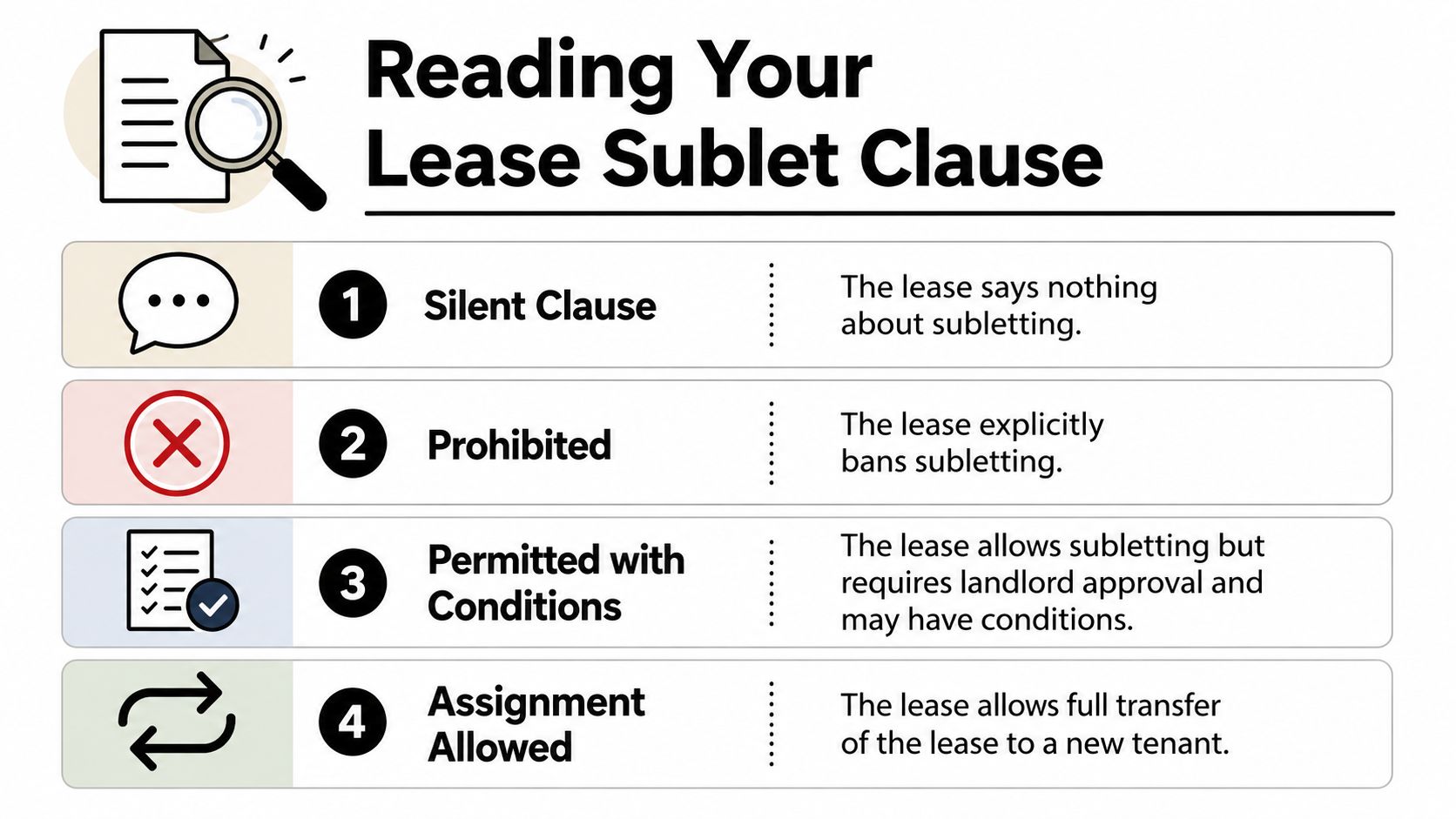
Before you send one email, read the lease like it matters, because it does. Texas tenants get burned when they guess at what a “sublet” clause means, and the wrong guess can cost time, money, and control. A careful read of the lease's sublet and assignment language tells you whether you're dealing with silence, a ban, a consent requirement, or a true transfer right.
Four lease setups that change your next move
A silent lease is not your friend. Texas guidance makes clear that silence does not create permission, so you still need landlord approval before subletting. A prohibited clause is even stricter, because it tells you the landlord has already said no unless you negotiate a change.
A consent-required clause is the most common setup. That means the landlord can review the proposed subtenant and either approve or deny, but you should never treat “review” as a casual conversation. A freely assignable clause is the rare one, and it usually gives broader transfer rights, though you still need to read whether the lease says “assignment,” “sublease,” or both.
The label matters. A sublease keeps the original tenant in the middle, while an assignment transfers the lease interest more completely. If you call the deal by the wrong name, you can lose protection or create confusion over who stays liable under the lease. The distinction is why a lawyer reading the document carefully can spot problems a hurried renter misses.
If you want a plain-English comparison, the lease-structure page at lease vs sublease is the right place to start. And if you want a broader transaction checklist, Subleasing and Assignment Under Texas Leases covers when a Texas tenant may sublease and what both sides should know.
Practical rule: If the lease has a notice-and-cure section, an attorney-fee clause, or an arbitration clause, read those too. They often control how the dispute gets handled if the landlord drags its feet.
For document formalities, it also helps to browse the legal document essentials so you know why signatures, dates, and clear approval language matter when the paper trail becomes the proof.
Building a Written Sublet Request That Gets Approved
Most Texas sublet requests fail before the landlord even reviews the candidate. The problem is usually a sloppy packet, not the subtenant. If you want a real answer, send a complete written request that makes the landlord's job easy and leaves you with proof of delivery.
What belongs in the request packet
Start with the proposed sublease dates. Be specific, because open-ended language invites delay. Then include the subtenant's full legal name and permanent address, the reason for the transfer, any required co-tenant consent, and a copy of the proposed sublease.
That package gives the landlord the basic facts needed to evaluate risk. It also helps eliminate the common excuse that the request was “incomplete.” In practice, incomplete packets are one of the main reasons these requests stall.
Send it by written request and use certified mail with return receipt if you want a clean record. That is the safest delivery method when a landlord later claims the package never arrived. Keep a copy of everything, including the mailing receipt, the signed return card, and the exact version you sent.
A landlord can ignore a casual text more easily than a certified package. Paper wins when the story changes later.
A simple request paragraph can look like this: “I'm requesting written consent to sublet my unit from [start date] through [end date] to [full legal name]. I've attached the proposed sublease, the subtenant's contact information, and supporting documents for your review. Please send your written approval or denial to me in writing.”
Landlords and property managers often want more than a name and date. A practical screening packet can also include pay stubs, an employment letter, rental history, and references. That lines up with the risk-management approach used in real rental screening, even though Texas law itself does not publish a statewide approval template. If you're a renter, give them the facts up front. If you're a landlord, ask for the same package every time so your process stays consistent.
A disciplined packet, sent in writing, is the foundation of the texas sublet approval process. It's also where a lot of avoidable disputes disappear before they start.
How Long a Texas Landlord Can Realistically Take to Respond
Texas law does not give every landlord a universal deadline to answer a sublet request. That is the part many people want, and it is also the part the statute does not supply. By contrast, a comparative state-law source notes that Virginia gives landlords 10 business days to respond, which shows how different Texas is on timing.

Use a written follow-up schedule instead of waiting forever
The right move in Texas is to create your own record. A polite follow-up after about 7 days, a written request for a decision after about 14 days, and a final notice after about 21 days gives you a clean timeline without pretending the statute set one. That sequence is not a magic rule, but it is a practical way to show the landlord you were serious and organized.
The lease can change that analysis. If your lease has its own response period, follow the contract. If it does not, silence should never be treated as approval, but it also should not be treated as the end of the matter. Keep everything in writing so you can show who said what, when they said it, and what was missing.
A good follow-up letter should ask for one thing, a written decision. Don't ramble about fairness, and don't bury the ask in a long story. You want a record that the landlord received a complete request and still chose not to answer.
For broader timing rules in Texas rental disputes, the notice framework discussed at how much notice does landlord have to give Texas is useful because it shows how much these disputes turn on written process, not verbal back-and-forth.
Bottom line: no Texas statute guarantees a sublet response window, so the tenant who documents silence gains leverage.
That evidence matters. If the landlord keeps stalling, your paper trail can support a negotiation, expose a delay tactic, or help you show that the response wasn't just slow, it was strategic.
What a Landlord Can and Cannot Use as a Reason to Deny
Texas law requires consent, but it does not spell out a neat statewide test for approval. That leaves landlords with real discretion. It does not give them a blank check.
Reasonable screening looks like this
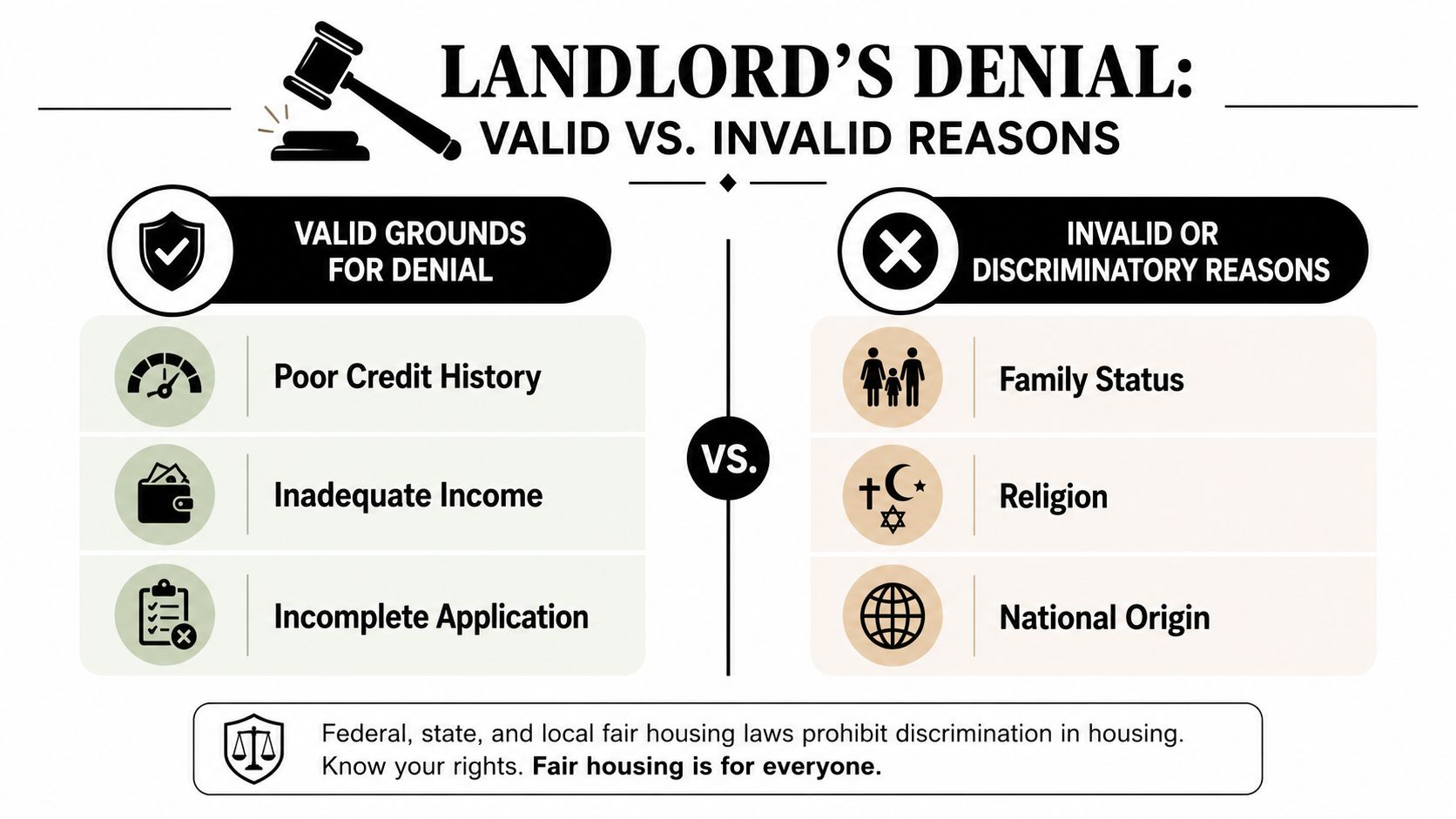
A landlord can legitimately look at income, rental history, credit, and other standard screening information before deciding whether the proposed subtenant fits the property. That is basic risk management, not mystery. If the request packet is thin, incomplete, or inconsistent, denial is easier to justify.
But the reason still has to be lawful. A landlord cannot use race, religion, national origin, familial status, disability, or retaliation as the basis for refusal. If the tenant recently complained about repairs or asserted habitability rights, the denial deserves a hard look because retaliation is a real issue in Texas rental disputes.
A fair process is documented and consistent. That means the landlord asks the same categories of questions, reviews the same categories of documents, and keeps the same standard for every proposed replacement tenant. If one applicant gets a detailed review and another gets brushed off for no stated reason, the dispute is no longer just about subletting, it's about whether the decision was made fairly.
The Texas tenant-rights page at tenant rights in Texas underscores the consent issue, but the harder question is the one people ask, whether the landlord's refusal was reasonable or just convenient.
Documented reasons travel better than vague ones. If a landlord can't explain the denial in writing, the denial becomes harder to defend later.
Texas landlords should also remember that bad-faith conduct creates risk. If a landlord stalls a request while trying to rerent the unit at a higher rate, the tenant may have a stronger argument that the process was being used as a tool instead of a real review. That does not mean every denial is unlawful. It means every denial should be grounded in something you can defend.
Handling Denials, Silence, and Retaliation Under Texas Law
A denial is not the end of your options. Silence is not either. The worst thing you can do is shrug, move forward anyway, and hope nobody makes it a fight.
Your strongest moves after a no or no response
First, ask whether an assignment would work better than a sublease. Some landlords are more comfortable with one structure than the other, and a clean transfer may solve the problem faster than arguing over labels. Second, offer practical reassurance if the only issue is risk, such as a stronger applicant file, a co-signer, or a security arrangement that addresses the landlord's concern.
Third, ask for the denial in writing. If the landlord refuses to explain the decision, that omission matters because it leaves you with nothing to evaluate and nothing clean to challenge. If the landlord does explain, preserve the letter, the email, and every earlier request that led up to it.
Retaliation is where tenants need to pay attention. If you recently complained about repairs, requested an inspection, or reported a code problem, the timing of a denial can matter. The retaliation discussion in landlord retaliation Texas tenant rights explained is worth reading because a sublet refusal can become part of a larger dispute when the landlord starts treating normal requests as a reason to punish you.
If the landlord is stonewalling because they want the unit back on the market, don't let that stay invisible. Preserve the request packet, the certified mail receipt, the follow-up notices, and any messages showing delay or shifting explanations. If a notice to vacate lands, or your deposit is at risk, stop improvising and get legal help fast.
When the landlord goes silent, your file becomes your voice.
For tenants, that means documenting every attempt to get approval before the move. For landlords, it means giving a written answer and keeping the approval criteria consistent. Either way, a texas sublet approval process dispute is easier to resolve when the paper trail is clean.
If you're dealing with a sublet refusal, a stalled response, or a retaliation issue tied to your lease, The Law Office of Bryan Fagan, PLLC can help you sort out the next move under the Texas Property Code. Visit The Law Office of Bryan Fagan, PLLC for practical guidance on tenant rights, lease disputes, and rental conflicts across Texas.