Dealing with a landlord dispute after move-out can be frustrating, especially when the deposit check is short and the deduction list feels vague. Texas law does give you rules you can lean on, and the most important ones focus on timing, documentation, and whether the landlord is charging you for something you are responsible for under the lease.
The texas security deposit itemized deduction rules matter because that short letter in the envelope is often where the dispute starts. If the list is sloppy, missing detail, or sent too late, the landlord can face real legal exposure. If the list is clear and supported, both sides have a much better shot at resolving the issue without a fight.
When Your Security Deposit Comes Back Short
You move out, hand back the keys, and wait for the deposit to come in. Then the envelope arrives, and the numbers don't make sense, cleaning here, repairs there, a charge labeled “miscellaneous,” and not much else to go on.
That's the moment many Texas renters feel stuck. Landlords often believe they're recovering legitimate move-out costs, while tenants look at the list and see charges that feel padded or unexplained. Texas law does not leave that question to guesswork, it ties deposit deductions to specific legal duties under the Texas Property Code.
Why the itemization matters so much
The dispute usually isn't only about money. It's about whether the landlord explained the deduction in a way that lets you understand what was charged and why. Under Texas security-deposit rules, an itemized list is not window dressing, it's part of the landlord's legal compliance.
A vague deduction sheet creates more conflict than clarity. If you can't tell what was repaired, cleaned, or replaced, the document is already raising red flags.
That's why tenants should read the list line by line, not just look at the final balance. It's also why landlords need to keep move-out records organized before the first deduction is ever written down.
For a broader overview of Chapter 92 deposit rules, the Texas State Law Library's summary of Texas Property Code Section 92 security deposit rules is a useful starting point. If you're comparing deposit issues with other landlord obligations, the related discussion of repairs and health or safety duties in Texas often comes up when tenants argue that a charge was really the landlord's responsibility to maintain.
A simple move-out example
Say a tenant leaves a clean apartment except for a hole in the drywall and a broken blind. The landlord can usually point to those as damage issues. But if the list also includes broad charges like “general cleanup” with no detail, that's where the fight begins.
The key is specificity. Texas disputes rarely turn on whether a landlord may charge something at all. They turn on whether the landlord can explain it clearly and support it with records.
The 30-Day Deadline and What Triggers Bad Faith
A short deposit check often creates the first real argument. The tenant expects a refund, the landlord believes deductions are justified, and the paperwork has to show exactly how the money was handled. Texas gives landlords a 30-day deadline to act, but that clock does not start until two things happen. The tenant must surrender the premises, and the tenant must provide a forwarding address. Once both are in place, the landlord must either return the deposit or send the balance with a written, itemized list of deductions within 30 days. For the full text of the statute, see Texas Property Code Section 92.
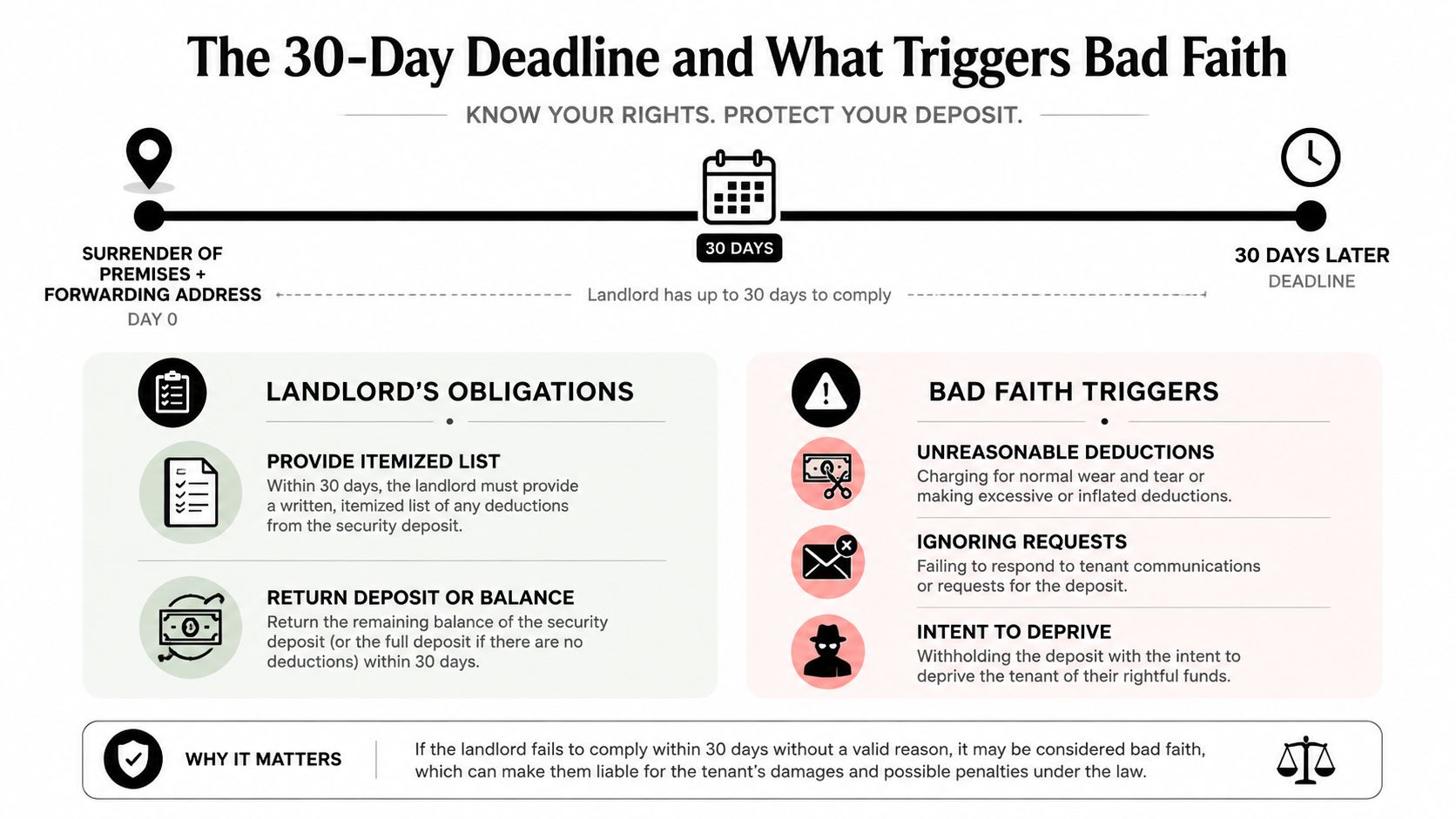
Missing the deadline can change the entire dispute. Texas law presumes bad faith if the landlord fails to return the deposit or provide the required accounting on time. That presumption matters because a simple disagreement over cleaning or repairs can become a claim for statutory damages. Section 92 also requires an itemized list when the landlord uses part of the deposit for repairs, so long as the tenant has paid all rent and there is no rent dispute.
The narrow exception landlords rely on
There is one limited exception. If the tenant owes rent at surrender and there is no dispute about the amount owed, the landlord does not have to provide an itemized list in that narrow situation. That exception is narrow for a reason. A landlord who uses it as a shortcut instead of documenting the actual condition of the unit risks turning a routine deposit accounting into a bad faith argument.
Security Deposit Rules in Texas gives a practical overview of the 30-day return rule and the basic duties Chapter 92 places on both sides.
How the deadline works in real life
The sequence is simple, but the details matter.
- The tenant moves out and gives a forwarding address.
- The landlord reviews the unit and calculates lawful deductions.
- Within 30 days, the landlord returns what is left or sends the itemized balance statement.
If one of those steps is handled carelessly, the landlord creates avoidable risk. Tenants should keep proof that the forwarding address was delivered and that the premises were surrendered, because those facts often decide whether the 30-day clock started at all. Landlords should keep move-out photos, invoices, and notes that connect each charge to a specific condition, because an itemization without support can be too thin to hold up when challenged.
A useful way to test the paperwork is to ask whether a stranger could read it and understand the charge without guessing. If the answer is no, the list may be legally weak even if the amount seems small. That is the documentation gap that often triggers statutory penalties.
Practical rule: if the landlord says the deadline never started, the tenant should be ready to show when they moved out and when the address was delivered.
Allowable Deductions Versus Normal Wear and Tear
Texas law limits deductions to damages and charges the tenant is legally liable for under the lease or for breach of lease. It also bars deductions for normal wear and tear. That line sounds simple, but it's where most deposit disputes get messy. Texas normal wear and tear definition
The statute's definition matters because ordinary use is not the same as damage. For commercial premises, normal wear and tear includes deterioration from intended use, including breakage or malfunction due to age or deteriorated condition, but not deterioration caused by negligence, carelessness, accident, or abuse by the tenant or guests. In plain English, a landlord can charge for harm, not for the expected aging of the property.
What landlords can usually charge for
A broken window, a large stain, missing fixtures, or a wall hole bigger than routine scuff marks usually falls on the deductible side if the tenant caused it. Unauthorized paint colors can also become a valid charge when restoring the unit is necessary. The key question is always whether the condition goes beyond ordinary use.
What usually counts as wear and tear
Faded paint, worn carpet in a high-traffic area, and minor scuffs are the kinds of issues that usually reflect time and normal living. Those are not the same thing as abuse. A landlord who tries to charge for those items often ends up defending a deduction that doesn't fit the statute.
The repair-duty context matters too. If the issue involves a condition affecting health or safety, Texas repair law may come into play under Section 92.052, which is why deposit charges and repair obligations sometimes overlap. A tenant and landlord can be arguing about the same drywall patch from two different legal angles.
Common Deposit Deduction Scenarios
| Condition Found | Allowable Deduction? | Reasoning |
|---|---|---|
| Large hole in bedroom wall | Yes | Damage beyond normal use |
| Faded interior paint | No | Normal aging and wear |
| Worn carpet in hallway | No | Expected deterioration from use |
| Broken blind caused by tenant | Yes | Tenant-caused damage |
| Minor wall scuffs | No | Typical move-out wear |
| Unauthorized paint color requiring repainting | Usually yes | Restoring after lease breach |
Texas landlord-tenant disputes get easier when both sides use the same question, was this ordinary wear, or was it tenant-caused damage? That's the dividing line that keeps deductions lawful and defensible.
What Makes an Itemized List Legally Sufficient
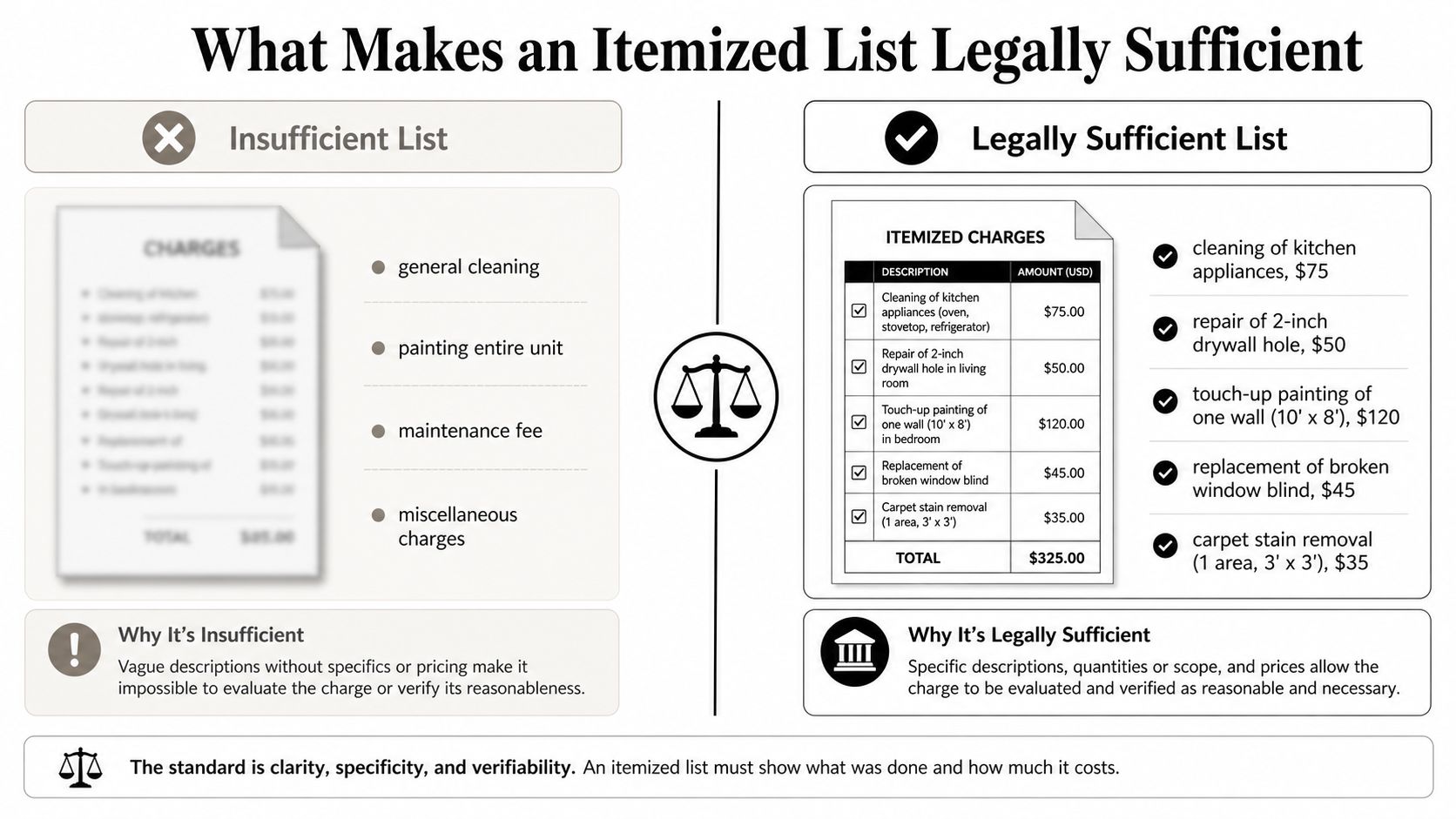
Texas requires more than a simple list. The itemization has to tell the tenant what was charged, why the charge was made, and how much was taken for each line item. A note that says “cleaning, $200” or “repairs, $350” often falls short because it does not explain the specific work tied to the deduction. The vaguer the list, the easier it is for a tenant to argue that the landlord did not document the charge well enough.
That documentation gap is where disputes turn into statutory exposure. The secondary-source penalty summary tied to residential deposit disputes says missing itemization can create exposure to $100 plus 3 times the wrongfully withheld amount plus attorney's fees. In practice, that means a thin or sloppy itemization can cost far more than the original deduction.
What a stronger itemization looks like
A safer itemization names the actual task, not a broad category. It may describe cleaning of kitchen appliances, repair of a specific drywall hole, replacement of a damaged blind, or repainting tied to a tenant-caused condition. Each line should connect the deduction to a real repair or service, so the tenant can see what was done and why it was charged.
Receipts help, but a receipt by itself does not explain the deduction. The landlord still needs a plain explanation of what the receipt covers and how it relates to the unit's condition. If the landlord performed the work personally, the list should still identify the service performed and the amount claimed, because the tenant needs enough detail to review the charge without guessing.
What fails fast
A list that only says “labor” or “general maintenance” is usually too thin. The same problem comes up when the landlord lists totals without breaking out the individual charges. Courts and tenants need enough detail to tie each deduction to a specific condition in the unit.
For context on how deposit disputes fit into the larger rental relationship, an overview of Texas landlord-tenant law and how Chapters 91–94 apply to deposit disputes helps place Chapters 91-94 and Chapter 24 in the broader framework. That matters because a deposit issue is often part of a larger lease conflict, and the itemization has to stand on its own even when the rest of the dispute is messy.
If the tenant cannot tell what was done, the itemization probably is not doing its legal job.
How to Contest Improper Deductions
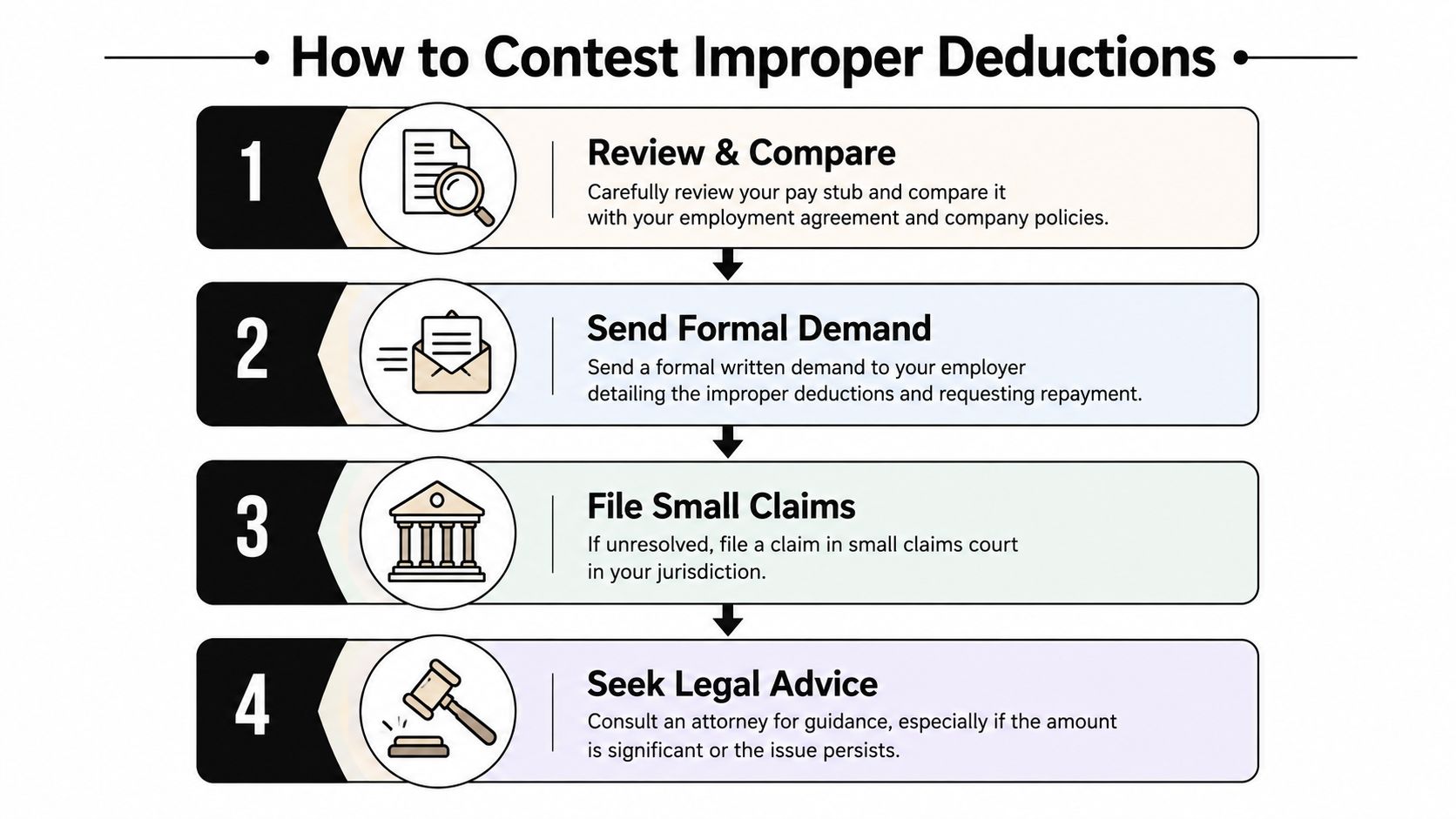
When a deduction looks wrong, don't start with a fight. Start with the file. Pull together your move-in photos, move-out photos, lease, emails, text messages, and any inspection notes so you can compare what the unit looked like before and after. The stronger your paper trail, the easier it is to separate actual damage from ordinary wear.
Step 1 Review the deduction list carefully
Read each charge and ask whether it matches a real condition in the unit. A blanket “cleaning” charge may be worth challenging if the apartment was left in ordinary condition. A repair charge with no description deserves a second look too.
Step 2 Send a formal demand
A calm written demand often resolves a problem before it grows. State the charges you dispute, ask for the supporting records, and cite the Texas Property Code sections that require proper itemization and timely return. If you want a template, this guide on how to write a demand letter to a landlord in Texas gives helpful structure for a formal request.
Step 3 Use the right evidence
Keep your proof organized. Photos with dates, witness statements, and repair estimates all help show whether the landlord's charges are reasonable. If the landlord is claiming damage, evidence that the unit was already worn or that the issue was minor can be especially persuasive.
Step 4 Decide whether court is necessary
If the landlord won't resolve the issue, justice court may be the next step for smaller disputes. The law library summary notes that tenants can pursue claims in justice court when the amount is within the court's limits. That's where a Texas landlord tenant lawyer or tenant rights attorney can help you decide whether the claim is strong enough to file and how to present it.
The YouTube video in this section can also help visually organize the contest process if you're trying to understand the sequence before you write your demand.
The best disputes are the ones that get settled with paperwork, not emotions.
Statutory Penalties and Financial Exposure
Texas treats bad-faith withholding seriously because weak documentation can turn a small deposit dispute into a costly one. Under Texas Property Code Section 92.109, the penalty exposure is $100 plus 3 times the wrongfully withheld amount plus attorney's fees. That makes careful documentation part of the job from the first inspection, not something to sort out after the dispute starts.
The practical risk is easy to miss until you put numbers to it. If a landlord keeps money for a charge that does not hold up, the cost of defending that decision can exceed the amount originally withheld. Even a single disputed line item can move a routine move-out issue into a broader statutory claim if the itemization is thin or unsupported.
A lawyer would usually tell a client to treat the paper trail like a repair invoice. If the invoice does not show what was done, why it was needed, and how the amount was calculated, the landlord has trouble proving the deduction later. Texas itemization works the same way. A list that names the charge, ties it to the unit, and can be backed up with records is much easier to defend than a vague summary with no detail.
Why good-faith compliance still matters
A landlord who returns the deposit on time, gives a specific list, and keeps repair records is in a much better position even if the tenant still disagrees. Good-faith compliance does not force the tenant to accept the result, but it does help show the landlord followed the rules. In a close case, that paper trail can be the difference between a defensible deduction and one that looks careless or retaliatory.
Tenants should read the statute the same way. A strong claim is usually not “my deposit feels too small.” It is a claim that the landlord missed the deadline, failed to itemize properly, or charged for items that are ordinary wear and tear. Those are the kinds of defects that matter because they show a legal problem in the way the deduction was handled.
If you are deciding whether a demand letter will get attention, use a clear and specific format, like the one in this guide on how to write a demand letter to a landlord in Texas. The goal is simple, make the other side see the documentation gap before the dispute gets more expensive.
A simple financial reality check
If the landlord is unsure whether a charge belongs on the list, it is usually cheaper to review the records than to defend a lawsuit later. If the tenant is unsure whether to pursue the dispute, it helps to check the paper trail before assuming the deduction is valid. The statute rewards process, not guesswork.
Practical Checklists and Sample Letters
A good move-out file starts before you leave the property. Take photos of every room, note existing damage, save your lease, and give the landlord your forwarding address in writing. Keep one folder for move-in evidence and one for move-out evidence so you can compare them quickly if there's a dispute.
For landlords, the checklist is just as practical. Walk the unit, photograph the condition, match each deduction to a specific repair or cleaning task, and keep invoices or clear notes showing how the number was reached. If the itemization is built from the beginning, it's much easier to defend later.
A simple tenant checklist
- Photograph every room: Take wide shots and close-ups before you hand over the keys.
- Write down known issues: Note scratches, stains, chips, or anything already present.
- Send the forwarding address in writing: Keep proof that the landlord received it.
- Save all move-out messages: Texts and emails can show what was said about the deposit.
A practical landlord response template
A clear response should identify the property, the date of surrender, each deduction, the reason for the deduction, and the remaining balance. If the landlord needs a structure for that kind of letter, the article on how to write a demand letter to a landlord in Texas is useful for understanding formal letter format from the tenant side too.
If the dispute turns on repairs, unpaid charges, or a lease violation, The Law Office of Bryan Fagan, PLLC can help evaluate whether the itemization complies with the Texas Property Code and whether the next step should be negotiation, a demand letter, or court. When you're dealing with a deposit fight, the right advice early can save time and keep the issue from escalating.
If you need help with a security deposit dispute, lease issue, or rental conflict, The Law Office of Bryan Fagan, PLLC can review your paperwork, explain your options under Texas law, and help you decide on the next step. Visit The Law Office of Bryan Fagan, PLLC to schedule a free consultation and get guidance that fits your situation.