Skip to content
In Texas, the landlord or property owner is legally responsible for paying property taxes on a rental home, and the average property tax rate is around 1.63%. Even so, many landlords build that cost into rent, which is why the tax bill can feel like it lands on the tenant too.
That's where confusion starts. A tenant sees a rent increase, a landlord sees a rising county valuation, and both sides assume the other party should be paying the tax bill. Under Texas law, those are two different questions, and mixing them up leads to avoidable disputes.
A common scenario looks like this. The lease renews, the rent goes up, and the tenant hears that property taxes changed. The tenant wants to know whether the increase is legal. The landlord wants to know whether they can pass the cost through. The answer depends on the legal duty to pay, the lease language, and the local tax system that drives the bill in the first place.
For a plain-English overview of landlord duties in Texas, you can also review landlord responsibilities in Texas. That context matters because Texas property tax responsibility is shaped by local rules, not just by what a lease says on paper.
Understanding Who Is Legally Responsible for Texas Rental Property Taxes
A tenant opens a rent increase notice and then sees a county tax statement mentioned in the lease discussion. A landlord gets the same tax pressure from a different angle, through the appraisal and the local bill. Under Texas law, the legal duty to pay the property tax bill belongs to the landlord or property owner, because Texas uses a local property tax system and the bill is tied to the owner, not the renter.
That difference matters. A tenant may feel the cost through higher rent, but that is an economic effect, not a direct tax obligation. The county sends the bill to the owner because the owner is the assessed party. If you are a tenant, do not assume a tax increase automatically means you owe the taxing authority anything directly. Read the lease first and see whether it tries to shift costs into rent or a separate charge.
A simple way to think about the payment chain
The owner receives the tax bill. The owner pays the taxing authority. The tenant pays rent under the lease. Those are separate steps, even when the landlord uses the rent to cover expected tax costs.
For landlords, that separation is useful. It gives you a cleaner way to explain a rent change when taxes rise, and it helps you avoid telling a tenant that they personally owe the county. It also makes lease renewals, budgeting, and appraisal disputes easier to discuss because you can separate the legal tax duty from the business decision to recover expenses through rent.
Practical rule: If the tax bill is issued to the owner, the owner is the one responsible for paying it, even if the lease economics shift some of that burden into rent.
For readers comparing lease structures, Texas Landlord-Tenant Law: An Overview is a useful related reference because it ties Texas Property Code Chapters 91-94 and Chapter 24 to the rental relationship. That legal backdrop helps explain why tax responsibility, rent collection, and eviction rights all sit in different parts of the landlord-tenant framework. If you want a plain-English review of those duties, landlord responsibilities in Texas is a helpful place to start.
The bottom line is simple. Texas rental property tax responsibility starts with the owner, not the tenant. Once you understand that, the rest of the conversation becomes easier, because you can separate who must pay from who may ultimately feel the cost.
How Texas Property Taxes Work for Rental Homes

A Texas rental owner usually sees the tax bill long before a tenant does. The county appraisal district assigns the value, local taxing units apply their rates, and the owner receives the bill for payment. Texas uses a local revenue system, so school districts, cities, counties, and other local units all play a part in what shows up on that bill. Those local taxes help fund schools, streets, roads, police, and fire protection. Texas Comptroller property tax overview explains that structure in plain terms.
That local setup is why property taxes feel different from one rental to another. Two homes can sit in the same state and still face very different bills because appraisal results and local rates vary from place to place. For broader guidance on managing these costs, property tax tips from Global offer additional context for rental owners.
Why rentals get taxed differently from homesteads
The key difference is the homestead exemption. A primary residence may qualify for homestead relief, but a rental home generally does not. Without that owner-occupied protection, the rental is usually taxed on its full appraised value, and the familiar 10% annual appraisal cap tied to homestead property does not apply to ordinary rental homes (Texas BMG on rental property taxes).
For landlords, that changes how you budget. You are not just asking what the property cost to buy. You are also asking how the appraisal may change, how the local rate will affect the bill, and how those costs fit into your annual carrying expense. A rental in one county can create far more tax pressure than a similar property somewhere else because the valuation is local, not statewide.
Rental property taxes in Texas turn on local valuation, local tax rates, and whether the property qualifies for owner-occupied relief.
The rate itself explains some of that pressure. TurboTenant reports that the average property tax rate in Texas is around 1.63%. On a $300,000 rental property, that average rate could mean roughly $4,890 in annual property tax before local variation, which is why many landlords watch appraisal notices and protest deadlines closely.
This local structure also explains why Texas property taxes are often treated as a property-cost issue first. Rental owners have to plan for the tax bill up front, even before they think about rent collection or federal reporting. If you are setting rent or reviewing a renewal, this is the tax framework you are working within.
Legal Responsibility Versus Economic Reality for Landlords and Tenants
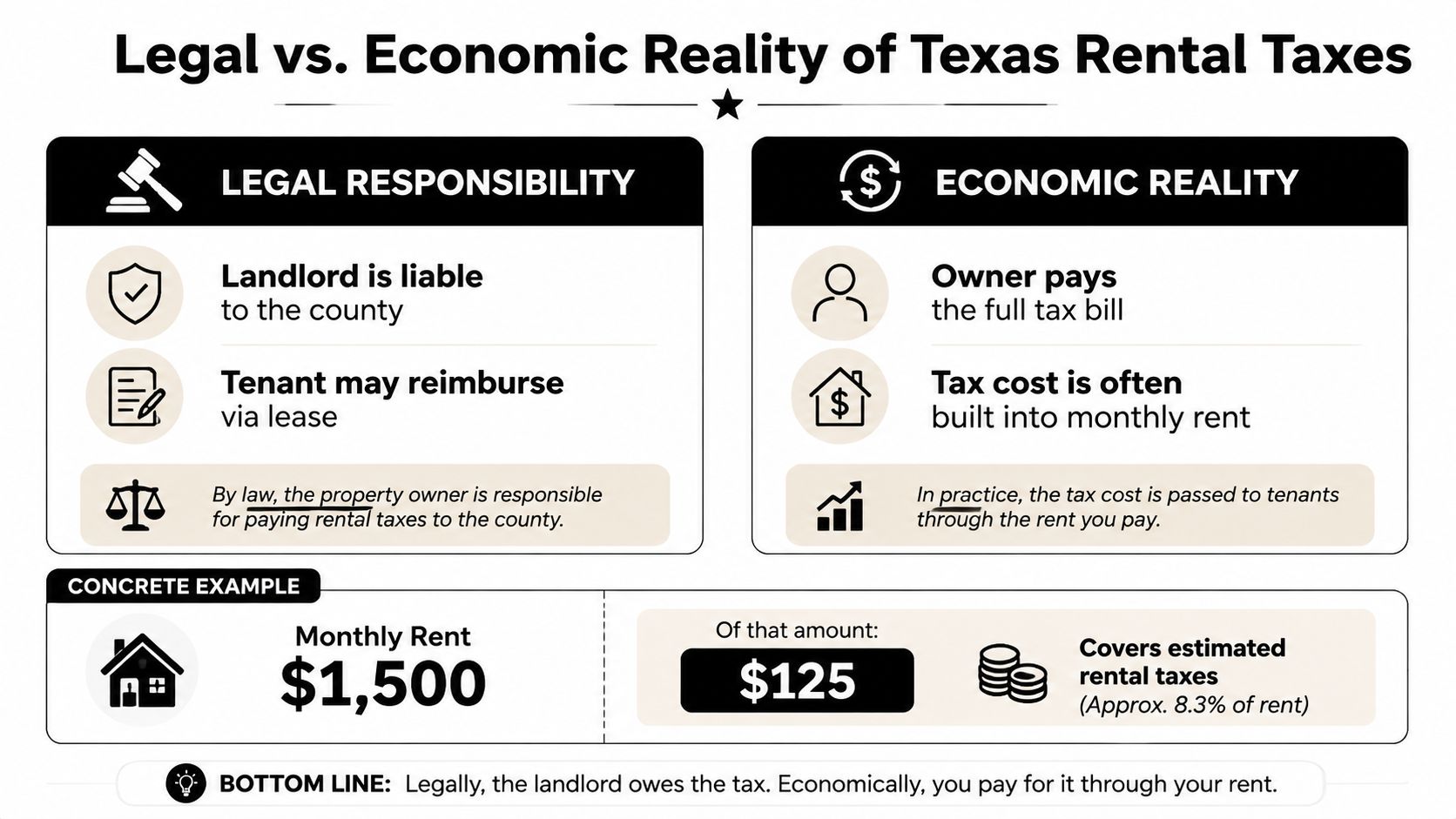
A tenant may write the monthly rent check, yet the county still looks to the owner for property taxes. That split can feel confusing, especially when a landlord raises rent after a tax increase and the tenant assumes the county has shifted the bill. Under Texas law, the legal duty to pay property taxes stays with the owner, while the practical cost can still show up in the rent the tenant pays.
Rent and tax are connected, but not identical
A lease can make that difference easy to miss. If the rent is $2,000 per month, the tenant is paying rent, not sending a tax payment to the county. The landlord separately pays the property tax bill, while also deciding how much of that cost is reflected in the rent amount or a renewal offer. That is the basic divide between legal responsibility and business pricing.
This matters in everyday disputes. A tenant can object to a rent increase, ask for a better renewal term, or decide whether the lease still fits the household budget. None of those choices turns the tenant into the taxpayer of record. The landlord can explain that taxes increased, but that explanation does not move the county obligation away from the owner.
Side by side, the difference looks like this
| Legal responsibility | Economic reality |
|---|---|
| Landlord is liable to the county | Owner pays the full tax bill |
| Tenant may reimburse only if the lease says so | Tax cost may be built into monthly rent |
Renewal season is where the tension usually shows up. A landlord sees a higher appraisal and expects a larger tax bill, then adjusts rent with that in mind. A tenant sees the new rent number and may feel like the landlord is passing along a county obligation. Both reactions make sense, but only the first question is about legal responsibility.
Practical rule: If the lease does not make the tenant directly responsible for taxes, the landlord still owes the county. Rent can change, but the tax bill does not move to the tenant by default.
A helpful way to sort this out is to separate the county's claim from the lease payment. The county can pursue the owner for taxes, while the lease can still reflect those taxes in the rent a tenant pays. That distinction gives both sides a clearer place to start when they review a renewal, question an increase, or decide whether the lease language is fair.
Common Lease Clauses That Shift Property Tax Costs
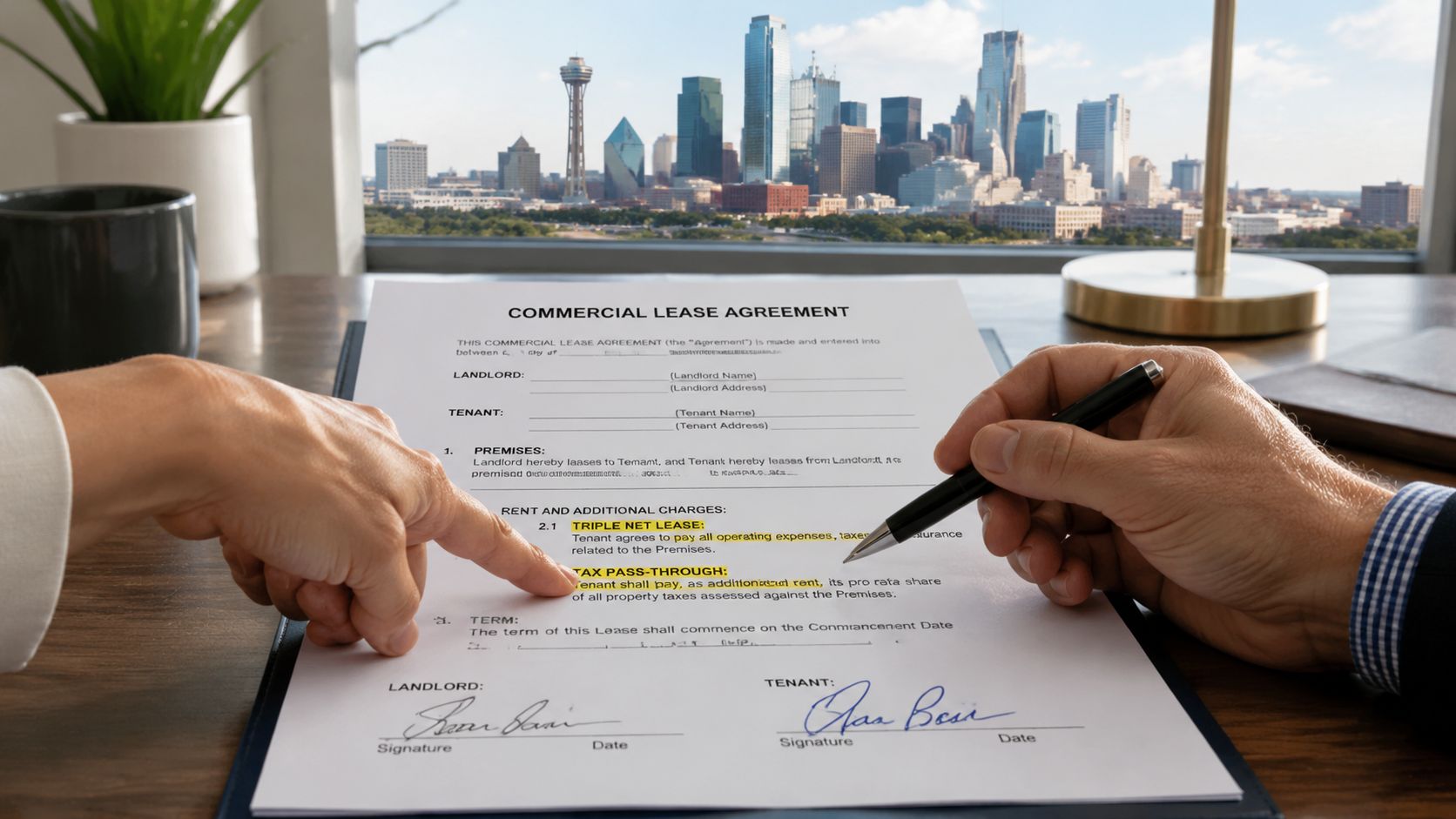
Some leases are crystal clear. Others bury tax costs in phrases like additional rent, tax pass-through, or net lease language. That's where tenants and landlords start talking past each other, because the legal duty to the county stays with the owner, but the lease can allocate some of the economic burden between the parties.
What tax pass-through language really means
In a commercial lease, and sometimes in more complex residential arrangements, you may see language that shifts certain operating costs to the tenant. A triple net or NNN structure usually means the tenant covers more than just base rent, often including taxes, insurance, and maintenance. In plain English, that means the landlord still receives the county bill, but the lease tries to make the tenant reimburse the cost indirectly.
That kind of clause should be read carefully. If the lease says taxes are part of “additional rent,” the wording matters a great deal. The stronger the clause, the easier it is for the landlord to enforce. The vaguer the clause, the more room there is for disagreement.
Lease language that tends to reduce fights
- Direct tax allocation: The lease clearly says who pays property taxes and how reimbursement works.
- Defined reimbursement method: The lease explains whether the tenant pays a fixed amount, a proportionate share, or a pass-through tied to actual tax bills.
- Written notice requirement: The lease requires the landlord to give documentation before collecting extra tax-related charges.
- No hidden labels: Charges are labeled plainly instead of being folded into an undefined “other costs” bucket.
Texas Property Code Chapters 91-94 and Chapter 24 shape the overall rental relationship, so lease language should fit within that framework rather than trying to create surprise obligations. If a clause is unclear, that ambiguity can become the center of a dispute over payment, renewal, or even nonpayment allegations.
A lease should tell you who owes what, when payment is due, and what proof supports the charge. If it doesn't, expect conflict later.
Landlords who want to avoid disputes usually do better with clear disclosure than with dense boilerplate. Tenants who see broad pass-through language should ask for a plain-English explanation before signing. When tax responsibility is spelled out, both sides know whether they're discussing legal duty, economic burden, or both.
What Happens When Property Taxes Go Unpaid
When property taxes go unpaid, the problem doesn't stay quiet for long. The taxing authority can place a lien on the property, and that creates real pressure for the owner because the debt is tied to the property itself. Tenants usually aren't personally responsible for that delinquency, but they can still feel the fallout if the owner falls behind.
Why tenants should care even without direct liability
An unpaid tax bill can lead to sale pressure, refinancing trouble, or foreclosure risk for the owner. That can shake up the tenant's housing situation even if the tenant never owed the tax in the first place. If you're renting, the concern is not whether the county can collect from you, it's whether the property's financial problems start affecting your lease, repairs, or long-term stability.
If you see a tax notice, don't ignore it. Ask whether the bill has been paid, and keep your communications in writing. A landlord who is already behind on property taxes should treat the problem as urgent, because tax issues can move faster than ordinary rent disputes.
The related guide on how to release a lien on property can help owners understand why action matters when a lien appears. Even when the issue starts with taxes, the legal and practical consequences often spread into leasing, sale negotiations, and occupancy concerns.
If a tax notice shows up, verify the account status first. Don't wait until a lien or enforcement step makes the problem harder to fix.
Landlords should also check whether the missed payment is tied to an escrow mistake, an appraisal surprise, or a budget gap. Tenants should focus on whether their rent is current and whether the owner's delinquency could affect habitability or the continuity of the lease. Quick verification protects both sides.
The key point is simple. Tax delinquency belongs to the owner, but its consequences can reach everyone in the building. That's why property tax notices deserve immediate attention, not casual filing.
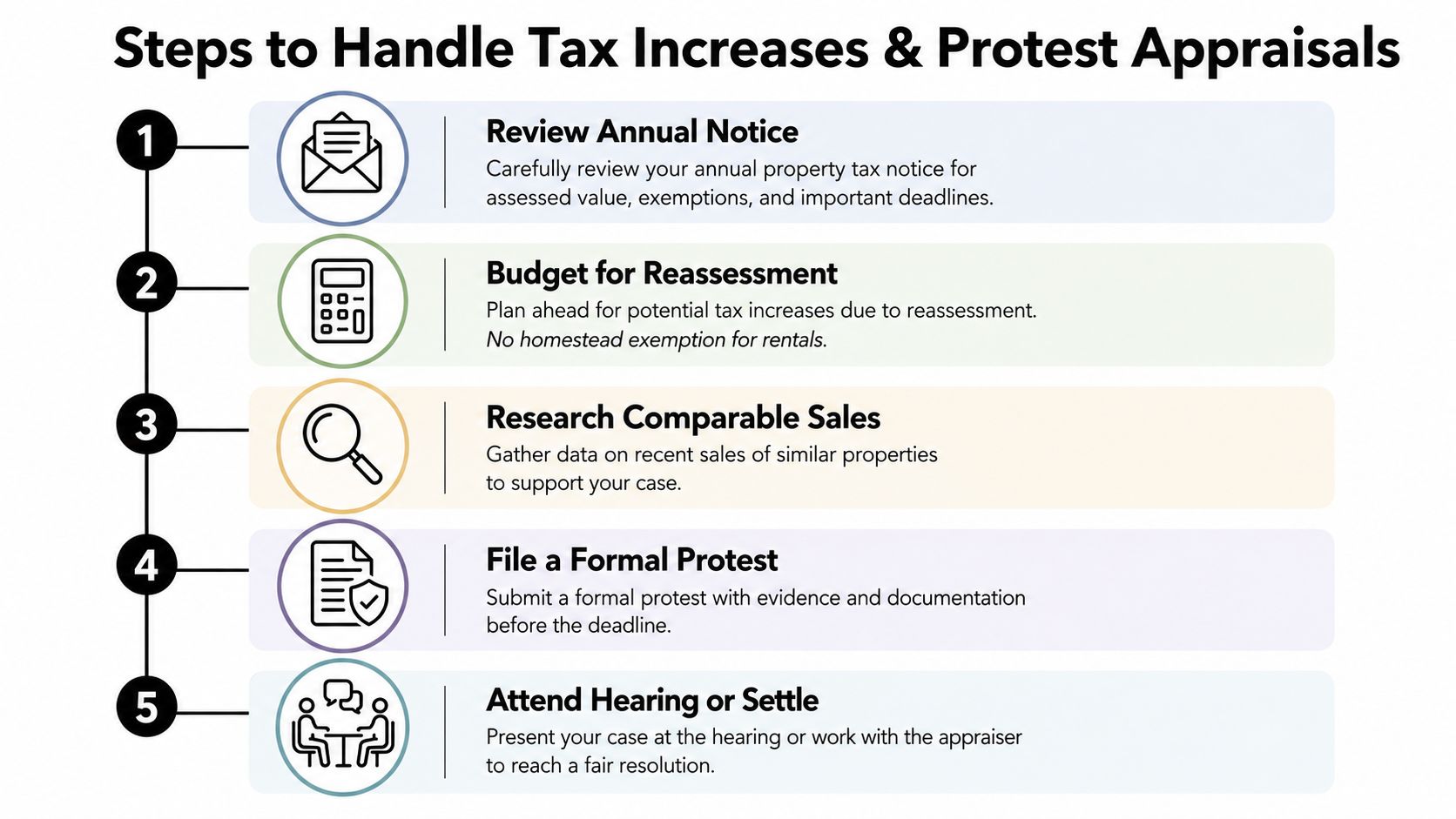
Practical Steps to Handle Tax Increases and Protest Appraisals
Texas has no state income tax, so rental income from Texas property isn't taxed by the state, but landlords still owe federal income tax on net rental earnings (Steadily on Texas rental property tax laws). That makes tax planning a split exercise. You're dealing with local property taxes on one side and federal reporting on the other, usually on Schedule E when rental income is reported.
Landlord steps for a tax increase
- Review the annual notice. Check the appraised value, the taxing units, and the deadline to protest.
- Budget for reassessment. Rentals don't get homestead protection, so plan for the full assessed value unless the property qualifies for a different treatment.
- Gather comparison evidence. Pull neighborhood sales, condition notes, photos, and repair history.
- File a formal protest. Use the appraisal district process and keep copies of every document.
- Attend the hearing or settle. Be ready to explain why the value is too high, or accept a negotiated reduction if the evidence supports it.
For a Texas-focused walkthrough of that process, how to contest property taxes in Texas is a helpful resource.
Tenant steps when rent rises after a tax increase
- Read the renewal notice closely. Look for any clause that ties rent changes to taxes or other costs.
- Ask for a plain explanation. Request the landlord's reason in writing if the increase references taxes.
- Compare the lease language. See whether the landlord has reserved the right to pass through tax costs.
- Keep records of communication. Save emails, notices, and rent statements.
- Decide whether to negotiate. Sometimes a direct conversation solves the issue faster than a formal dispute.
If the tax issue is tied to back payments or enforcement pressure, back tax relief Texas may be worth reviewing as a general resource for owners who need a broader tax solution. The point isn't to guess at a fix. It's to act early before a tax problem turns into a lease problem.
When to Get Legal Help and How The Law Office of Bryan Fagan Can Support You
When a lease has ambiguous tax language, a rent increase follows an appraisal fight, or a tax lien starts threatening the property, it's time to talk with a Texas landlord tenant lawyer. That's especially true if a tenant is worried about retaliation, a wrongful eviction threat, or a landlord trying to reframe tax costs as a direct tenant obligation. The same is true for owners who need help interpreting pass-through clauses, delinquency notices, or protest strategy.
The practical value of legal help is clarity. A lawyer can read the lease, match it against the Texas Property Code, and tell you whether the dispute is really about taxes, rent, possession, or notice. If you're a landlord, that can prevent a bad demand letter or an unenforceable charge. If you're a tenant, it can protect your tenant rights before a dispute grows into an eviction case.
The Law Office of Bryan Fagan, PLLC assists clients in Houston, Dallas-Fort Worth, Austin, San Antonio, and surrounding counties with rental disputes, lease review, and eviction issues. If you want a broader Texas landlord-tenant reference, Texas Landlord-Tenant Law: An Overview can help you understand how Chapters 91-94 and Chapter 24 fit into the bigger picture. For direct guidance, When to Consult a Texas Landlord-Tenant Attorney explains how a consultation can help either side evaluate their position.
The right move isn't always to argue harder. It's to get the lease, the notices, and the tax facts in front of someone who knows how Texas rental disputes work.
If your issue involves a tax-heavy renewal, an unclear reimbursement clause, or a property tax dispute that's spilling into a tenancy problem, legal review can save time and reduce risk. You don't have to sort out the whole problem alone.
If you need help with an eviction, lease issue, or rental dispute, The Law Office of Bryan Fagan, PLLC can help you understand your options, review your lease, and respond to tax-related rental problems with a clear legal strategy. Visit The Law Office of Bryan Fagan, PLLC to schedule a free consultation and get practical guidance for your Texas landlord-tenant issue.