Skip to content
Texas does not allow rent control at the state or local level, and the only exception is a narrow disaster-emergency pathway that needs the governor's approval. In ordinary lease renewals, Texas tenants and landlords are dealing with contract terms, not a state-imposed ceiling on rent increases.
That is usually where the stress starts. A tenant opens a renewal notice and sees a sharp jump in rent. A landlord, on the other hand, may be trying to keep pace with the market and wonders whether the law gives any room to limit future increases voluntarily. In Texas, the answer starts with the same basic point, there is no statewide rent cap.
Understanding the Texas Rent Control Law Status
A tenant in Houston gets a renewal notice that raises rent enough to force a hard choice, stay and stretch the budget, or move. A landlord in San Antonio wants to keep a reliable renter but also needs the unit to remain competitive. Both people ask the same legal question first, does Texas rent control law status protect the tenant from a big increase?
The short answer is no. The Texas State Law Library says there is not a statewide law that limits how much rent can rise when a lease is renewed, and Texas does not have a statewide rent cap. For most market-rate rentals, the lease and ordinary contract rules control the relationship, not a government ceiling on renewal pricing. That means rent changes usually turn on the lease term, the renewal timing, and whether any specific clause limits how much the landlord can change the rent.
Practical rule: If the lease term has ended, the landlord and tenant are usually negotiating a new deal, not extending the old one on the same pricing terms.
This is why tenants sometimes feel blindsided by a renewal offer and landlords sometimes feel boxed in by a misunderstanding of the law. In reality, Texas gives both sides room to negotiate, but it does not impose rent stabilization on the private market. For a broader overview of how Texas rental rules work together, you can also review Texas Landlord-Tenant Law: An Overview, which helps place rent issues inside the larger lease and eviction framework.
What the practical answer means
If your lease says rent can change at renewal, the landlord can usually propose a higher number. If your lease does not guarantee a fixed renewal rate, you generally don't have a rent-control defense just because the increase feels steep. Your negotiating power is usually practical, not statutory, a move-out plan, or a request for a different lease term.
A landlord who wants predictability can still offer longer leases, loyalty pricing, or a modest increase to keep a good tenant. A tenant who sees an unaffordable increase can ask for a lower renewal, but Texas law usually won't force the landlord to accept it.
How Texas Preempts Local Rent Control Efforts
A tenant in Austin may see a rent notice and wonder why the city cannot step in. A landlord in Houston may ask the same thing from the other side, especially when local officials talk about affordability. Texas answers that question through state preemption, which means the state law controls and cities do not get to build their own ordinary rent cap systems on top of it.
Local Government Code § 214.902 treats local rent control as a narrow exception, not a normal city power. The statute opens that door only in a disaster setting, and even then the conditions are tight. The Texas State Law Library explains that a city may adopt local rent control only when a housing emergency follows a declared disaster and the governor approves the ordinance before it can take effect.

That structure matters in practical terms. City councils in places like Houston, Dallas, Austin, and San Antonio cannot vote to cap rents across the city because state law has already occupied that field. A local ordinance that tries to impose a general rent cap outside the disaster-only exception would run into state preemption. For readers trying to place Texas in the broader landlord-tenant picture, this discussion also fits with the question of is Texas a landlord friendly state?, because the answer often depends on whether local governments can add extra rent rules of their own.
What preemption means in everyday terms
Preemption is easier to understand than it sounds. If the state says a city may not do something, local officials cannot make it happen just because the policy sounds fair or popular. In the rent control setting, that means a city ordinance fails if it tries to create a general price cap outside the narrow disaster scenario.
People sometimes describe Texas as lightly regulated on rent. That misses the core issue. Texas uses a statewide preemption regime with a disaster-only escape valve, so the question is not whether cities prefer rent caps, it is whether the Legislature has allowed them at all.
Texas law also has other rent-related rules that can matter when a lease starts getting tense. Late Fees and Rent Rules in Texas explains how the state treats late fees and rent collection, which is a different issue from rent control but still part of the same day-to-day landlord-tenant picture.
The practical result is straightforward. A city council may debate affordability, but it cannot create a routine rent cap the way some other states and cities do. Texas law keeps that authority at the state level, except for the narrow disaster exception.
A broader state-law framework like this is one reason Texas appears in discussions about rent regulation across the country. Later summaries place Texas among the states that prohibit local rent control, and the state's preemption rule is the reason those local efforts do not get off the ground.
What Rent Increases Look Like Under Texas Law
In Texas, rent increases are usually a contract question, not a legal ceiling question. If the lease term has expired or is about to expire, the landlord can propose a new rent amount, and the tenant can accept it or decide not to renew. That market-driven structure is why the legal conversation is less about “How high can the landlord go?” and more about “What does the lease say, and when does it end?”
A tenant may see a small increase, a larger increase, or a very sharp one at renewal. Texas law does not create a statewide percentage limit for those changes. The rent is generally set by the lease agreement and by negotiation between the parties, unless a specific clause says otherwise.
Where the lease matters most
The lease controls timing. During an active fixed-term lease, the landlord generally can't change the rent in the middle of the term unless the lease itself allows it. At renewal, though, the parties are often starting fresh. That is when a landlord can present a new number and a tenant must decide whether the deal still works.
Some leases also include language about renewal pricing, notice, or month-to-month conversion. Those details matter more than broad assumptions about “fairness.” If you have a question about how a landlord may change rent in your specific situation, the legal analysis needs to start with the written lease and the notice language, not with a guess about what sounds reasonable.
Bottom line: In Texas, the real limit on a rent increase is often the lease term, not a state rent cap.
Landlords should also keep the rent-setting process clean and consistent. A rent increase should line up with the lease timeline and should not conflict with any promised notice requirements. Tenants should review the renewal offer carefully, compare it with the lease, and decide whether negotiation or relocation makes more sense.
If you want a plain-English explanation of that issue, the article on How Much Can a Landlord Raise Rent in Texas? is a helpful companion resource.
A simple way to think about it
- During the lease term: the rent usually stays where the contract put it.
- At renewal: the landlord can usually offer a new rent figure.
- After a lease expires: the tenant can accept, negotiate, or move.
- If the lease has a special clause: that clause may limit the change.
The practical reality is that tenants have more bargaining power when they are willing to move, and landlords have more bargaining power when the unit is in demand. Texas law doesn't replace that bargaining process with a rent-control formula.
Real Scenarios Rent Hikes Tenant Rights and Landlord Options
A tenant in Austin receives a notice saying the renewal rent will jump by 35 percent. The tenant feels stuck and asks whether Texas law gives any cap or appeal process. In a market without rent control, the first question is whether the lease has expired and whether any renewal language limits changes, because that usually determines the landlord's legal room to raise the price.
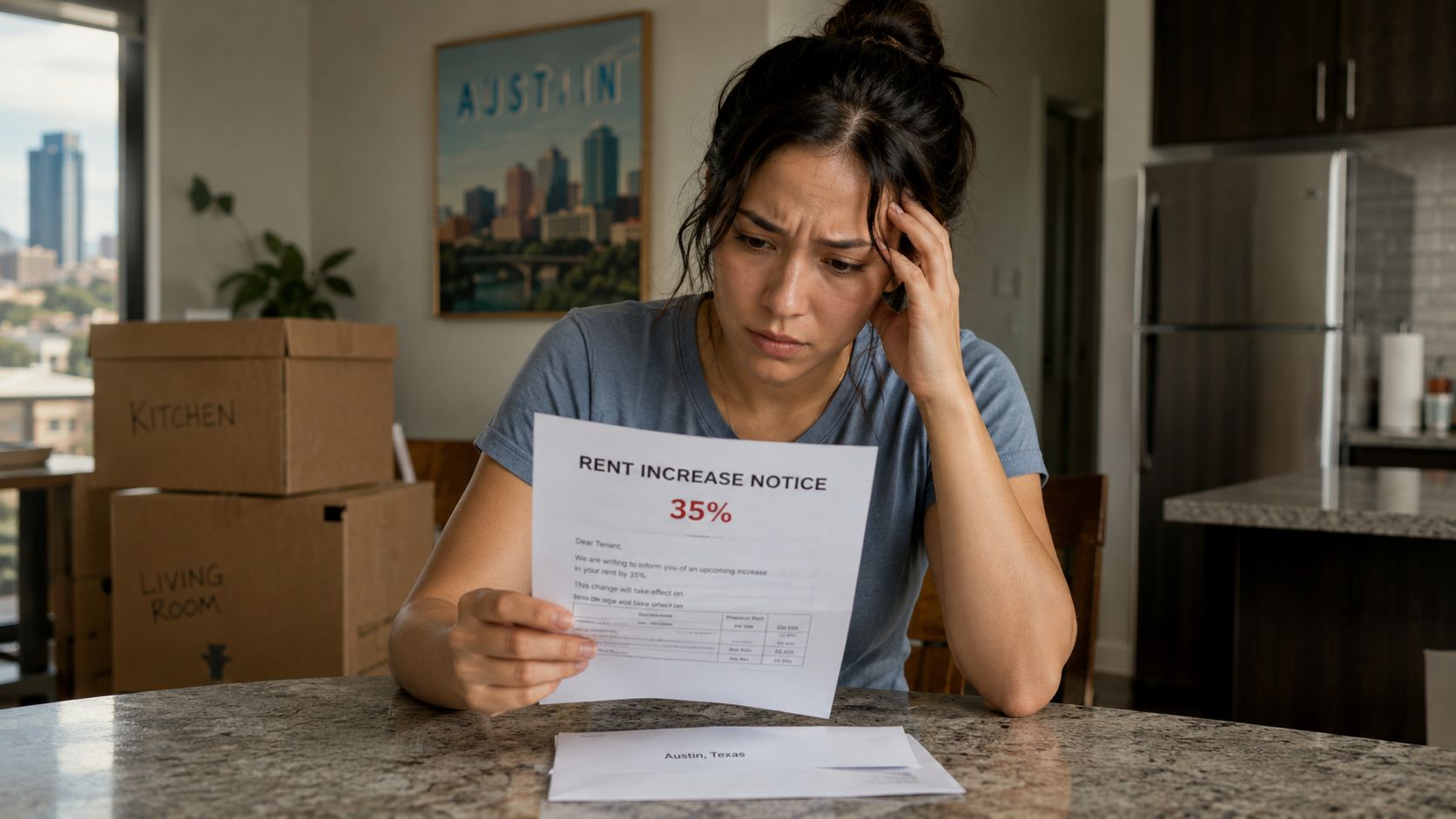
If the lease is ending, the tenant's main options are practical. The tenant can negotiate, ask for a shorter increase, or prepare to move. Texas rent-control law status does not usually give the tenant a right to force the landlord to keep the old rent.
The tenant may also want help organizing the conversation with the property manager. In larger properties, a responsive tenant call answering service can help route tenant questions to the right office, which can make negotiation or notice issues easier to document.
Now look at the landlord side. A Houston landlord wants to raise rent on a long-term tenant but is worried about doing it the wrong way. The legal question is whether the lease is still active. If it is, the landlord must honor the existing terms. If it is ending, the landlord can usually offer a higher renewal rate, as long as the notice and lease language are handled properly.
What each side should do
For tenants, the first step is to read the lease carefully and check the renewal date. For landlords, the first step is to confirm that any increase is tied to the end of the current term and not to retaliation or a broken lease promise. Both sides benefit from putting everything in writing, because memory fades fast once the notice arrives.
A rent hike can also point to a bigger dispute, especially if it appears right after a repair request or complaint. That is where Texas Property Code protections may come into play, even though rent control itself does not.
The Narrow Disaster Exception That Almost Never Applies
Texas law has one narrow path that could allow local rent control, but it is so restricted that it almost never matters in ordinary rental life. Under Local Government Code § 214.902, a city must first find that a housing emergency exists because of a declared disaster, and then the governor must approve the ordinance before rent control can begin. That is not a normal policy tool, it is an emergency-response mechanism.
Texas passed this anti-rent-control framework in 1993, and major Texas cities have not operated rent-stabilization systems like the ones some other markets use. The disaster exception exists on paper, but it is not part of everyday housing practice in Texas.
Normal market system vs disaster exception
| Aspect | Normal Market-Rate System | Disaster Exception Scenario |
|---|---|---|
| Who sets rent | Landlord and tenant through the lease | Local government only after statutory findings |
| Default rule | No statewide rent cap | Possible local control, but only in the narrow disaster setting |
| City authority | Cities cannot impose ordinary rent control | City must first identify a housing emergency caused by a declared disaster |
| State role | State preemption controls | Governor approval is required before the ordinance can take effect |
| Real-world use | Applies across Texas now | Not used by major Texas cities in ordinary conditions |
The biggest point is not just that the exception is narrow. It is that the exception is tied to a disaster-driven emergency finding, which makes it very different from a routine affordability policy. That distinction keeps Texas firmly in the anti-rent-control camp for ordinary leases.
For tenants and landlords, the practical takeaway is simple. Don't assume a city can step in and cap a renewal increase just because the market feels harsh. Unless the disaster exception is triggered, the rental relationship stays governed by the lease and state law, not by a local rent ceiling.
Protecting Your Rights Under Texas Landlord-Tenant Law
Even without rent control, tenants and landlords still have real rights under the Texas Property Code. A rent increase can't be used as a cover for retaliation, and it can't erase the rules that govern notice, lease enforcement, repairs, and security deposit issues. If a landlord raises rent right after a tenant requests repairs or complains to a government agency, that may raise a separate legal problem under Texas retaliation law.
The same is true if a landlord tries to change the deal in the middle of an active lease term, or uses rent pressure to force a tenant out without following the contract. Those disputes often turn less on the size of the increase and more on whether the landlord respected the lease and the tenant's legal rights.
When legal help makes sense
- You got a renewal notice with a sudden jump: A Texas landlord tenant lawyer can review the lease and the timing.
- You requested repairs and then got hit with a higher rent offer: That may require a closer look at retaliation protections in Chapter 92.
- You're a landlord trying to keep a lease enforceable: Clear notice and clean paperwork can prevent problems later.
- You're already in a dispute over the unit: An eviction attorney can help you understand the next legal step before the situation escalates.
For a detailed look at the tenant protections that sit alongside rent issues, review Texas Property Code 92 Tenant Rights. That chapter matters because it covers the landlord-tenant rules that still apply even though Texas does not have rent control.
A calm review of your lease and notice history can save time and money. It can also keep a disagreement from turning into an eviction case or a court fight. If you're unsure whether a rent increase is lawful, or whether your response could create a bigger issue, legal guidance is usually the smartest next step.
If you need help with an eviction, lease issue, or rental dispute, contact The Law Office of Bryan Fagan, PLLC for a free consultation today.
The Law Office of Bryan Fagan, PLLC helps Texans handle rent increases, lease disputes, evictions, and tenant rights issues with clear legal guidance. If you're facing a renewal notice, a retaliation concern, or another rental problem, visit The Law Office of Bryan Fagan, PLLC to schedule a free consultation and get practical help based on Texas law.