Normal wear and tear in Texas is deterioration from the intended use of a dwelling and ordinary aging, and landlords may not deduct it from a security deposit. That line is what separates a lawful charge from a dispute that can turn into a headache for both sides.
Dealing with a move-out bill can feel unfair when you've already handed back the keys and cleaned the place. A tenant wants to know why a carpet line item appears, and a landlord wants to know what the Texas Property Code allows, not just what feels reasonable in the moment.
The Move-Out Surprise Every Texas Renter Should Prepare For
A tenant in Houston turns in the keys, waits for the deposit, and then gets an itemized list that charges for carpet cleaning, repainting, and a scratched door. A similar scene plays out in San Antonio, Austin, and smaller Texas towns every week, and it's usually the same moment when people realize the move-out fight is not really about the deposit amount, it's about whether the charges are tied to damage or to normal wear and tear.
That distinction matters because Texas law treats those two ideas very differently. If a landlord is trying to keep part of the deposit, the landlord has to show that the charge comes from tenant-caused harm, not from ordinary use of the home. If the change is just what happens when people live in a space, the deposit is not supposed to cover it.
Practical rule: If the apartment changed because time passed and the unit was used normally, that's usually wear and tear. If it changed because of an incident, neglect, or abuse, that's where a deduction argument starts.
A lot of renters feel blindsided because they hear “cleaning fee” or “repaint charge” and assume the labels control. They don't. Texas deposit disputes turn on the condition of the unit, the lease terms, and what the landlord can document at move-out.
This is why the issue is worth understanding before you ever sign a lease or hand back keys. If you know how Texas draws the line, you can protect your tenant rights, document the unit the right way, and avoid paying for ordinary aging that the law doesn't let a landlord pass on to you.
What Texas Law Actually Says About Wear and Tear
Texas law defines normal wear and tear as deterioration from the intended use of a dwelling, including breakage or malfunction caused by age or a deteriorated condition, but it excludes deterioration caused by negligence, carelessness, accident, or abuse by the tenant, household members, or guests. In plain English, the law recognizes that homes age when people live in them, and landlords cannot treat every change as damage. The Texas Attorney General's renter guidance also explains that carpet wear from ordinary walking is a classic example of non-chargeable wear, not damage, under Chapter 92 of the Texas Property Code. (Texas landlord-tenant security deposit guidance)
The core rule in Chapter 92
The security-deposit rules sit in Texas Property Code Chapter 92, especially the sections that govern deposit return, deductions, and tenant protections. The landlord has to return the deposit after move-out, provide a written itemized list if money is withheld, and limit deductions to charges the tenant is legally responsible for. A landlord may not keep any portion of the deposit for normal wear and tear.
That sounds simple, but the legal meaning matters. If a wall is dull from years of sunlight or a hallway carpet is worn from foot traffic, that's not the same thing as a hole punched through drywall or a carpet burned by a dropped iron. The statute draws that line on purpose.
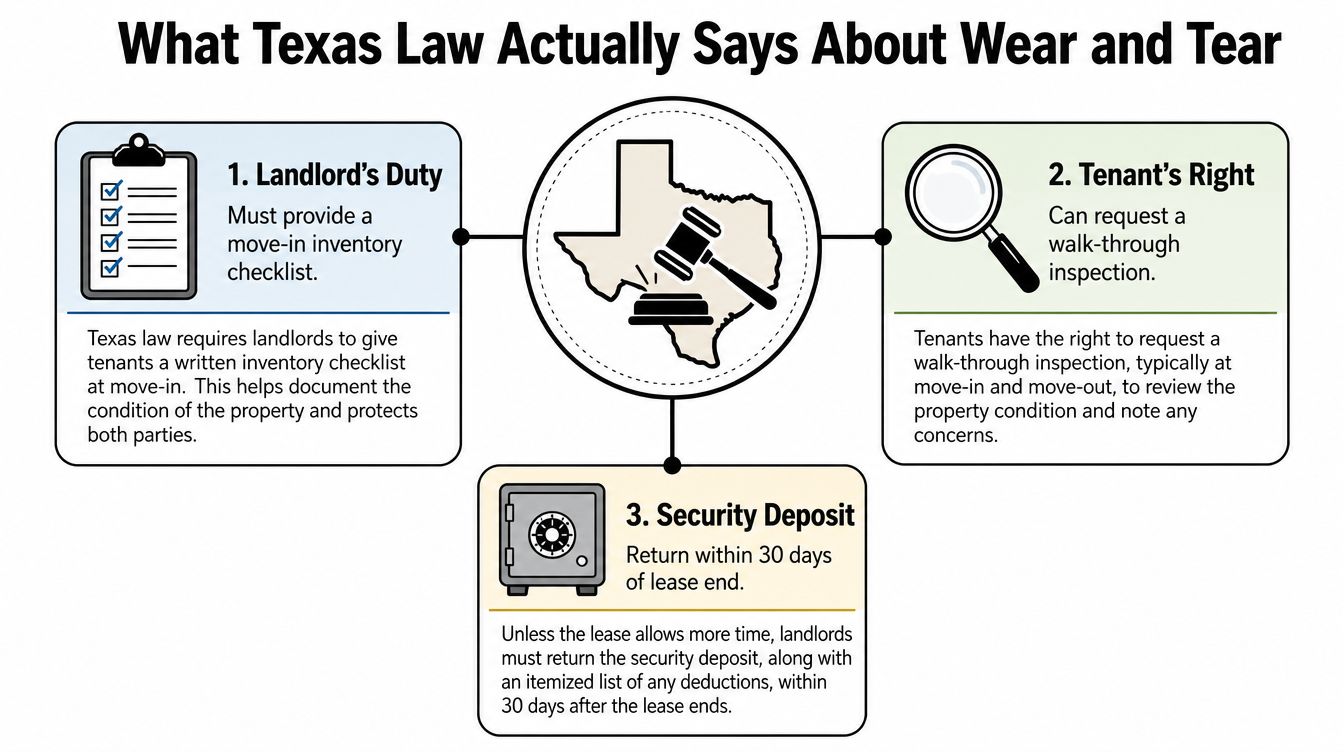
If you want the full text, you can read Chapter 92 on the Texas Legislature's site. You don't need to memorize the statute, though. The core issue is what happened in the unit, what was there at move-in, and what changed before move-out.
For a broader overview of how the rental relationship fits together under Texas law, Texas Landlord-Tenant Law: An Overview gives a useful map of Chapters 91 through 94 and Chapter 24. That context helps when a deposit dispute overlaps with repairs, notices, or an eviction issue.
What tenants and landlords should keep in mind
A few practical points matter every time:
- Wear is expected: Normal aging, fading, and minor breakdowns happen in occupied homes.
- Damage is different: Tenant-caused harm can support deductions if it is documented.
- Condition at move-in matters: The newer and cleaner the unit was when the lease started, the more important the move-in record becomes.
- Proof matters too: A landlord's deduction has to match the actual condition, not just a guess.
That legal floor never changes, even when the lease feels rushed or the move-out is tense. The fight usually starts when one side thinks the other is charging for aging and calling it damage.
The Attorney General's Examples That Draw the Line
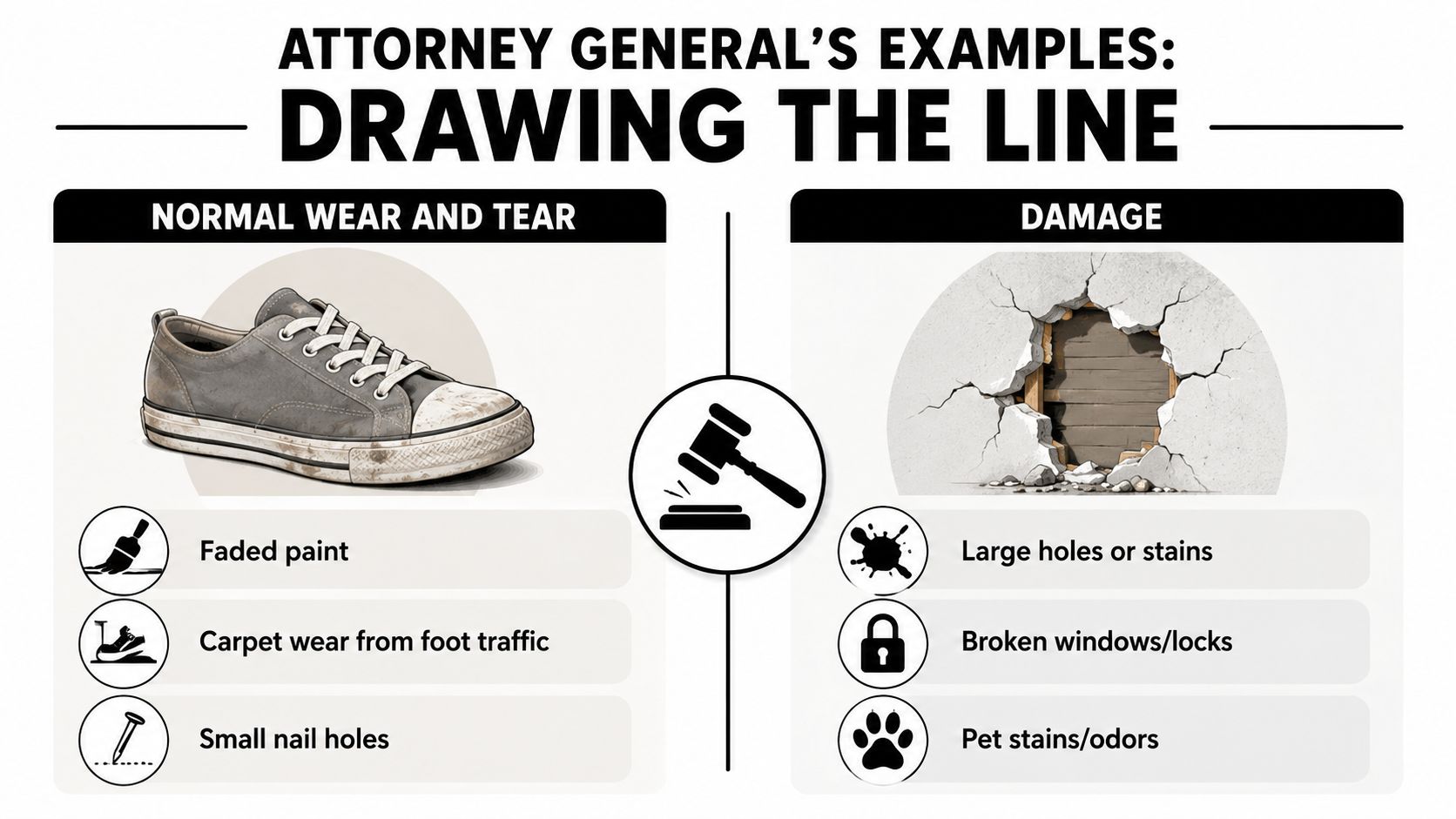
The Texas Attorney General uses a very clear contrast. A carpet that becomes more worn after a year of normal use cannot be charged to the tenant, but mildew caused by a leaking water bed can be charged because it comes from actual damage. That difference is the heart of the texas normal wear and tear definition, and it's why deposit disputes often turn on the cause of the change, not just the appearance of the unit. (Texas Attorney General renters' rights guidance)
A simple way to think about the line
If a condition gets worse because the unit was lived in, age usually points to wear and tear. If it gets worse because of a specific event, a tenant action, or a failure to act, landlords have a much stronger argument that it's damage. That same idea applies to paint, fixtures, appliances, locks, and plumbing parts.
So when a landlord looks at a dull wall, the question is whether the dullness came from time and ordinary use, or from something that happened inside the unit. When a handle loosens or a hinge sags, the issue is whether the part aged out or whether someone broke it. Texas law cares about the reason for the condition, not just the condition itself.
Why the Attorney General's examples matter
The AG's carpet example is useful because carpet almost always shows some life after normal use. Foot traffic, vacuuming, and ordinary occupancy leave marks. But mildew from a leaking water bed points to a specific source of harm, which is why that kind of charge lands differently under the law.
The same logic helps with other common disputes:
- Paint: Fading over time is different from unauthorized paint colors or wall damage.
- Appliances: Aging failure is different from broken parts caused by misuse.
- Locks: Natural wear is different from a damaged lock after a forced entry or careless use.
- Plumbing: Age-related failure is different from damage caused by misuse or a tenant-made leak.
A lot of renters and landlords get stuck because they ask, “Does it look different?” That's the wrong first question. The better question is, “What caused the difference?”
For a deeper practical look at cleanup charges, see this guide on what a landlord can charge for cleaning in Texas. Cleaning and damage often get lumped together, but they're not the same thing in a deposit dispute.
Wear and Tear Versus Tenant Damage in Everyday Scenarios
A Texas justice court judge doesn't care much about labels on a spreadsheet if the photos, lease, and condition reports tell a different story. The issue is whether the condition at move-out is the kind of ordinary change a home goes through, or the kind of harm a tenant caused. That's why side-by-side examples help.
Common items and how they usually compare
| Item | Normal Wear and Tear | Tenant Damage |
|---|---|---|
| Walls | Faded paint after years of use, small nail holes from pictures | Large holes, heavy stains, unauthorized paint colors |
| Floors | Carpet worn in traffic lanes, slight scuffing on hardwood | Burns, deep scratches, broken tile from dropped objects |
| Doors and hardware | Minor scuffs on frames, a loose handle that finally gives out | A cracked door, bent hardware, broken blinds from a pet |
| Windows and locks | Aging seals, parts that stop working after normal service life | Broken windows, damaged locks, forced entry damage |
| Kitchen | Appliance discoloration from age, a refrigerator that quits after years of normal use | Cracked shelves, missing parts, spills that stain cabinets |
| Bathroom | Caulk aging, fixtures wearing down naturally | Mold caused by a leak that was ignored, cracked tile, broken hardware |
A tenant who hung pictures and left tiny nail holes is usually in a different position from a tenant who drilled large anchors into the wall. A landlord can often live with small picture holes, while larger wall damage can justify a charge if it goes beyond ordinary use.
Borderline cases people argue about
Small crayon marks on walls sit in the gray area for many renters. A light mark might come off with normal cleaning or spot-priming, while a larger stain could justify a charge if it required repair work. A sliding door track that wears out after years of use is another classic age-related issue, while a track damaged by force is not.
A refrigerator that no longer cools after years of service usually looks different from a unit broken by rough handling. The same is true for a door handle that loosens over time versus one that is snapped off. These are the kinds of facts that matter when a landlord is deciding whether to keep any deposit money.
If wall cleanup is the only issue, the right approach is often to document it carefully and compare it to what was there at move-in. A practical resource like J.G. Carpet Cleaning's wall cleaning tips can help a tenant understand basic cleanup, but it does not change the legal line between ordinary maintenance and chargeable damage.
A landlord can also learn a lot by comparing the charge to the actual condition at move-in and move-out. The point is not to find a reason to bill, it's to match the deduction to the problem.
How Security Deposit Deductions Actually Work in Texas
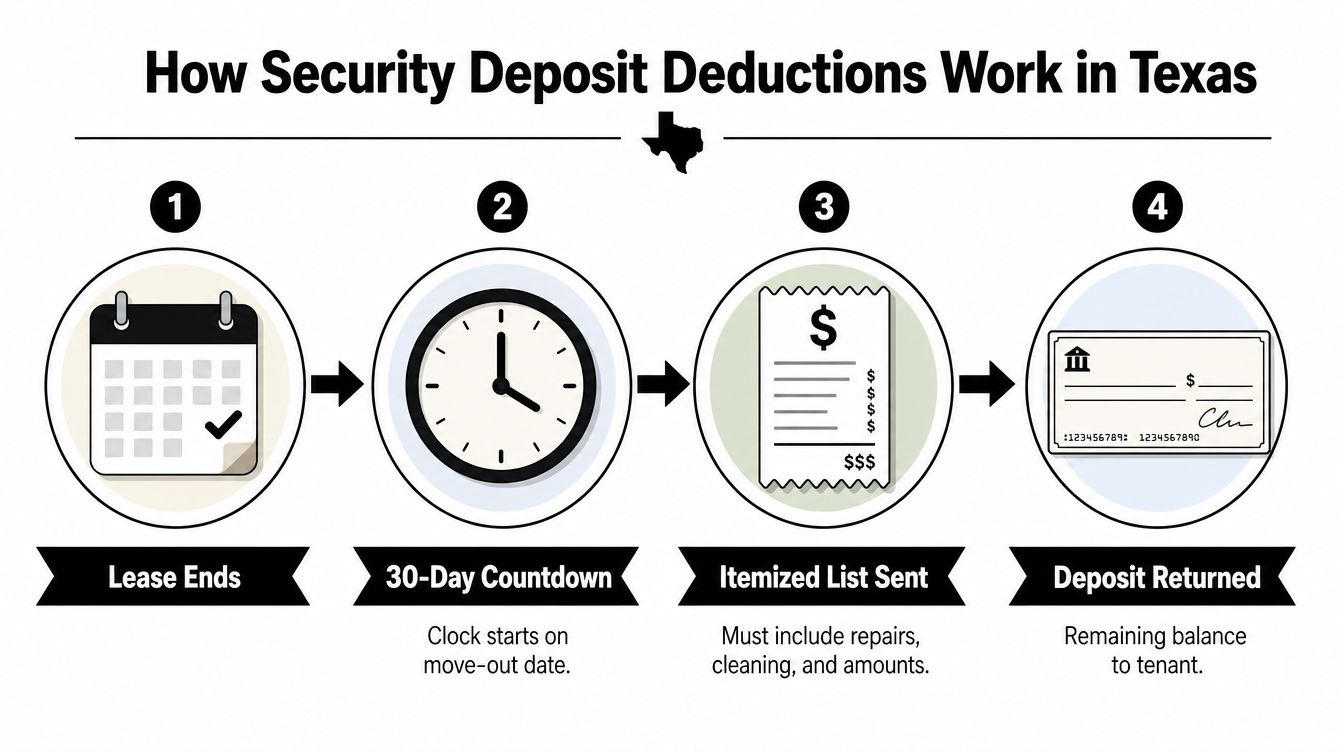
The Texas deposit process is procedural, and that's where a lot of disputes go wrong. Under Chapter 92, the landlord has to return the deposit after the tenant surrenders the premises, provide a written itemized list if any part is withheld, and keep deductions tied to actual legal liability under the lease. If the landlord misses the required timeline or skips the written accounting, the dispute can get much worse very quickly. (Texas security deposit law guide)
The basic flow
- The tenant moves out. The unit is surrendered, and the move-out clock starts to matter.
- The landlord reviews the condition. Photos, inspections, and notes become important.
- The landlord sends a written accounting. The list should identify each deduction and the amount tied to it.
- The remaining deposit gets returned. Anything not lawfully withheld should be sent back.
The statute also ties the timeline to the tenant's forwarding address, so landlords need a real mailing address before they can finalize the refund process. If the landlord has deductions, the accounting has to be in writing, not just implied through a partial refund or a stack of receipts.
Common mistakes that create deposit fights
Landlords often trip over the same problems:
- Vague line items: “Cleaning” without explaining what was cleaned or why.
- Mixed charges: Putting routine turnover work together with real damage repairs.
- Pre-existing issues: Charging the tenant for a problem that was already there.
- No written itemization: Sending money back without a proper explanation, or sending nothing at all.
Those mistakes matter because a charge can be perfectly reasonable in spirit and still fail if the paperwork is sloppy. The reverse is true too. Even a neatly itemized list is not lawful if it tries to charge for normal wear and tear in the first place.
For the statute-focused version of this issue, this Texas security deposit law guide is a helpful reference point. It fits well with the practical rule here, which is simple, document the basis for every charge, and don't deduct for aging that the law treats as ordinary.
Why Newer or Short-Term Rentals Change the Picture
A freshly remodeled unit can make a tiny scuff look bigger than it would in an older apartment. That's one reason Texas deposit disputes get more complicated in new construction, recently renovated spaces, and premium units with finishes that show every mark. The legal definition still turns on intended use and aging, but the age and condition of the unit at move-in affect what counts as believable wear.
Why the unit's age matters
A tenant in a brand-new or recently painted unit may leave very little visible aging behind after a short lease term. That doesn't mean every mark becomes chargeable, but it does mean both sides need stronger proof of what was already there and what changed during the tenancy. A faint edge scuff on a designer backsplash may look like damage because the surface was new and clean to begin with.
The same issue shows up in short-term leases. A six-month tenancy in a luxury build-out doesn't create the same amount of ordinary deterioration as a longer occupancy in an older unit. So when a landlord points to a mark at move-out, the tenant may need better documentation to show the condition at move-in and explain why the change is minor.
Practical takeaway: The newer the unit and the shorter the lease, the more important the move-in record becomes.
How to think about the hard cases
A landlord managing a freshly painted unit should expect a stricter comparison between move-in and move-out photos. A tenant should expect the same scrutiny. That doesn't change the law, but it changes the evidence needed to apply it fairly.
This is also where the gap in public-facing Texas explanations shows up. Most general guidance stops at faded paint and worn carpet. It rarely explains how the analysis shifts when the unit is high-end, recently renovated, or occupied only briefly. Yet those are exactly the situations where deductions become contentious.
The underlying rule remains the same. Wear and tear is still deterioration from intended use and age, but if age hasn't had much time to work, the visible differences may be easier for a landlord to frame as damage. That makes move-in documentation especially important before keys are ever handed over.
Move-In and Move-Out Documentation That Wins Disputes
The best deposit disputes are the ones that never happen because both sides kept clean records. A tenant who documents move-in condition well has a much stronger tenant rights position later, and a landlord who documents move-out carefully has a better chance of making lawful deductions without a fight. The paper trail does most of the work.
Build the record at move-in
Take date-stamped photos and video of every room, then get close-ups of walls, floors, appliances, and fixtures. A written condition report signed by both tenant and landlord is even better, especially when it lists pre-existing scratches, stains, or worn spots. Save every email or text that mentions repairs or damage before move-in.
Repeat the same process at move-out
Use the same angles, the same rooms, and, if possible, similar lighting. That makes the comparison much more persuasive if a dispute reaches justice court. Keep receipts for professional cleaning or repairs, and send written communication that explains how you plan to leave the unit, especially if you're trying to reduce the chance of a misunderstanding.
A small habit can make a big difference later.
- Keep timestamps visible: They help show when the photos were taken.
- Save files in two places: A phone plus cloud storage is safer than one device.
- Note the same areas both times: It's easier to compare if the inventory is consistent.
- Track messages in writing: Texts and emails often matter more than memory.
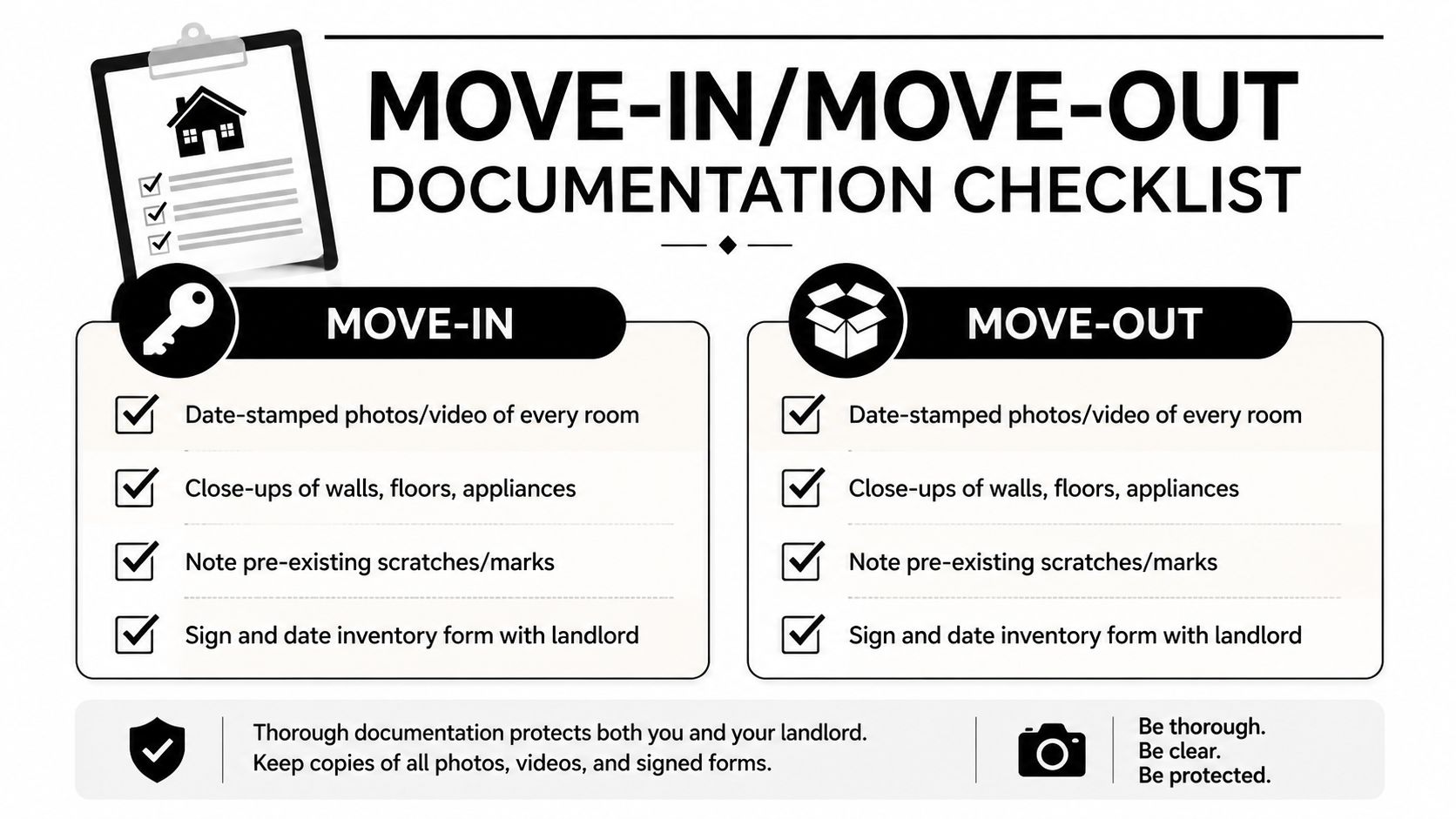
If you want a starting point, the tenant move-in checklist template can help organize the basics before a dispute ever starts. The goal is simple, show what the unit looked like when the lease began and what changed by the end.
When to Call a Texas Landlord-Tenant Attorney
Most wear-and-tear arguments are really documentation arguments. One side thinks the charge is fair, the other side thinks the bill includes ordinary aging, and the missing piece is usually proof. When the deposit fight starts to revolve around deadlines, receipts, and pre-existing conditions, legal help becomes more valuable.
Warning signs the dispute has outgrown simple negotiation
A few red flags usually mean it's time to get advice:
- The deadline was missed: The landlord didn't send the deposit or itemized list in time.
- The charges ignore ordinary aging: The deductions clearly cover things that look like wear and tear.
- Receipts aren't being shared: The landlord won't explain the math behind the deduction.
- Repairs and retaliation overlap: The tenant thinks the dispute is tied to a repair request or other protected complaint.
A tenant can often handle a smaller dispute in justice court, especially when the facts are straightforward and the records are good. The process is designed for smaller claims, and many people file without a lawyer. But once the numbers grow, the paperwork gets messy, or the landlord raises counterclaims, the risk changes fast.
That's also where an experienced Texas landlord tenant lawyer can help both sides understand what the law supports. A landlord may want to know which deductions are defensible before sending the final accounting, and a tenant may need help deciding whether a demand letter, a justice court claim, or a negotiated settlement makes the most sense. If the conflict is tied to a repair issue, eviction threat, or broader tenant rights problem, the legal strategy can shift quickly.
Best next step: Don't argue in circles over labels like “cleaning” or “damage.” Start with the photos, the lease, and the deadline, then decide whether the deduction is actually lawful.
In many cases, a calm review of the records solves the issue. In others, the dispute is already headed toward a formal claim, and waiting only makes the file worse.
If you need help with a security deposit dispute, a lease problem, or an eviction concern, The Law Office of Bryan Fagan, PLLC can review your situation and explain your options in plain English. Visit The Law Office of Bryan Fagan, PLLC to schedule a free consultation and get guidance customized for your Texas rental issue.