Dealing with a lease ending can be stressful, especially when the letter from your landlord says the rent is going up, the terms are changing, or your lease has already rolled forward without much warning. Many Texans do not realize that a renewal issue can turn on a small detail, like when the notice was sent, whether it was in writing, or whether the lease language shifted the tenancy into month-to-month status.
That is why Texas lease renewal notice requirements deserve careful attention. The rules are not just about a deadline on the calendar, they also depend on the lease itself, the delivery method, and whether either side acted in time. If you are a tenant trying to protect your home, or a landlord trying to avoid a dispute, the safest move is to understand the notice window before the lease expires.
Why Renewal Notices Catch Texas Renters Off Guard
A tenant opens an email on day 45 and sees a new rent amount. The lease was ending soon, but nobody had sent a clear renewal offer or a proper nonrenewal notice before then. By the time the tenant starts asking questions, the landlord says the lease terms have already moved forward.
That kind of surprise is common because lease endings feel simple until they are not. People assume the other side will “just know” what to do, then discover that the lease turned on a hidden clause, a missed deadline, or a notice that never counted because it was not delivered the right way. The stress usually comes from three questions nobody asks early enough, when must notice go out, in what form, and what happens if neither side takes action.
Why the timing matters more than most people think
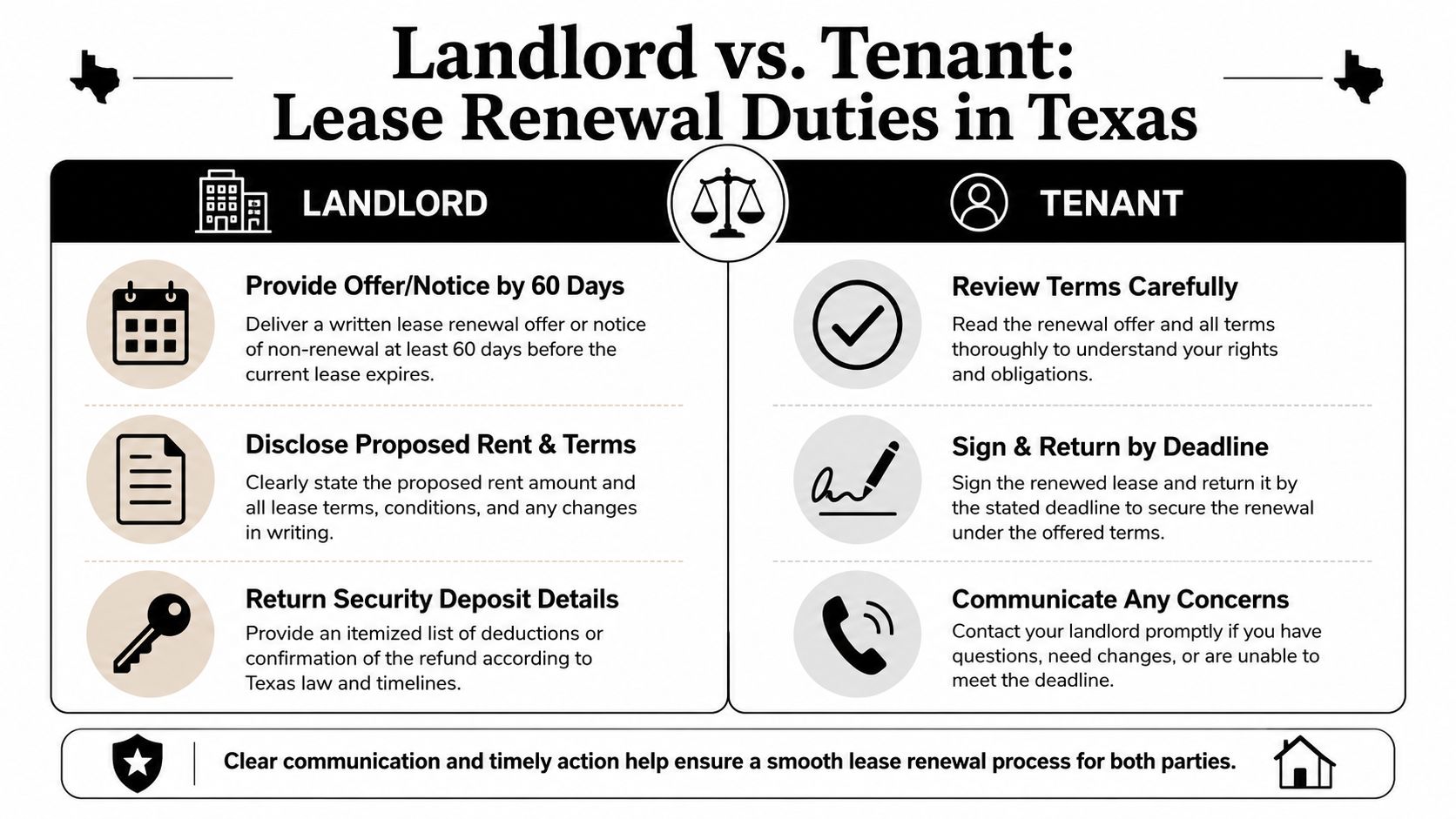
Texas Property Code § 94.055 gives the renewal process a defined structure. The landlord must send either a notice to vacate or a renewal offer by the 60th day before the lease expires, and if the landlord offers renewal, the tenant must reject it at least 30 days before expiration or the modified terms can take effect automatically. The renewal offer also has to disclose the proposed rent and any lease changes, which means the tenant is supposed to see the new deal clearly enough to respond on time. You can read the statutory language in Texas Property Code § 94.055.
A renewal dispute often starts with silence, not a fight. If the lease language, the notice timing, or the delivery method is unclear, the tenancy can keep moving even when one side thought it was ending.
For renters, that silence can feel like a trap. For landlords, it can turn into a disagreement over whether the tenant was ever given a real chance to accept, reject, or negotiate.
What Texas Property Code § 94.055 Requires
A lease renewal dispute often starts with a small mistake that looks harmless at first. One side assumes the paper went out on time, the other assumes silence means the deal is over, and the tenancy keeps going under terms nobody clearly discussed. That is why § 94.055 matters. It sets a notice path that can decide whether the lease ends, renews, or rolls into a different status.
The landlord's deadline and the tenant's response window
Under Texas Property Code § 94.055, the landlord must act no later than the 60th day before the lease expires. The landlord's choice is limited to two options, a notice to vacate or an offer to renew. If the landlord offers renewal, the offer must identify the proposed rent and any lease changes, so the tenant can read the new terms instead of guessing what changed.
The tenant then has a separate deadline. If the tenant wants to reject the renewal, that rejection must be delivered at least 30 days before expiration. If the tenant does not reject in time, the lease renews on the modified terms automatically. That is the trap in many cases, the lease does not wait around for an informal conversation, it moves according to the notice language and the statute.
The practical lesson is simple. A notice that is late, incomplete, or sent in the wrong form can create the same kind of confusion as no notice at all. A lease packet can also hide a silent renewal clause or a month-to-month rollover rule, and those terms can change the result even when one side believes the tenancy should end. If you are reviewing that packet, What a Texas Lease Should Include helps show why the main lease terms should be easy to find instead of buried in fine print.
| Step | Who Acts | Deadline | What Must Happen |
|---|---|---|---|
| Initial notice | Landlord | No later than 60 days before expiration | Send notice to vacate or offer renewal |
| Renewal response | Tenant | At least 30 days before expiration | Reject renewal if the new terms are not acceptable |
| Renewal effect | Both, by operation of the lease and statute | At expiration | Lease renews on the modified terms if not rejected in time |
The same document can also shift into month-to-month status if the lease says so or if the parties miss the required nonrenewal step. A reader looking for the difference between a fixed term and a rolling tenancy may find this UK tenancy law guide useful as a general comparison point, but the Texas lease controls the result here. The key point is that § 94.055 does not stand alone. It works inside the lease the parties signed, and that lease may add timing rules, renewal language, or delivery requirements that affect what happens next.
Fixed-Term Versus Month-to-Month and Long-Term Leases
Not every Texas tenancy runs on the same clock. That is where people get tripped up. The notice window depends heavily on the lease type and the contract language, not on one single statewide rule.
Fixed-term leases and automatic carryover
A standard residential fixed-term lease usually ends on the date written in the agreement, but the renewal clause can change what happens next. Texas guidance recognizes that many residential leases use 30-day or 60-day notice periods, and some month-to-month carryover arrangements require at least 30 days' written notice if the parties did not select a shorter period. That is why a lease can look simple on paper and still create a notice problem at the end.
A fixed-term lease can also slide into month-to-month status if the parties miss the required nonrenewal step. Once that happens, the rules often shift away from the original expiration date and toward whatever the lease says about holdover or month-to-month notice. The practical takeaway is that the lease does not always “end” just because the calendar says it should.
Long-term leases and special timing
Texas guidance also notes that for longer tenancies, such as leases of 36 months or more, a six-month notice period may apply under the Property Code. That makes long-term leasing very different from the typical one-year residential setup. The notice deadline scales with the length and structure of the tenancy rather than following a single statewide standard.
If you want a plain-English comparison of month-to-month carryover, the internal guide on What Is a Month-to-Month Tenancy? fits naturally with this issue. For broader context outside Texas, a UK tenancy law guide shows how other systems also tie renewal rights to the lease language instead of assuming one universal rule.
| Tenancy Type | Default Notice Window | Governing Source |
|---|---|---|
| Standard fixed-term residential lease | Often 30 or 60 days, depending on the lease | Texas lease language and § 94.055 framework |
| Month-to-month tenancy | At least 30 days if no shorter period is chosen | Lease terms and Texas guidance |
| Long-term lease of 36 months or more | Six months may apply | Texas Property Code guidance |
Texas lease law is lease-specific in a way that surprises many renters. The same apartment can have one set of notice rules this year and a different set next year if the tenancy shifts form.
What Landlords and Tenants Must Each Do
The cleanest way to avoid trouble is to separate the duties. Landlords have one set of obligations, and tenants have another. When those lines blur, the renewal process gets messy fast.
Landlord checklist
The landlord should send the renewal offer or notice to vacate by the 60-day deadline. If the landlord wants the tenant to renew, the notice should clearly state the new rent and any changed lease terms. If the lease has its own notice period, the landlord has to honor that language too.
A landlord should also pay attention to the form of the response. If the tenant rejects the offer or proposes a different term, that communication should be handled in writing and kept with the lease file. A verbal conversation at the kitchen table is not enough when the later dispute is about who said what, and when.
Practical rule: if the lease says written notice, send written notice, and keep proof that it was delivered.
Tenant checklist
The tenant should read the renewal offer carefully and check the expiration date right away. If the new rent or lease changes are unacceptable, the tenant needs to send a written rejection no later than 30 days before expiration. If the tenant stays past the lease term without resolving the renewal issue, rent obligations can continue during the holdover period.
The biggest mistake tenants make is moving out without notice and assuming that ends the issue. It usually does not. A landlord may still claim rent for the missing notice period if the lease or the carryover arrangement requires written notice before departure.
For renters worried about a rent jump, the guide on How Much Can a Landlord Raise Rent in Texas? helps frame the issue around notice and lease terms rather than assumptions.
Notice Delivery Methods That Hold Up in Texas
A notice can be timed correctly and still fail if it is delivered wrong. That is the written-warning trap. The words matter, but so does the method.
What usually counts and what usually does not
Texas notice rules require written notice to count. In practice, reliable methods often include personal delivery with a witness, certified mail with return receipt, and email or electronic delivery only when the lease authorizes that method. Posting or leaving the notice at the premises is usually treated as a last-resort fallback, not the first choice.
A verbal promise like “I'll renew next month” is risky because it leaves no clean proof. A tenant may think the landlord waived the deadline, while the landlord may later insist no binding renewal ever happened. That is how a notice dispute becomes a credibility fight.
Sample language that keeps the message clear
A landlord's renewal offer should sound direct and specific, such as, “This notice offers renewal of your lease beginning on the expiration date. The proposed rent is X, and the following lease terms are changed, Y and Z.”
A tenant's rejection should be just as plain, such as, “I reject the proposed renewal terms and do not agree to renew under the modified lease. Please confirm receipt of this written notice.”
Those sample lines are not magic words, but they show the right shape of the message. Clear writing, sent the right way, is much safer than a phone call or a text thread no one can prove later.
Exceptions That Override Standard Notice Rules
Some tenancies do not follow the standard renewal timeline at all. The lease may still matter, but other laws can move to the front of the line.
When federal or special protections take priority
Military tenants may have rights under the Servicemembers Civil Relief Act, which can allow termination of a residential lease on short notice depending on the circumstances and deployment orders. Texas also has protections for family violence, sexual assault, and stalking that can allow early lease termination with limited notice under state law.
Federally subsidized housing is another major carve-out. In Section 8, public housing, and project-based rental assistance, federal regulations and the lease terms often control renewal procedures instead of the usual § 94.055 timeline. Senior-living communities and certain age-restricted communities can also have hybrid rules that do not fit neatly into a standard residential template.
The landlord-side exception that matters too
A landlord does not always need to discuss renewal. If a tenant has committed a lease violation serious enough to trigger a notice to vacate, the landlord may move into enforcement instead of renewal. That is not a shortcut, it is a different legal path.
The key point is simple. Special protections do not erase the lease, and lease language does not erase special protections. The controlling rule depends on the type of housing, the status of the tenant, and the governing law.
What Happens When the Notice Goes Wrong
One missed deadline can change the whole case. A tenant may think the lease is ending cleanly, while the landlord thinks the renewal is already locked in. The result is usually a dispute about rent, possession, and what each side can prove.
A common tenant problem
A tenant gets a renewal notice on day 45, after the 60-day deadline has already passed. The new rent is higher, and the tenant never had the full statutory window to evaluate it. If the tenant keeps paying under protest, the landlord may treat the lease as renewed on the modified terms. If the tenant moves out without sending the right written rejection, the landlord may claim extra rent for the missing notice period.
A common landlord problem
A landlord emails a renewal notice, but the lease required written notice by certified mail. The tenant says the notice never counted and argues the lease renewed or rolled over differently by default. If the landlord later files eviction paperwork or tries to collect extra rent, the tenant may challenge the notice method and the timing.
That is where the fallout spreads. Security deposit claims, accelerated-rent clauses, eviction filings, and attorney-fee requests can all enter the picture depending on the lease language and the facts. If a dispute has already started, What Happens If You Get Evicted in Texas? gives useful context for the next stage.
A bad notice does not always end the lease issue, but it often gives the other side a real argument.
The available remedies usually depend on who is challenging the notice and what the lease says. A tenant may argue waiver, invalid delivery, or failure to comply with the statute. A landlord may seek enforcement, money damages, or settlement before the dispute gets more expensive.
Your Next Steps and How We Can Help
The safest way to handle Texas lease renewal notice requirements is to work from the calendar and the lease at the same time. The landlord's renewal offer or notice to vacate should be sent by the 60-day mark, and the tenant's written rejection should go out at least 30 days before expiration if the new terms are not acceptable. The notice should be in writing, delivered the way the lease requires, and saved with proof of delivery.
Here is a simple checklist you can use today:
- Check the expiration date: Read the lease first, not after the deadline has passed.
- Confirm the notice method: Use the delivery method the lease requires, and keep proof.
- Review the new terms: Look at proposed rent, changes, and any automatic renewal language.
- Respond in writing: If you reject renewal, do it clearly and on time.
- Save everything: Keep emails, mail receipts, screenshots, and a copy of the lease.
A short notice template can help when you are drafting your own message. For a rejection, you can say, “I am giving written notice that I do not accept the proposed renewal terms and do not agree to renew on those modified terms. Please confirm receipt of this notice.” For a nonrenewal, a landlord can say, “This is written notice that the lease will not be renewed, and the tenancy will end on the expiration date stated in the lease.”

If you're dealing with a lease renewal, holdover claim, or notice dispute, it helps to get a lawyer involved before the deadline turns into a case. The Law Office of Bryan Fagan, PLLC helps Texas landlords and tenants evaluate lease language, compare delivery methods, and decide on a practical next step in Houston, Dallas-Fort Worth, Austin, San Antonio, and surrounding counties.
If you need help with a lease renewal, nonrenewal notice, or rental dispute, The Law Office of Bryan Fagan, PLLC can review your lease and explain your options in plain English. Schedule a free consultation to get guidance on your rights, your deadlines, and the next move that protects your position under Texas law.