You signed the lease, the move-in went fine, and then life changed. Maybe your job moved you out of state, maybe your roommate bailed, or maybe the landlord is now asking questions because someone new is living there. In Texas, that situation usually turns on one question, assignment or sublease, and getting that answer right can decide who stays liable, who can sue, and whether the transfer holds up at all.
| Issue | Assignment | Sublease |
|---|---|---|
| What transfers | The tenant's entire remaining leasehold interest | A limited right to occupy, while the original tenant keeps a reversionary interest |
| Who is usually responsible to the landlord | The incoming party can become directly responsible, while the original tenant may still remain liable unless released | The original tenant stays primarily responsible under the master lease |
| Who can enforce against the incoming occupant | The landlord can generally enforce directly against the assignee | The landlord usually has no direct enforcement rights against the subtenant unless the subtenant separately assumes obligations |
| Long-term control | Stronger, because the new party steps into the lease position | Weaker, because a subtenant generally can't exercise a purchase or renewal option in the master lease |
| Best fit | Permanent handoff | Temporary move-out or room share |
Texas law treats the labels less important than the actual structure. If you're dealing with a Texas lease assignment vs sublease difference question, the core issue is whether the tenant kept any interest in the space and whether the lease allows the transfer at all.
When You Need Out of a Texas Lease Before It Ends
A tenant signs a 12-month lease in Houston, then gets a job in another state halfway through the term. The landlord wants certainty, the tenant wants out, and everybody wants to avoid a fight. That's where assignment and sublease show up as the two real-world tools people use when they need a legal handoff instead of a straight lease break.
For tenants, the decision is rarely academic. An assignment can move the entire remaining lease to someone else, while a sublease keeps the original tenant tied to the master lease. If you're trying to leave early, that difference changes your risk, your influence, and how much paperwork you need.
For an early-exit overview, this resource on how to get out of an apartment lease early in Texas is a useful starting point. The same issue comes up in commercial settings too, where a business needs to move locations but still has rent obligations hanging over it.
The practical question is not whether you can hand the space to someone else. The question is whether the landlord will recognize that person as the new tenant, or whether you're still on the hook if something goes wrong.
When I look at these cases, I always start with the lease language and then the tenant's goal. If you want to walk away completely, that points in one direction. If you just need someone to cover the remainder of the term while you expect to return, that points in another.
What an Assignment and a Sublease Actually Mean in Texas
An assignment transfers the tenant's entire remaining leasehold interest to another party. In plain English, the outgoing tenant is giving up the lease position itself, not just lending the space to someone else for a while. Texas-focused guidance from Texas A&M's Real Estate Research Center explains that the assignee usually assumes the original tenant's liability and becomes directly responsible to the landlord, although the original tenant can still remain liable if the landlord does not release it. Texas A&M's Real Estate Research Center also makes clear that a sublease works differently.
A sublease leaves the original tenant with a reversionary interest. That means the original tenant expects the space back when the sublease ends, even if that return date is just the lease expiration. The subtenant generally isn't directly liable to the landlord, and the landlord usually deals with the original tenant unless the subtenant separately assumes the lease obligations.
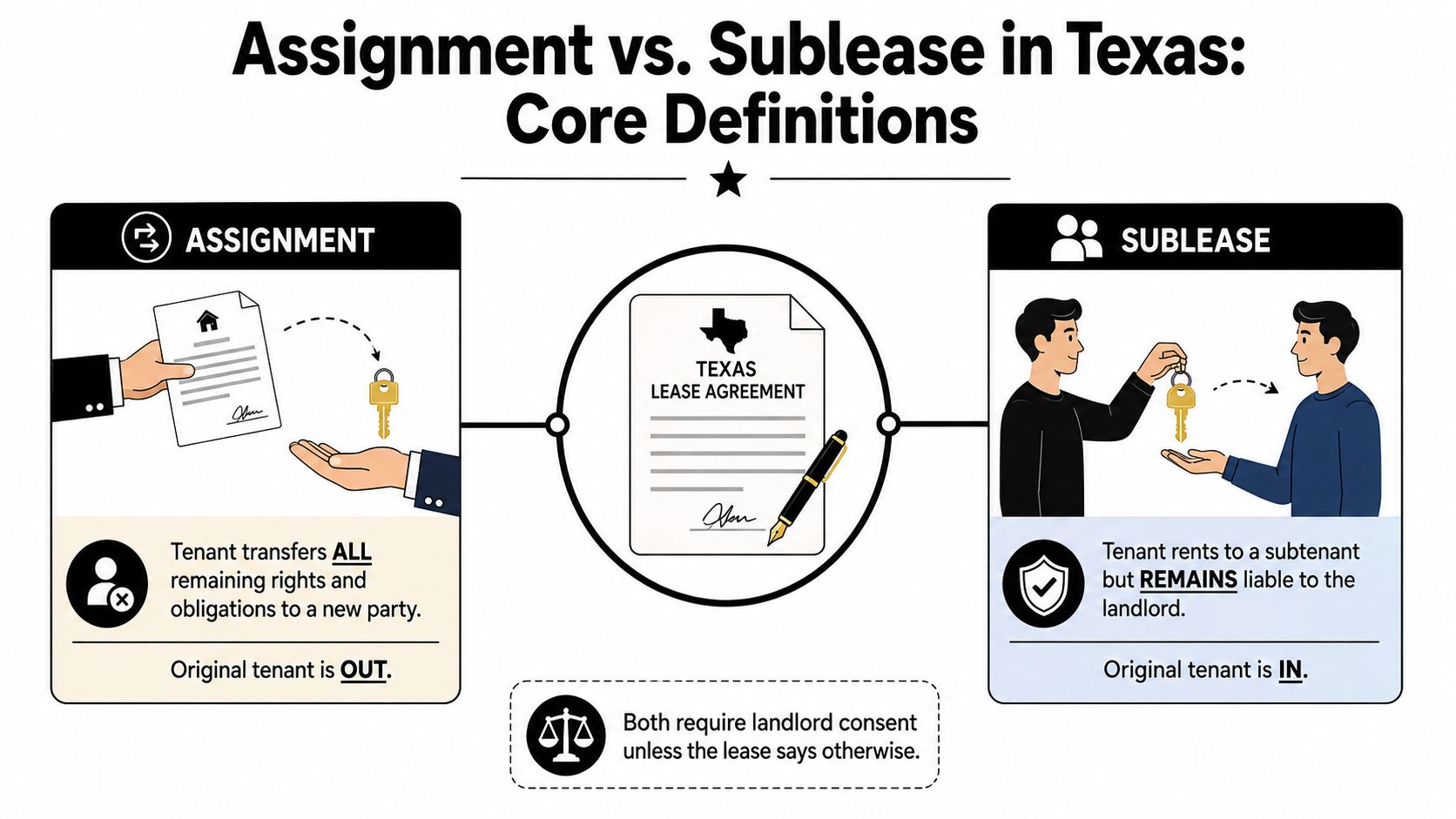
Practical rule: the test is not the label on the document. It's whether the tenant kept any remaining interest in the premises.
A good way to think about it is control. Assignment is closer to stepping into the shoes of the old tenant. Sublease is closer to renting from the old tenant while the master lease still exists above it. That's why a subtenant generally can't exercise a renewal or purchase option in the master lease, while an assignee is much closer to that kind of control if the landlord and lease documents allow it.
If you're reviewing lease language, What a Texas Lease Should Include is a practical reference for the key terms and required disclosures in a Texas residential lease. For renters trying to understand whether someone can step into their shoes, the idea is the same in both residential and commercial deals, even if the paperwork looks different.
A related commercial point comes up often in flexible office arrangements. The discussion in flexible office vs traditional lease helps illustrate how much the structure of the occupancy agreement changes the legal risk, even before you get to Texas-specific rules.
And if you're wondering whether someone else can take over the lease, this issue is closely related to whether someone can take over your lease, because the answer depends on the landlord's consent and the actual transfer structure.
Who Stays Liable to the Landlord After the Transfer
Liability is the part many individuals get wrong. A tenant hears “assignment” and assumes the original lease is gone, but that's not always true. In Texas, an assignment can place the new tenant directly in the landlord's path, yet the original tenant may still remain liable unless the landlord signs a written release.
A sublease is even less protective for the original tenant. The landlord typically has no direct contractual relationship with the subtenant, so if rent stops being paid or the unit is damaged, the landlord usually looks to the original tenant under the master lease. That's why a sublease is useful when the original tenant wants flexibility, but it's not the same thing as a clean exit.
| Liability After a Texas Lease Transfer | Assignment | Sublease |
|---|---|---|
| Who the landlord can pursue directly | Usually the assignee | Usually the original tenant, not the subtenant |
| Original tenant's exposure after transfer | Can continue unless the landlord releases the tenant in writing | Usually remains primary under the master lease |
| Direct obligation to the landlord | Often yes, if the assignee assumes the lease | Usually no, unless the subtenant separately assumes obligations |
| Risk if rent goes unpaid | The landlord may sue the assignee directly and may still have a claim against the original tenant | The landlord normally pursues the original tenant |
| Best protection for the outgoing tenant | A written release | A written release plus landlord approval, if possible |
Commercial deals are where this matters most, because rent, repairs, and default exposure can all stay alive after the transfer. Residential tenants sometimes assume the incoming person “replaces” them automatically. That's not how Texas landlord-tenant law usually works.
A landlord who wants a clean file should insist on assumption language and, when appropriate, a release agreement. A tenant who wants out should never rely on a handshake or a text saying “you're fine.” If the release is not in writing, the liability argument can come back later.
When reviewing a commercial lease, I also look at related financing language, because subordination terms can affect the practical value of a transfer. A resource on subordination agreement and refinancing is useful background when a lease transfer sits inside a broader property transaction.
Texas Consent Rules and What Happens Without Approval
Texas Property Code § 91.005 matters because it sets the default rule. A tenant generally may not sublease or rent the leased premises during the lease term without the landlord's consent, unless the lease specifically authorizes it, and Texas guidance repeats that this default rule applies to both assignments and subletting when the lease is silent. In other words, if the lease doesn't give permission, don't assume the transfer is allowed.
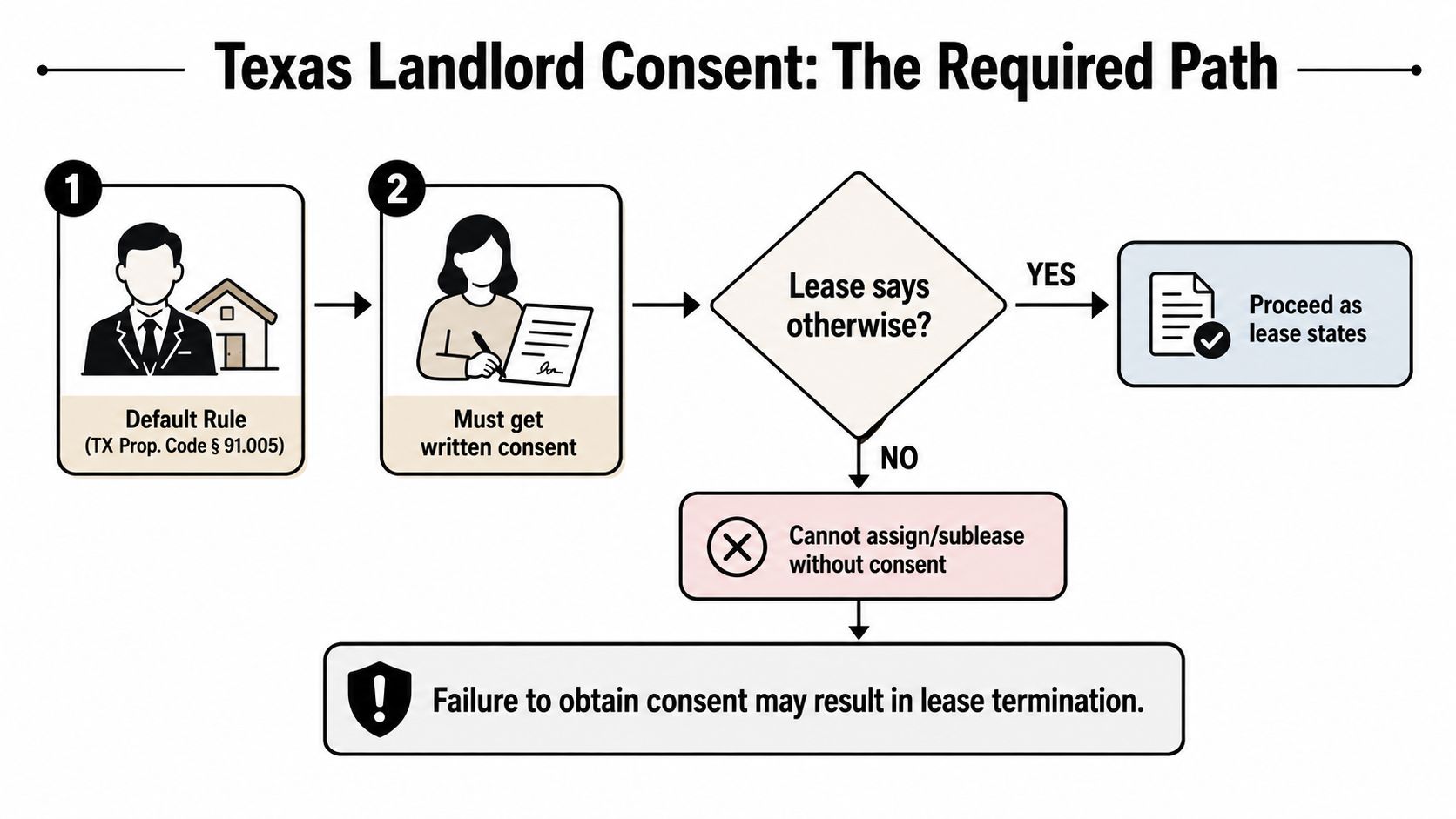
The consent issue is usually where tenants get trapped. They find a replacement, move the person in, and only later learn the landlord never approved the transfer. Texas commentary notes that an unpermitted assignment or sublease is not automatically void, but voidable at the landlord's option, and acceptance of rent can waive the default. That's a major difference, because it means the landlord's conduct after learning about the transfer can matter as much as the transfer itself.
A landlord who wants to enforce the transfer restriction should act consistently. Accepting rent after learning about the unauthorized transfer can weaken the argument that the landlord objected.
If the lease includes a reasonableness standard, consent should be handled through that lens. If the lease plainly prohibits assignment or subletting, the landlord usually has a stronger position. Texas Property Code § 91.005 is a default rule, but lease drafting can change the analysis, and many modern leases do exactly that.
Manufactured-home tenancies are even more explicit. Texas Property Code § 94.057 allows a landlord to prohibit both assignments and subleases in the lease agreement, and if the landlord allows either one, the lease must specify the conditions under which the tenant may do it. That makes the written lease even more important in those settings.
If you're trying to get approval, this resource on the Texas sublet approval process is worth reviewing before you move anyone in. The right paperwork at the beginning is cheaper than a dispute after the fact.
The Houston office market has also seen how much sublease inventory can matter in practice. One Houston leasing presentation reported that at the end of 2016 Houston had over 11.1 million square feet of available sublease office space, more than five times the amount available in Dallas and roughly equal to the combined sublease space in Boston, Manhattan, and Washington, D.C. That doesn't change the law, but it does show why landlords in major Texas markets pay close attention to who is coming into the space.
Reading Sample Texas Lease Clauses on Transfers
The lease language usually tells you more than the title page ever will. A strict clause might say the tenant may not assign or sublease without the landlord's prior written consent, and that usually means no transfer until the landlord says yes. A silent lease is different, because Texas Property Code § 91.005 steps in as the default rule.
A reasonable-consent clause is the one many tenants want, because it gives some room to negotiate. It often says the landlord's consent shall not be unreasonably withheld. That wording matters because it gives the tenant an argument if the landlord turns down a qualified replacement without a solid basis.
Look for the phrase “shall not be unreasonably withheld”. If it's there, the landlord's discretion is narrower than a flat prohibition.
Here's how the common versions usually read in plain English.
- Strict prohibition: the tenant cannot assign or sublease unless the landlord agrees in writing. This gives the landlord the most control and gives the tenant the least flexibility.
- Silent lease: the lease doesn't mention transfers, so the Texas default rule controls, and consent becomes the issue.
- Reasonable-consent clause with release language: the tenant may transfer with approval, and the outgoing tenant may be released if the landlord signs off on the release terms.
For a broader lease drafting reference, What a Texas Lease Should Include is useful because transfer language usually works best when the core lease terms are already clear. I've also seen business owners miss how one lease clause can affect another, especially when occupancy rights interact with financing. The background in subordination agreement and refinancing is a good reminder that lease terms don't live in a vacuum.
The practical takeaway is simple. A clause that allows transfers but demands written consent gives you a path. A clause that bans transfers closes that path unless the landlord agrees to something different. And a clause that says nothing usually doesn't mean “do whatever you want.”
Common Disputes That End Up in Texas Courts
Most transfer disputes start with a simple assumption that turns out to be wrong. A landlord sees an unauthorized occupant and assumes the transfer is automatically void. A tenant sees a replacement paying rent and assumes the problem is cured. Texas law is usually messier than both of those positions.
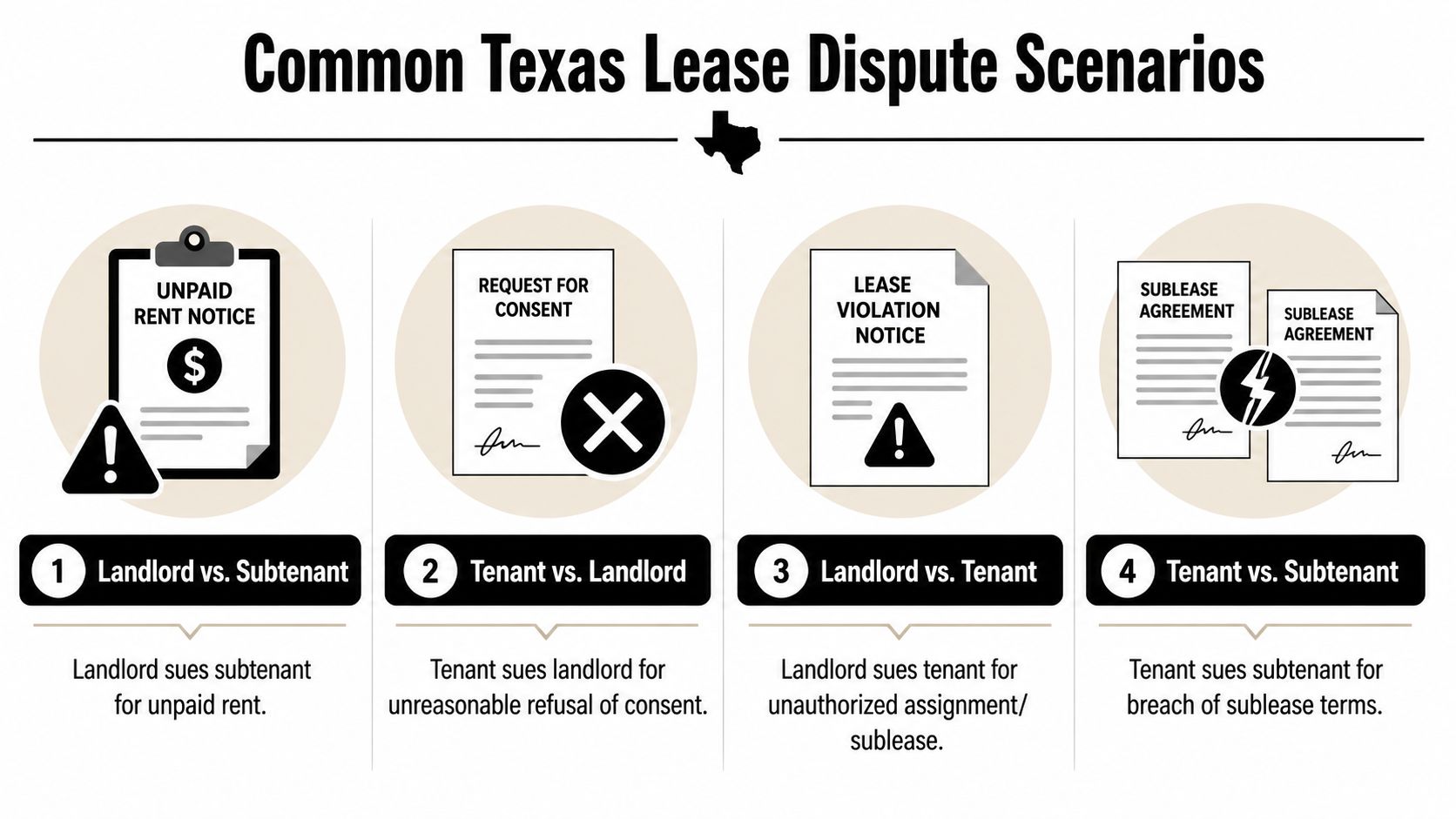
One common case involves a landlord suing for unpaid rent after a subtenant stops paying. The landlord usually looks to the original tenant, because the original tenant remains primarily responsible under the master lease. Another common dispute is the tenant who claims the landlord unreasonably refused consent. That fight turns on the lease language and whether the landlord had a legitimate basis for saying no.
A third problem is the eviction based on an unapproved transfer. If the lease required consent and the tenant skipped that step, the landlord often has a strong position. But if the landlord kept accepting rent after learning about the transfer, the waiver issue can change the analysis.
A fourth dispute involves self-help reactions. Tenants sometimes lock a subtenant out, landlords sometimes change the story midway through, and both sides then have to sort out who had the right to possess the space. Those fights often get worse fast because possession, rent, and consent all overlap.
Bottom line: an unapproved transfer is not automatically dead on arrival, and it is not automatically safe either. The facts after the transfer matter.
If you're deciding whether to fight, the key question is what the lease says, what consent was given, and what the landlord did after learning about the transfer. In Texas, those facts often matter more than the labels parties put on the paperwork.
Which Option Fits Your Texas Situation
A tenant leaving for a permanent job in another state usually wants an assignment. That's the cleanest match when the goal is to hand off the lease and stop treating the space like it's still yours. If the lease and landlord both allow it, assignment is the more direct path to a full transfer.
A tenant taking a six-month work assignment but planning to return usually fits better with a sublease. The original tenant keeps a reversionary interest, which makes sense when the absence is temporary. The same logic applies when a roommate moves out early and someone else takes that room while the original tenant remains connected to the lease.
A business owner selling a storefront or stepping out of a commercial location often needs an assignment as well. In that setting, the buyer usually wants to step into the existing lease position instead of starting over from scratch. The lease terms and the landlord's consent rights will still control the final result.
Texas Property Code § 94.057 matters for manufactured-home tenancies because it expressly lets the landlord prohibit both assignments and subleases unless the lease says otherwise. That's a good example of why you should never assume the same answer applies in every housing situation.
When you need a practical comparison of occupancy structures, it also helps to think about rental administration and reporting. A resource on master rental income tax can be useful context for landlords who are tracking who pays and how the transaction is documented.
If I had to boil the choice down, I'd say this. Use assignment when the relationship is supposed to end and the new occupant is meant to take over. Use sublease when the original tenant is still part of the picture.
Steps Tenants and Landlords Should Take Next
Tenants should start with the lease, not the replacement tenant. Read the transfer clause, look for consent language, and decide whether you need an assignment or a sublease before you contact the landlord. Then send a written request with the proposed transferee's name, move-in date, and any information the landlord is likely to use for screening.
Keep the request specific. If you want a release, ask for it in writing. If you want the landlord to recognize the incoming party directly, say so and attach the proposed assumption language. If the landlord agrees, keep every email, signed addendum, and approval notice in one file.
Landlords should respond in writing and document the reason for any refusal. If the lease gives discretion, use it consistently. If the lease requires consent, make sure the approval or denial lines up with the lease terms and the Property Code.
A landlord who wants to avoid later disputes should also decide whether the transfer requires an assumption agreement. That agreement can make it clear who owes rent, who handles damage claims, and whether the original tenant is released. Just as important, if you want to enforce a default, don't casually accept rent after learning about an unauthorized transfer.
- Tenants should check the lease first: that tells you whether transfer rights exist at all.
- Landlords should answer in writing: that creates a record if the transfer becomes contested.
- Both sides should use assumption or release language when possible: liability gets clarified this way.
- Commercial or manufactured-home disputes deserve legal review early: the risk profile is higher and the documents matter more.
If you're a landlord trying to track the income side of a transfer, the master rental income tax discussion is a helpful companion piece because the paperwork and payment flow need to match the legal structure.
The four questions we hear most often are easy to state and not always easy to answer.
Does Texas law require a landlord to consent to a sublease? Usually, yes if the lease allows it and the tenant follows the contract, but Texas Property Code § 91.005 gives the landlord consent power when the lease is silent or restrictive.
Can a landlord refuse an assignment for any reason? Not if the lease limits that discretion, but a flat prohibition or strong consent clause usually gives the landlord more room.
Does the original tenant stay liable after an assignment? Often yes, unless the landlord releases the tenant in writing.
What is the fastest way to get out of a Texas lease without losing a deposit? Get the landlord's written approval before the transfer, document the handoff, and make the release part of the deal.
If you need help with an eviction, lease issue, or rental dispute, contact The Law Office of Bryan Fagan, PLLC for a free consultation today.
If you're dealing with a transfer, a refused consent request, or a landlord who is already threatening eviction, The Law Office of Bryan Fagan, PLLC can help you review the lease, protect your rights, and put the right paperwork in place before the dispute gets worse. Their team handles Texas landlord-tenant matters with a practical focus on assignment, sublease, and lease enforcement issues, so you can get clear advice about your next step.