Skip to content
Texas law caps residential late fees at 12% of monthly rent for properties with four or fewer units and 10% for properties with more than four units, and rent must be at least two full days past due before any fee can be charged. If a fee shows up earlier than that, or it pushes past those limits, you may have a real dispute under Texas law.
That's the kind of problem that lands on a tenant's account portal at 9 p.m. and turns into a landlord's headache by morning. A renter sees a charge they didn't expect, a property manager wonders whether the lease template is still compliant, and both sides start guessing about what the lease says versus what Texas enforces. In Texas, the lease matters, but the statute sets the boundaries.
A practical way to think about Texas late fee legal limits is this, the lease can describe the policy, but it can't rewrite the state's guardrails. That gap between contract language and enforceable law is where most late-fee disputes happen, and it's where a careful review saves money, stress, and time. For landlords who want a broader market context around local housing, Texas property investing with Pie Assets is one place to look at Texas real estate from an owner's perspective.
When a Late Fee Catches You Off Guard
A tenant opens the portal, sees a late fee, and knows the rent was only a day or two behind. A landlord reads the lease again and realizes the fee clause was copied from a template that may not fit Texas law. That's usually the moment the conversation shifts from frustration to liability.
Texas law gives both sides a clear starting point. For residential leases, the fee can't be collected until the rent has stayed unpaid for two full days after the due date, and the amount still has to fit within the statutory limits. That means the timing matters just as much as the dollar amount.
Why this becomes a real dispute
Late fees feel small when they're first assessed, but they can trigger bigger problems fast. Tenants often challenge them because they were charged too early or because the amount doesn't match the property type. Landlords challenge the dispute because they believe the lease language controls, when in reality the law does.
Practical rule: If the fee was assessed before the statutory waiting period ended, or if the percentage is too high for the building size, the charge is vulnerable.
For tenants, the question is often whether to pay first and argue later. For landlords, the question is whether the fee was created and collected in a way that a court will enforce. The safest answer for both sides starts with the statute, not the lease form.
That's also why it helps to read resources built around the same problem, like Late Fees and Rent Rules in Texas, which focuses on what Texas law allows for rent collection. The issue isn't whether a fee is common in a lease, it's whether Texas treats it as enforceable.
The Safe Harbor Caps Under Texas Property Code Section 92.019
A lease can say a late fee is due, and the tenant can still challenge it if the amount crosses Texas's safe harbor line. Under Texas Property Code Section 92.019, the statute gives landlords a safe harbor only up to the amount the law treats as reasonable. If the fee goes above that cap, the landlord has to show actual damages tied to the late payment, including collection-related costs and overhead. Texas Property Code § 92.019

How the cap works in plain English
The rule turns on the property type. A late fee is presumed reasonable if it does not exceed 12% of monthly rent for a dwelling in a structure with four or fewer units, or 10% of monthly rent for a structure with more than four units. That is a ceiling, not a target, and a lease can always charge less.
A few basic numbers make the point clear. In a 200-unit apartment complex, a $1,200 monthly rent means the safe harbor is 10%, so the fee can't exceed $120. In a fourplex, a $2,000 monthly rent means the safe harbor is 12%, so the fee can't exceed $240. Those figures matter because many lease forms use one flat late-fee amount across every property, and that approach falls apart once the unit count changes.
Where landlords get into trouble
The statute does not let a landlord choose a number just because it seems reasonable in practice. The amount has to match the property size, the lease must disclose it, and the landlord has to defend it if the charge sits above the cap. That higher-damage route is hard to prove and easy to attack.
A late fee policy that looks normal on paper can still fail if the property size, the rent amount, and the lease language do not line up.
For a practical overview of how Texas treats these rules, Late Fees and Rent Rules in Texas gives a useful snapshot of what landlords can collect and when. The key question is whether the lease tracks the statute, because that is what Texas courts will enforce.
Written Lease and Disclosure Requirements for Enforceable Fees
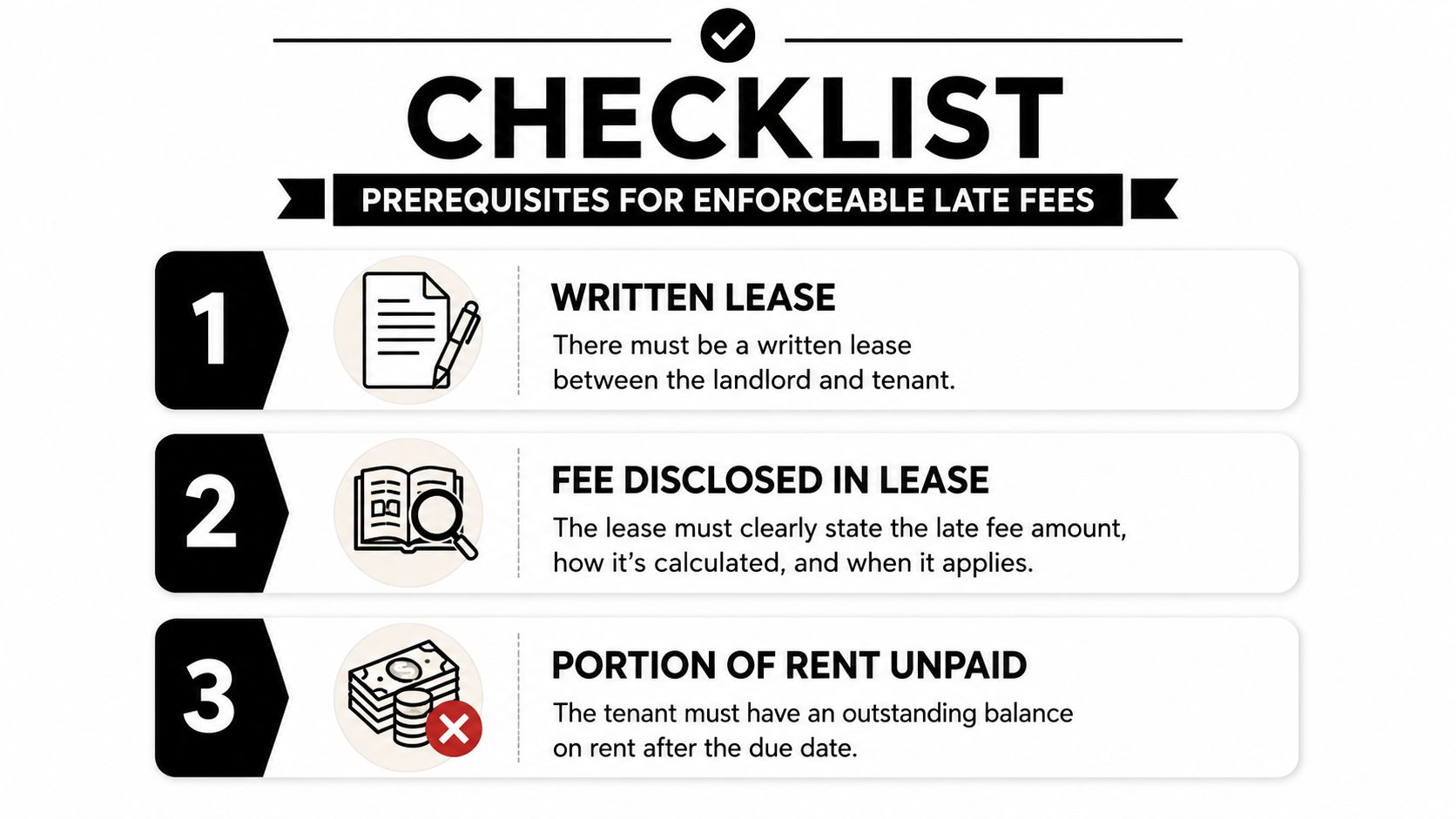
Texas does not let a landlord charge a residential late fee unless the fee was part of a written lease and the fee was disclosed in that lease. The rent also has to remain unpaid for two full days after the due date before the fee can be collected. Texas Property Code late-fee guidance
What compliant lease language looks like
A strong clause is specific. It names the fee, explains when it starts, and identifies the amount or the percentage formula tied to the property type. It doesn't leave the tenant guessing.
By contrast, vague wording like “customary late fees may apply” creates risk. So does a lease that mentions late fees but fails to say how much, when they begin, or what triggers them. Oral understandings are even worse, because Texas looks for a written disclosure in the lease itself.
Why timing and wording both matter
A landlord who charges a late fee on day one is acting too early, even if the tenant is unquestionably behind. A landlord who charges a clearly stated fee but never put that fee in the written lease has a separate problem. The lease has to do both jobs, it has to disclose the charge and it has to match the timing rule.
Bottom line: If the fee clause is missing, unclear, or activated too soon, the tenant has a strong challenge to the charge.
If you're reviewing a lease, it helps to compare the wording against a lease-drafting checklist. The internal resource on what to include in a lease agreement is a useful place to see how a Texas lease should be organized before a late-fee fight starts. The same concept applies to late fees, clear drafting protects everyone.
The law library's rent guidance is also useful because it ties the disclosure requirement to the written lease and the unpaid-rent window. That combination is the part many people miss when they assume a fee is enforceable just because it was printed in the tenant packet.
Understanding the Grace Period and Timing Rules
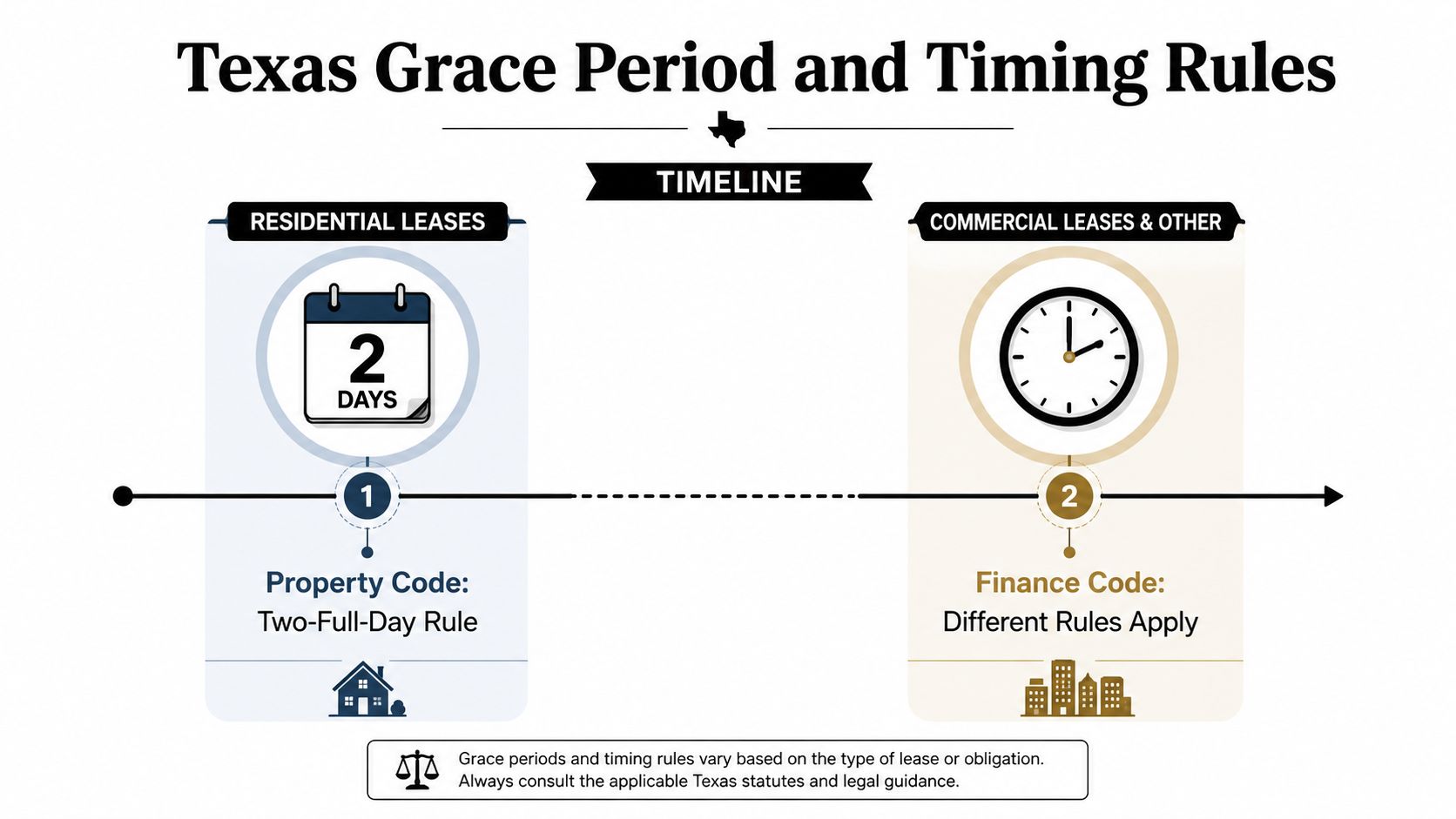
Texas late-fee timing causes a lot of confusion because different statutes use different language in different settings. For residential leases, the key rule is the two-full-day waiting period in the Property Code. Texas Finance Code § 346.103 uses a 10-day threshold in a different statutory context, and it counts Sundays and holidays in that period. Texas Finance Code § 346.103
How the timing works in real life
If rent is due on the 1st, the landlord can't charge the late fee until after the 2nd and 3rd have passed unpaid. That means the earliest practical charge date is the 4th. That timing is exactly why many people describe the modern residential rule as a two-day grace-period style framework.
For tenants, this is one of the easiest places to spot an improper fee. If the portal adds the fee too early, the charge is vulnerable. For landlords, this is one of the easiest compliance checks to build into your billing system so staff don't post fees before they're allowed.
Why the two rules get mixed up
The confusion usually comes from reading broad late-payment rules without separating residential leases from other contexts. The Property Code governs the residential late-fee structure many individuals care about, while the Finance Code language is the other statutory reference point. The practical takeaway is simple, if you're dealing with a residential apartment or home lease, the shorter residential timing rule is the one that usually matters most.
When a landlord charges a late fee before the waiting period ends, the issue isn't a technicality. It goes to whether the fee was authorized at all.
If you want a plain-English explanation of timing disputes, the internal page on late rent payment is a helpful companion. It's especially useful when the fight is about whether the fee was posted on the right day, not whether the rent was late in the first place.
Penalties for Landlords Who Overcharge and Tenant Defenses
Texas gives tenants a real remedy when a landlord charges a late fee outside the statute. If the fee is improper, the tenant may recover $100, three times the improper late fee collected, and reasonable attorney's fees. That is enough to make even a small overcharge worth challenging, especially when the lease language says one thing and the account ledger shows another.
How the numbers play out
A $100 late fee on a $900 apartment stays within the 12% safe harbor, because 12% of 900 is $108. A $250 fee on that same unit does not. In practice, that kind of gap is where disputes become easy to prove, because the lease may permit a late fee in general while the amount charged still exceeds what Texas will enforce.
The same problem shows up in other fee disputes too. People who review contract language in real estate often compare it with guidance like wholesaling real estate legal in 2026, because the same basic lesson applies, a contract term does not control if statutory limits say otherwise.
| Late Fee Cap Examples by Property Type | |||
|---|---|---|---|
| Monthly Rent | Property Size | Max Late Fee (Safe Harbor) | Example Overcharge |
| $900 | Four or fewer units | $108 | $250 exceeds the cap by a wide margin |
| $1,200 | More than four units | $120 | A fee above that amount is outside the safe harbor |
| $2,000 | Four or fewer units | $240 | A higher charge needs actual-damages proof |
Where tenants can raise the defense
Tenants can challenge the fee in a demand letter, in an eviction case if the landlord folds the fee into the dispute, or in small claims court depending on the facts. A paper trail usually matters more than argument. The lease, payment records, ledger, and the notice showing when the fee was posted can tell the whole story. If the landlord cannot show that the fee was disclosed and timed correctly, the charge becomes much harder to defend.
For a broader view of charges landlords often try to impose, the internal guide on what fees are illegal for landlords in Texas is a useful companion. It helps separate lawful charges from the ones tenants should question before they pay them.
Practical Steps for Landlords and Tenants to Resolve Late Fee Disputes
Landlords should start with the lease template, not the resident account. Check whether the late-fee clause is in writing, whether it identifies the fee clearly, and whether the amount fits the safe harbor for the property size. If you want to charge above the cap, document the actual damages carefully instead of assuming the higher number will stand on its own.
Tenants should do the opposite. Pull the lease, the payment history, and the late-fee notice, then compare the fee to the unit count and rent amount. If the timing was early or the amount is too high, send a written objection before the issue grows into an eviction filing or collections problem.
A simple dispute checklist
- Verify the lease language: Confirm the fee is disclosed in a written lease.
- Check the dates: Make sure the fee wasn't charged before the two-full-day period passed.
- Compare the amount: Match the charge against the applicable 10% or 12% cap.
- Document your position: Save screenshots, emails, and ledger entries before you respond.
- Escalate when needed: If the charge stays on the account, get legal help early.
The consumer-facing consumer grievance policy is a reminder that many businesses have a formal complaint path, and the same idea works here. A written dispute gives the other side a chance to correct a mistake before it turns into a larger case.
A Texas landlord tenant lawyer can be especially helpful when a landlord refuses to remove the fee, when the fee gets bundled into an eviction, or when a tenant needs to assert the statute's penalty provisions. The same is true for landlords who need a clean lease review before the next renewal cycle.
If you need help with a late fee dispute, lease issue, or rental conflict, The Law Office of Bryan Fagan, PLLC can review your paperwork, explain your options, and help you protect your rights under Texas law. Visit The Law Office of Bryan Fagan, PLLC to schedule a free consultation and get clear guidance on your next step.