Dealing with a roommate problem can get messy fast. One person stops paying, another starts sending angry texts, and suddenly you're wondering whether the landlord can come after everyone on the lease or just the person who caused the problem. In Texas, that question turns on joint and several liability, and if you just signed a shared lease, it matters more than most renters realize.
A lot of people think roommate responsibility works like a private split, one person owes a third, two people owe half, or everyone is only responsible for their own room. That's not how Texas lease law usually works when everyone signs the same contract. Under the lease, the landlord can often treat all co-tenants as one group for collection purposes, even if the roommates made a different side deal among themselves.
If you're trying to keep rent organized with roommates, it helps to separate the legal rule from the household math. Apps can help with the house math, and a simple tracking system can keep everyone honest, especially if you use a tool to track room expenses with Koru while the lease itself stays in the background. For the legal side, Texas renters should also understand what happens when rent is late, so it's worth reviewing late rent payment rules in Texas before a problem turns into a notice on the door.
When a Roommate Stops Paying in Texas
A Houston apartment with three roommates can feel stable for months, then one person loses a job, moves in with a partner, or stops answering calls. The rent is due, the other roommates are staring at the mailbox, and the landlord wants payment. That's the moment when Texas joint and several liability roommates becomes more than a legal phrase. It becomes the rule that decides who is exposed.
Under Texas tenant guidance, if multiple tenants signed the same lease, each tenant can be responsible for the entire rent and lease obligations, not just a fractional share. If one roommate does not pay, the others may have to cover the shortfall, and the landlord may pursue any one tenant for the full balance. That is why a private agreement to split rent 50/50 or 33/33/34 doesn't change the landlord's rights under the lease. The lease controls the landlord's collection rights, not the text thread between roommates.
The stress comes from timing as much as money. A missed payment can lead to a notice, an overdue ledger, and possibly an eviction filing if the default isn't cured. If you're a tenant, that means your housing can be affected even when you personally paid your share. If you're a landlord, it means the lease needs to make responsibility clear before the move-in date, not after the first dispute.
Practical rule: in a shared Texas lease, one roommate's default can become everyone's problem unless the lease says something different.
For landlords and tenants alike, the first question should be simple, who signed the lease and what does it say about shared responsibility? Once you know that, the rest of the analysis gets much easier. Texas law gives a clear answer, even when the roommate situation itself is chaotic.
What Joint and Several Liability Means in Texas
Think of a shared lease like one pizza. If three roommates order it together, the landlord doesn't care who ate which slice when the bill comes due. Under joint and several liability, each signer can be asked to cover the whole bill if the others don't pay. That is the heart of the rule.
This is mainly a contract-law issue, not a special roommate-only statute in the Texas Property Code. Texas Property Code Chapter 92 governs many residential lease basics, but the joint-liability concept comes from the lease language itself and broader contract principles. That is why the exact wording matters so much when you read your lease. If the lease says liabilities are joint and several, the landlord has the contractual right to collect the full amount from any one signer.
The difference between the three terms is worth keeping straight:
- Joint liability means the tenants are tied together on the obligation.
- Several liability means each tenant is responsible only for their own share.
- Joint and several liability means the landlord can treat the obligation both ways, together or separately, depending on what needs to be collected.
The landlord may demand 100% of the unpaid rent from any single signer.
That's the sentence most roommates need to remember. It explains why private side agreements do not protect you from the landlord. It also explains why lease review matters before you sign. A resource like What a Texas Lease Should Include is useful because the key terms and required disclosures in a Texas residential lease often shape how liability works in real life.
If you want a deeper look at the drafting side, what to include in a lease agreement is the place to start before you ever hand over a deposit. And if you read broader coverage on Texas property law insights, you'll see the same pattern again and again, the lease language controls the outcome.

How the Rule Shows Up in a Roommate Lease
The words on the page usually appear in the parts of the lease nobody wants to read twice. Rent clauses, utility clauses, damage clauses, and cleanup rules all sit under the same shared responsibility structure. If one tenant agrees to pay the electric bill and another promises to reimburse later, the landlord still looks to the signed lease, not the roommate's private promise.
What the landlord can collect
A shared lease often ties together several kinds of obligations. That can include monthly rent, utilities if the lease assigns them to tenants, and damages tied to the unit. The important point is that the landlord's collection rights are built into the lease relationship. If one roommate makes a private deal to cover “their room” or “their half,” that side deal may matter between roommates, but it does not rewrite the landlord's contract.
This is why the rule has long worked as a risk-allocation device in Texas housing. In large rental markets, standard-form leases are common, so the default wording often spreads risk across everyone who signed. If three people sign one lease, the landlord does not have to collect one-third from each person. The landlord can pursue the full unpaid amount from any signer, and the roommates can sort out reimbursement later if they want to.
Why side agreements help, but only privately
Roommate agreements still have value. They can spell out who pays what, who handles the deposit, how damages are split, and what happens if someone leaves early. But they work like a private contract between roommates, not a shield against landlord claims. If a roommate pays more than their share, the law may let that roommate seek reimbursement in small claims court, but that is a separate fight from the landlord's collection rights.
For tenants trying to line up house rules with the lease, it also helps to understand the move-out side of the transaction. The firm's resource on security deposit deductions can help you connect the lease terms to what happens at the end of the tenancy.

Rent, Damage, and Eviction Scenarios That Expose Everyone
The hard part for many renters is that one bad roommate decision can create several different problems at once. Missed rent can lead to a notice to vacate. Damage can lead to a charge against the unit. Lease violations can lead to eviction risk for all signers. The facts are different, but the lease often treats the group as one.
Nonpayment
If rent is not paid, Texas Property Code § 24.005 usually allows a 3-day notice to vacate before an eviction case is filed. In a shared lease, the notice can be directed to the tenants named on the lease, so one roommate's default can trigger a process affecting all co-tenants. That is why a missed payment is never just a private argument among roommates. It can become a housing problem for everyone on the lease.
Damage and fault
Damage is where people often get confused. A roommate may have caused the mess, but the lease may still create contract liability for all signers. That is separate from fault-based allocation, which comes up under Texas tort principles and can work differently. In other words, the landlord's contract claim can be joint and several, while a separate fight over who caused the damage may be apportioned by fault later. Those are not the same analysis.
Eviction risk
Lease violations can spread quickly. Unauthorized pets, repeated noise complaints, illegal activity, or occupancy violations can expose everyone if the lease ties the tenants together. The landlord may not care which roommate caused the problem if the lease has been breached. In a shared unit, the whole home can be at risk even when only one person created the issue.
| Roommate Scenarios and Liability Exposure in Texas | What Triggers It | Effect on All Signers |
|---|---|---|
| Nonpayment | One roommate misses rent | All named tenants can face notice and collection risk |
| Property damage | Damage tied to the unit or lease obligations | The landlord may pursue any signer for amounts owed |
| Lease violation | Unauthorized pets, noise, or other breaches | The whole tenancy can be put at risk |
The same logic can reach utilities or HOA-related charges if the lease makes the tenants responsible for them. Once those obligations are written into the contract, the shared-liability rule can follow them too.
A Landlord Playbook for Roommate Leases
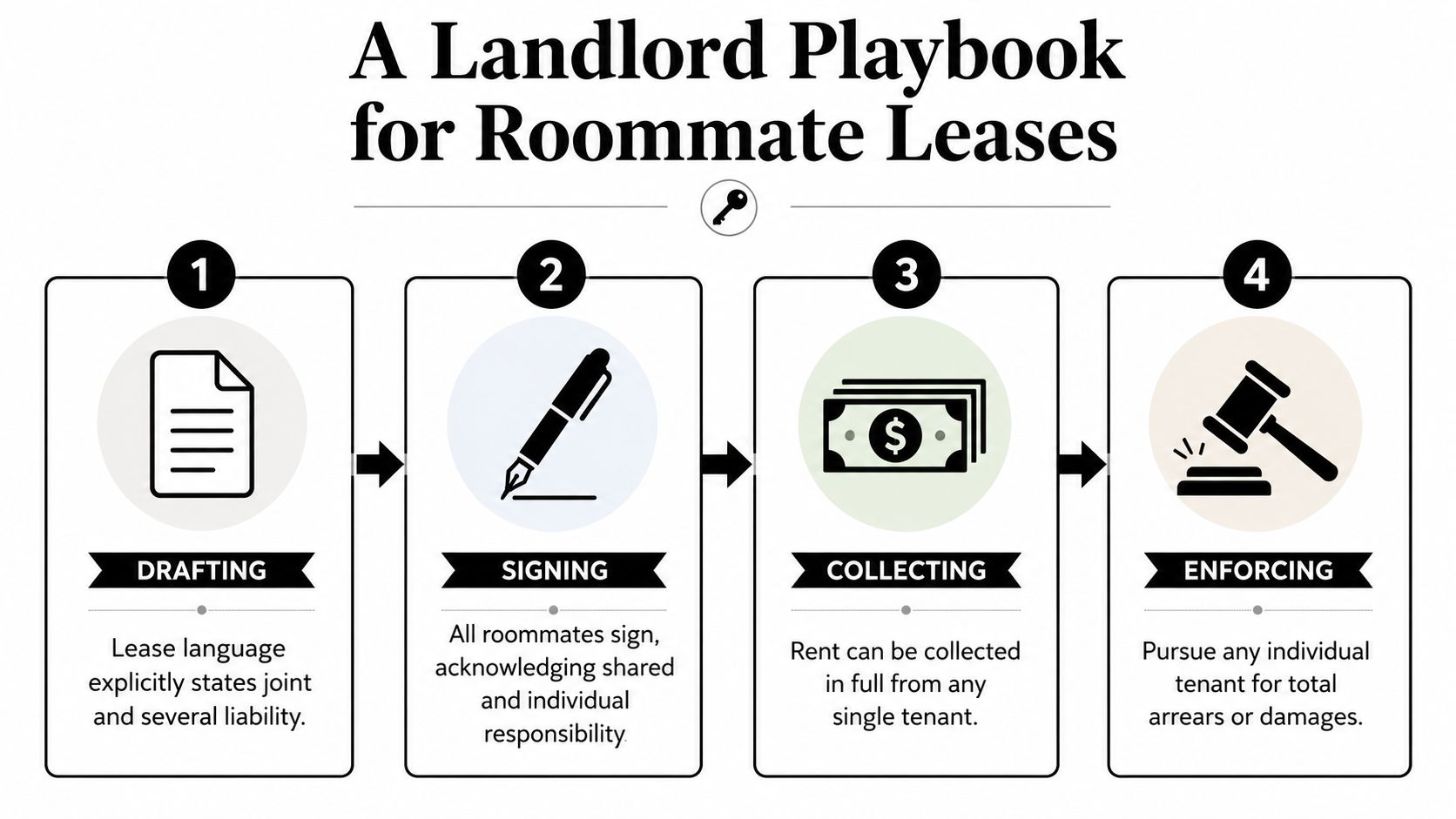
Landlords do themselves a favor when the lease is drafted cleanly from the start. A lease that clearly states joint and several liability gives the landlord a stronger path if one roommate falls behind. It also keeps the dispute focused on contract terms instead of after-the-fact arguments about fairness.
Drafting and documentation
The lease should state who is liable, what charges are covered, and how co-tenants are handled if one moves out. Move-in and move-out inspections matter because they create the record for later damage claims. If roommates are allowed to change, a written replacement-tenant process helps prevent confusion about who is still on the hook.
Collection and records
When rent goes unpaid, a landlord should document the ledger carefully, send demand letters, and keep proof of notice. Partial payments can be accepted, but the record should still show what remains unpaid. Clean records matter because the file may later be reviewed by a judge in a forcible detainer case.
Keep the paper trail simple. Judges understand dates, amounts, notices, and signatures much faster than roommate stories.
Enforcement and legal timing
The eviction process usually starts with the 3-day notice to vacate for nonpayment under Texas Property Code § 24.005. If the problem is not cured, the landlord can file a forcible detainer suit. When there are multiple tenants, service and notice need to match the names on the lease and the address where the tenants receive mail.
For landlords dealing with shared units, outside help can save time. A local vendor resource like landlord exterior cleaning advice may help with property upkeep, while a Texas landlord tenant lawyer can help with lease drafting and enforcement before a small clause mistake turns into a bigger loss. One practical option is The Law Office of Bryan Fagan, PLLC, which handles Texas landlord-tenant disputes and lease issues.
A Tenant Playbook for Protecting Yourself
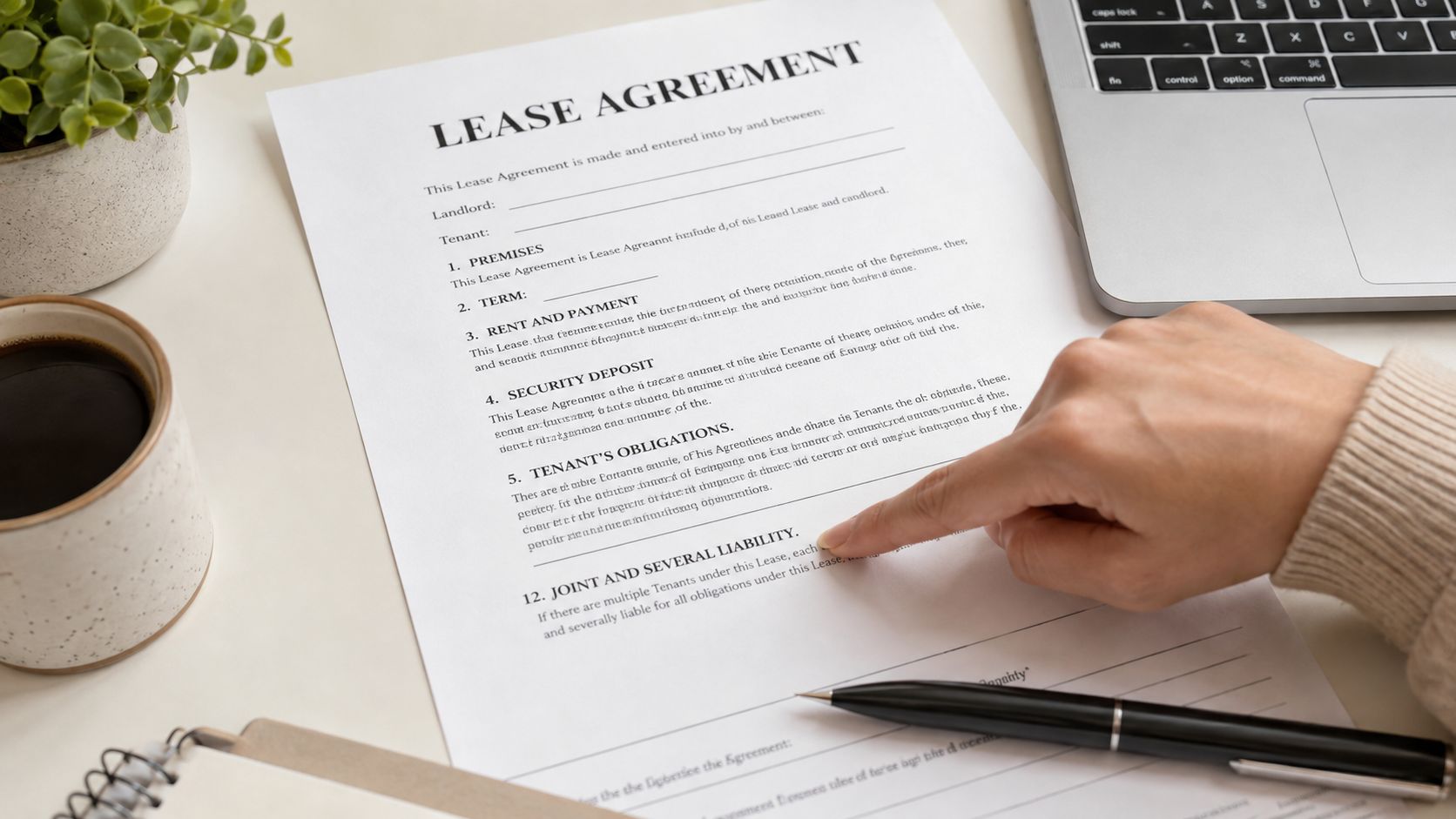
If you're the tenant reading your lease after the signature already went in, start with the liability clause. Look for words like joint and several, guaranty language, and any early-termination or replacement-tenant provisions. Those clauses tell you how much risk you took on when you signed.
Protect yourself before the move-in
A written roommate agreement is still smart. It can cover reimbursement, damage responsibility, cleaning, and how someone gives notice before moving out. Just remember that the landlord is not bound by that side agreement unless the landlord signed it too.
For the move-in side, use a checklist and document the unit condition in writing. A practical template like the tenant move-in checklist template can help create a record before anyone starts blaming anyone else for scratches, stains, or missing items.
Protect your deposit and your defenses
Keep repair requests in writing, save photos, and be specific about dates and conditions. That helps if the landlord later tries to deduct money you think shouldn't come out of the deposit. The same goes for move-out. The cleaner your documentation, the easier it is to challenge improper deductions.
The video below is useful if you want another plain-English walk-through of how roommates can read a lease and think about shared responsibility.
If an eviction starts, don't wait to see whether your roommate fixes it. Wrongful eviction issues, notice problems, retaliation, and lease interpretation disputes are all reasons to speak with a Texas landlord tenant lawyer quickly. In many shared-lease cases, the question is not whether you paid your half, it's whether the lease and the landlord's notice comply with Texas law.
Key Takeaways and Next Steps for Roommates in Texas
The main rule is simple, joint and several liability lets a landlord pursue any signer for the lease debt, even when the roommates privately split expenses another way. That same structure can affect rent, damage claims, and eviction exposure. If one roommate pays more than their share, reimbursement between roommates is usually a separate court issue, not a defense to the landlord's claim.
FAQ
If I move out, am I automatically off the hook? No, not unless the landlord releases you or the lease changes in writing.
Can a landlord pursue a roommate who was never on the lease? Usually not under the lease itself, but the facts can still matter in other ways.
Can roommates sue each other later? Yes, private reimbursement claims may be handled separately in small claims court.
If your lease, deposit, or eviction notice is causing problems, talk to a Texas landlord tenant lawyer before the issue gets worse. A short call can clarify your rights, your risks, and your next move.
If you need help with a roommate lease dispute, eviction notice, or tenant rights issue, The Law Office of Bryan Fagan, PLLC handles Texas rental matters with clear, practical guidance. Visit The Law Office of Bryan Fagan, PLLC to schedule a free consultation and get help protecting your rights under Texas law.