Dealing with a landlord dispute over repairs can wear you down fast. One day the water heater stops working, the next day the bathroom leak starts spreading, and suddenly you're trying to figure out whether Texas law gives you any real power or just more paperwork.
The short answer is that Texas habitability law is strict and procedural. In Texas, your rights usually turn less on a broad “implied warranty” idea and more on the Texas Property Code, the written notice you gave, whether you were current on rent, and whether the condition materially affected health or safety. That's why a Texas landlord tenant lawyer will usually start by asking for your lease, your notice, your rent records, and your photos before talking strategy.
When a Texas Rental Becomes Unlivable
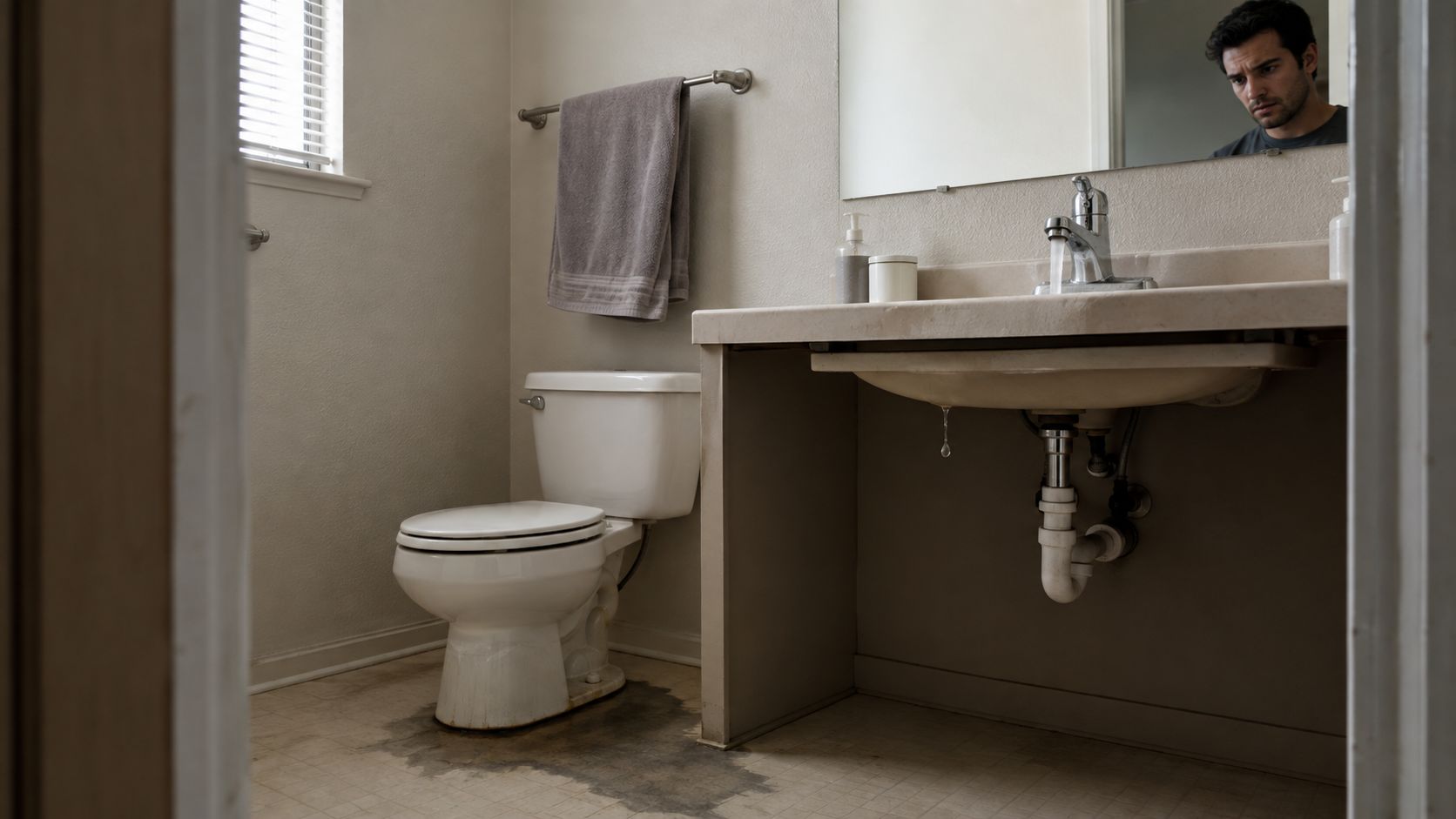
A Houston renter calls about a broken water heater. The shower never gets hot, the bathroom corner stays damp, and now there's mold creeping along the baseboard. The renter has heard that Texas has a habitability rule, so the main question is whether the unit becomes unlivable the moment something goes wrong.
Texas law answers that question through Chapter 92, Subchapter B of the Texas Property Code. The repair duty turns on conditions that materially affect a tenant's physical health or safety, not on every annoyance, inconvenience, or lease promise that goes unfulfilled (Texas Property Code Chapter 92). That is why Texas habitability law often feels narrower than the broad “implied warranty of habitability” language people use online.
A good way to sort it out is to ask whether the condition changes ordinary day-to-day living in a real health or safety sense. A loose cabinet hinge may be frustrating. A sewage smell, active leak, or loss of heat in the middle of winter can point in a different direction entirely.
Why the statute matters more than the slogan
Texas law is built around procedure. The tenant must give written notice, the landlord must have a reasonable time to respond, and the law treats 7 days as a reasonable period in many situations under § 92.056(d) (Texas Property Code Chapter 92). In plain English, the paper trail can make or break the claim.
The hot-water rule is one of the clearest examples of how Chapter 92 works in practice. If the problem is a failure to provide hot water, Texas Property Code § 92.052 requires the water-heating device to be in good operating condition so the unit can deliver hot water at a minimum of 120°F (Texas Property Code Chapter 92). That gives both sides a concrete standard instead of a vague argument about comfort.
Practical rule: A condition can be serious and still fail as a legal claim if the tenant did not give written notice or was behind on rent when notice went out.
For a plain-English guide to how Chapter 92 fits into tenant rights generally, see this overview of Texas Property Code Chapter 92 tenant rights.
The Statutory Foundation Under Chapter 92
A renter in Texas can have a real problem and still have no repair claim until Chapter 92 says the duty exists. That is the part many habitability guides blur. Texas law does not start with a general promise that every defect must be fixed. It starts with a narrow statutory rule: the landlord's repair duty is triggered only after written notice, only if the tenant is not delinquent in rent, and only if the condition materially affects the physical health or safety of an ordinary tenant.
That is the foundation. Everything else sits on top of it.
The ordinary tenant test in plain English
The phrase “ordinary tenant” does the heavy lifting. The law is not asking whether this condition is annoying to one renter, or whether a particular person finds it upsetting. It asks whether a normal tenant would view the defect as a real health or safety problem. A broken decorative fixture usually stays in the realm of inconvenience. A sewage backup, a gas leak, or another condition that threatens health or safety points in a different direction.
The hot-water rule shows how Chapter 92 turns that idea into something concrete. Under § 92.052, a landlord's repair duty can also arise when the problem is a failure to maintain hot water at the required minimum temperature, and the statute gives that issue a clear benchmark instead of leaving everyone to argue about comfort or preference (Texas Property Code Chapter 92; Dallas Landlord Lawyer's explanation of § 92.052). That is why hot-water disputes are often easier to document than vague complaints about whether a unit feels livable.
What the law is really asking for
A court, a lawyer, or a tenant reviewing the facts usually comes back to three questions. Did the tenant give proper written notice? Was rent current when the notice was delivered? Did the condition materially affect health or safety?
If the answer to any of those is no, the claim may fail even if the condition feels serious.
The lease can set notice rules, but it cannot erase the statute's core repair duty in a residential setting.
Chapter 92, Subchapter B rewards proof, not frustration. A renter who is trying to understand the Texas habitability standard explained in plain English should start with the statute, then identify the condition, then build the paper trail. For a fuller plain-English overview of how Chapter 92 fits into tenant rights, see Texas Property Code 92 tenant rights.
A small plumbing defect can still be just a maintenance issue. A leak that keeps returning, spreads into walls, or creates sanitation concerns is different. For a homeowner or tenant trying to understand how water problems are evaluated, H-Towne's plumbing inspection advice helps show what professionals look for before a repair issue grows into something larger.
Conditions That Qualify as Uninhabitable in Texas
Texas habitability problems usually look ordinary at first, then turn serious because of what they do to the unit. A broken pipe under the sink is annoying. A leak that spreads into walls, feeds mold, and keeps the bathroom wet is different. The statute is aimed at conditions that hit health, safety, and basic livability, not cosmetic complaints.
The problems that usually matter
Texas practitioners and property guides treat these as the kinds of defects that can cross the line into uninhabitable territory: faulty plumbing, lack of heat or electricity, mold, sewage backups, gas leaks, serious pest infestations, structural damage, electrical hazards, and missing or broken security devices on exterior doors and windows (Texas habitability requirement summary). Those are the kinds of problems that can make a unit unsafe even if the lease is still technically in force.
A good example is plumbing. If a leak is small and isolated, it may be a maintenance issue. If it causes recurring water intrusion, drywall damage, or sanitation concerns, it starts looking like a habitability issue. For a homeowner or tenant trying to understand how water problems are evaluated, H-Towne's plumbing inspection advice can help frame what professionals look for before a repair becomes a bigger structural problem.
Emergencies move faster than ordinary repairs
Emergency conditions get a much shorter response window. The cited legal analysis describes 24 to 72 hours as the typical expectation for emergencies, while non-emergency repairs may take 14 to 30 days depending on the facts and notice (Texas habitability standards overview). That timing isn't a free pass for landlords, it's a way to sort true emergencies from repairs that can be scheduled.
Here's the key distinction. A broken towel bar is not the same as exposed wiring. A noisy window isn't the same as a gas leak. The legal system cares about the effect on safe occupancy, not just whether something is broken.
For a landlord-facing explanation of what conditions usually fall inside the repair duty, habitability laws Texas landlords must provide is a useful companion read.
Good rule of thumb: If the problem threatens sanitation, electrical safety, secure access, heat, water, or gas, treat it as urgent and document it right away.
Notice Requirements and the Rent-Current Rule
A Texas habitability claim usually starts with two questions, did the landlord get written notice, and was the tenant current on rent when that notice went out. If either piece is missing, the repair claim can stall before anyone reaches the condition itself.
A good notice reads like something a landlord can act on without guessing. Put it in writing, date it, identify the unit, describe the problem with enough detail to show what is wrong, and ask for repair within a reasonable time. If the issue affects hot water, for example, a hot water heater replacement may be the fix, and the timeline can change depending on what has failed and how badly.
What your notice should say
Your notice should be clear, dated, and specific. It should include the date, your address, the exact condition, a request for repair within a stated time, and a request for a written response. The point is to leave no room for a later claim that the landlord did not understand the problem.
A practical template looks like this:
- Date and unit address. Put the notice in writing and identify where the problem exists.
- Specific condition. Say what is broken, leaking, unsafe, or missing.
- Request for repair. Ask for the issue to be fixed within a reasonable time.
- Request for response. Ask the landlord to reply in writing and confirm next steps.
Texas law treats 7 days as a common benchmark in many repair disputes, although emergencies can require faster action. A dead water heater is a different kind of problem than a loose cabinet door. If you are dealing with hot water failure, the facts may point to a faster repair window, especially if the loss of service affects daily use of the home.
Why rent current status changes everything
The rent-current rule is built into the statutory repair claim. A tenant who is behind on rent when notice is given usually loses the protection that comes with the repair process. That is why Texas habitability law is stricter than many renters expect. It does not start with a general promise of perfect housing, it starts with a tenant who has paid what is due and then gives proper notice of a condition that materially affects health or safety.
A renter in Austin once asked whether withholding rent until the landlord fixed the water heater would put pressure on the owner. That instinct makes sense, but Texas law does not treat rent withholding as a free-standing habitability strategy. If you are trying to understand the risk, can you withhold rent for repairs in Texas explains why the timing of rent matters so much.
If the rent is already behind when notice goes out, the tenant's leverage usually drops fast, even when the repair problem is real.
Tenant Remedies and Common Pitfalls
When a landlord ignores a valid repair complaint, Texas law gives tenants a few possible remedies. Which one fits depends on the facts, the timing, and whether the tenant followed the notice rules first. Choosing the wrong remedy too early can weaken the tenant's position or create a new problem.
The remedy menu
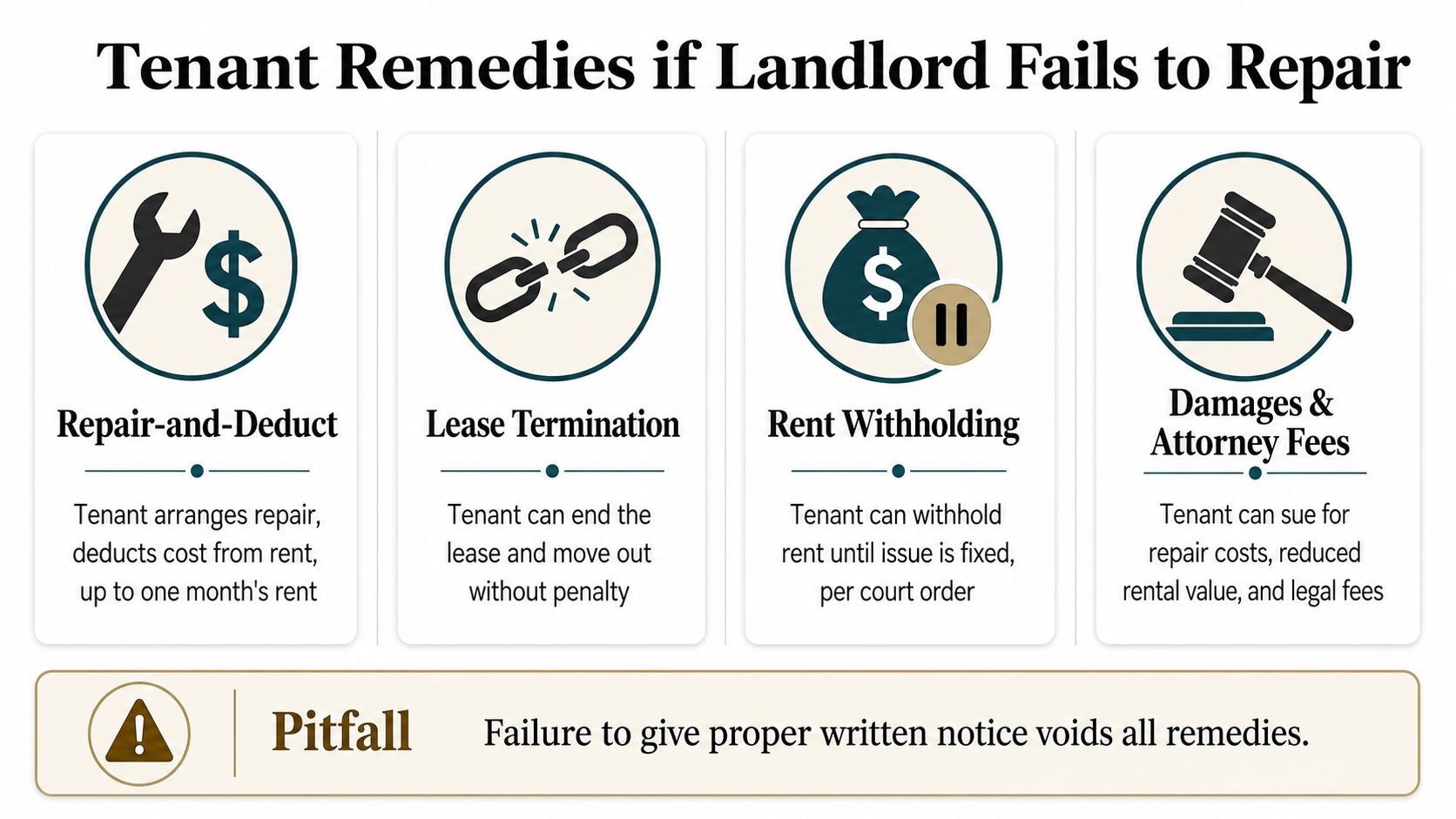
Repair-and-deduct lets the tenant arrange the repair and subtract the cost from rent, but it comes with procedural limits under § 92.0561. The tenant has to give proper notice first, and the deduction is limited by statute and timing.
Lease termination can be available when the property becomes uninhabitable and the landlord does not cure the problem after proper notice. That remedy is powerful, but it is not casual. A tenant who moves out too early or skips the notice period may lose the cleanest legal argument.
Rent withholding is the trap many renters misunderstand. Texas does not treat “I'm not paying until they fix it” as a stand-alone habitability strategy. The rent must be current when notice is given, so withholding first can break the statutory chain.
Damages and attorney's fees may also be available when the landlord fails to act after proper notice and the statutory conditions are met. Those claims often turn on whether the tenant can document the condition, the notice, the delay, and the harm.
A repair dispute can go wrong fast
Take a tenant whose air conditioning fails and mold starts forming near a window. If the tenant sends a clear written notice while current on rent, the claim is much stronger. If the tenant stops paying, texts the landlord a complaint, and then deducts money without a paper trail, the defense gets much easier.
The same caution applies if you are considering the firm's approach to unresolved repair fights. The Law Office of Bryan Fagan, PLLC can review a habitability dispute, a lease issue, or an eviction-related repair defense, but the first thing any lawyer will want is the notice history and payment record. A clean file matters more than a strong argument with no proof.
The tenant-remedy chart below, including the limits on repair-and-deduct and the warning about proper notice, is also a reminder that documentation controls outcome in Texas habitability disputes.
Common Landlord Defenses and Tenant Mistakes
A mold complaint can look strong from one side and weak from the other, depending on the paper trail. That's why these cases often turn on details, not just the condition itself.
The same facts, two different stories
A tenant in Fort Worth sends photos of mold in a bedroom closet. On the tenant's side, the story is simple. The unit has a moisture problem, the mold affects livability, and the landlord ignored written notice. On the landlord's side, the response may be just as specific. The tenant never sent written notice, the problem came from tenant-caused humidity or neglect, or the rent was already delinquent when the complaint was made.
Those defenses matter because Texas habitability law is procedural. A landlord will usually argue that the tenant never triggered the duty, or didn't preserve it, by failing to give written notice or staying current on rent. The landlord may also argue that the defect was cosmetic, isolated, or not severe enough to materially affect an ordinary tenant.
Where tenants trip up
One common mistake is relying on a lease promise instead of the statute. Another is assuming that every uncomfortable condition counts. Texas law draws a line between real health and safety risks and ordinary annoyance.
A landlord can also defend by showing the problem was caused by the tenant, or by pointing to quick repair efforts and documentation. If a manager logs the complaint, sends a contractor, and has photos of the completed repair, that file can undercut a later claim even when the tenant still feels dissatisfied.
Plain truth: A habitability case usually doesn't turn on who tells the better story. It turns on who can prove the timeline.
The strongest tenant case often starts with written notice, stays current on rent, and keeps every communication. The strongest landlord defense often starts with the same habits, just from the other side.
Building Your Evidence File Before You Call an Attorney
Before you talk to a lawyer, gather the records that show what happened and when. A good habitability file makes it easier to tell whether you have a repair claim, an eviction defense, or a lease dispute that needs faster action.
What to pull together
- Dated photos and videos of the condition, especially before and after any attempted repair.
- Every written repair request you sent, plus any landlord replies.
- Your lease and addenda, so counsel can check notice rules and repair language.
- Rent receipts or bank records showing you were current when notice went out.
- Utility bills or outage records if the issue involved heat, electricity, or hot water.
- Third-party reports from mold inspectors, pest control, plumbers, or licensed contractors.
- A simple timeline that lists when the problem started, when you notified the landlord, and what changed after that.
Why the timeline matters so much
Attorneys look for the point where the legal duty attached. That means the date of written notice, the rent status at that moment, and the period the landlord had to act. If the chronology is messy, even a serious repair problem can become hard to prove.
A clean file also helps you avoid self-help mistakes. If you're thinking about repair-and-deduct, lease termination, or a rent dispute, the evidence will show whether those choices are available or too risky. That's especially important in Texas, where procedure is part of the claim itself.
Bring the paper trail first. The photos help, but the dates usually decide the case.
When to Get Legal Help and How the Firm Can Help
If your rental has a serious repair problem, start with the basics. Check whether the condition really affects health or safety, confirm that you gave written notice, and make sure your rent was current when notice went out. If any of those pieces are missing, self-help can turn into self-sabotage fast.
That's the point where legal help pays off. A lawyer can review whether the issue fits Chapter 92, whether repair-and-deduct makes sense, whether a termination notice is premature, and whether the facts support an eviction defense, damages claim, or lease dispute strategy. If you're in Houston, Dallas–Fort Worth, Austin, San Antonio, or a nearby county, The Law Office of Bryan Fagan, PLLC can walk through the repair history, rent records, and next steps with you in a free consultation.
For more background, the firm's pages on Texas habitability laws and Texas Property Code tenant rights can help you compare your facts to the statute before you make a move.
If you need help with a repair dispute, eviction issue, or rental conflict, The Law Office of Bryan Fagan, PLLC can review your situation and explain your options in plain English. Visit The Law Office of Bryan Fagan, PLLC to schedule a free consultation and get guidance specific to your Texas tenant rights.