Dealing with a landlord dispute is stressful enough. It gets worse when you hear the property you rent is being listed, shown, or already under contract, because your first thought is usually simple, am I about to be forced out? In Texas, the answer is usually no. A landlord can sell the property, but that sale does not automatically end your lease, and your rights do not vanish just because ownership changes.
What you need right away is a clear view of four things. First, whether your lease survives the sale. Second, who controls your security deposit. Third, what notice rules apply when strangers start coming through for showings. Fourth, what to do if the landlord or new owner starts acting like they can push you out by lockout, pressure, or retaliation. If you want a broader map of the rental rules that govern these disputes, the Texas Landlord-Tenant Law: An Overview page covers how Texas Property Code Chapters 91 to 94 and Chapter 24 fit into the rental relationship.
You do not need panic. You need a plan. If you're dealing with tenant rights when landlord sells property Texas issues, a calm, plain-English read of the rules will keep you from signing away rights you still have.
What Happens When Your Texas Landlord Sells the Property
The day you hear the property is being sold, check the lease first and the gossip later. A sale can change who collects rent and who handles repairs, but it does not erase your lease by default. Tenants often panic because they assume a closing date means a move-out date. In Texas, that assumption is usually wrong.
Your job is to separate the sale from the tenancy rules that still apply. The lease, the security deposit, showings and entry, and any threat of eviction are separate issues. Landlords often mix them together to pressure tenants, so keep them in separate buckets and answer each one on its own terms.
A property can be marketed while the tenancy stays in place. If you are a landlord trying to avoid unnecessary conflict during a sale, the better move is to document showings, notices, and lease terms in writing, and to boost rental property leases with clear expectations before buyers start touring the unit. The same lesson works for tenants, clarity beats pressure, and written records beat verbal promises.
Practical rule: a sale changes ownership, not your basic occupancy rights, unless the lease says otherwise.
Read your lease, keep paying rent on time, and save every notice you get. Do not sign away rights because a buyer, agent, or new manager sounds certain. If the new owner wants different terms, those terms have to fit the lease and Texas law, not just the seller's convenience.
The Core Rule That Leases Run With the Land
The central Texas rule is plain. When the property changes hands, the new owner is bound by the existing lease if the lease does not specifically say it ends on sale. The Texas State Law Library says that if the lease has no sale-termination clause, the owner cannot remove the tenant or change the lease terms just because the property sold. Texas Law Help says the same thing in plain language, if the landlord sells or gives away the property, the new owner must honor the lease.
What that means for your day-to-day rights
Your rent amount, lease duration, and the other agreed terms keep going. The buyer steps into the seller's role as landlord. They do not get to restart the tenancy on new terms just because they signed a deed instead of a lease.
That is why a stranger showing up with new contact information is not a legal emergency. It may feel invasive, but it does not automatically change your obligations. If your lease still has months left, the new owner generally has to live with that timeline. If your lease says the unit is yours through the end of the term, that promise still matters.
The lease generally runs with the land, so the buyer inherits the bargain the seller made.
A good example is a tenant who still has six months left on a fixed-term lease. Under Texas law, the new owner cannot raise rent in the middle of that term or force an early move-out unless the lease itself gives that right. If you want a broader legal backdrop on how these rental relationships are structured, the rules that govern them sit inside Texas Property Code practice, not whatever the buyer prefers that day.
How the New Owner Steps Into the Seller's Shoes
Once the sale closes, the buyer becomes your landlord for the rest of the lease term. That means the buyer inherits the deal as written, not a fresh opportunity to renegotiate from zero. If the old lease says the rent is one amount and the term ends on a certain date, the new owner has to honor that.
What stays the same
The protected pieces are the ones people fight about most. The rent amount stays the same during the fixed term. The lease end date stays the same. The other agreed conditions, like occupancy rules or pet terms, stay in place unless the lease or law says otherwise.
A buyer can ask you to sign a new lease, but you do not have to agree. That matters because sellers and investors often try to dress up pressure as “housekeeping” after closing. It isn't housekeeping if they're trying to cut the term short or force a higher rent before your lease ends.
When the rule changes
There are limited exceptions. A written lease clause can allow termination on sale. A month-to-month tenancy can usually end with proper notice. A foreclosure can trigger different rules entirely, and that situation needs separate legal review. Those are exceptions, not the default.
For most renters, the practical takeaway is this. If you still have time left on a fixed lease, stay put unless you and the new owner make a deal you want. If the buyer starts pushing a move-out date that is not in your lease, put your response in writing and keep it short. Say you are honoring the current lease and want all future communication in writing.
If ownership questions come up during the transition, an owner can also prove the transfer through records. A useful internal reference for that is proof of ownership, because you should know who has authority before you take directions from anyone.
Security Deposits and the Transfer to the New Owner
Security deposits cause a lot of confusion during a sale because the money feels tied to the old landlord, but the law ties it to the property transfer. Under Texas Property Code § 92.105, the seller must transfer the tenant's deposit to the buyer on or before closing, or refund it to the tenant. The buyer then becomes liable for returning the deposit on the same terms as the seller.
Why the closing date matters
The transfer date is the important milestone. Once the sale closes, the new owner generally holds the responsibility for the deposit dispute, not the seller. Texas law also requires landlords to return a security deposit within 30 days after the tenant surrenders the unit, so the buyer needs to understand that obligation from day one.
That rule protects you from the old trick of “we sold the place, so we don't have your money anymore.” The money is supposed to move with the transaction or be refunded. It does not disappear just because ownership changed.
Document everything: keep your lease, move-in checklist, receipts, photos, and every email about the deposit.
Comparison of deposit responsibility during a sale
| Stage | Who Holds the Deposit | Tenant's Right | Key Code Section |
|---|---|---|---|
| Before closing | Seller | Ask where the deposit will go and keep records | Texas Property Code § 92.105 |
| At closing | Deposit must be transferred to buyer or refunded to tenant | Written confirmation helps prevent disputes | Texas Property Code § 92.105 |
| After closing | Buyer | Request itemized deposit accounting and repayment within the legal timeline | Texas Property Code § 92.105 and the 30-day return rule |
The smartest move is to ask for written confirmation that the deposit was transferred. If the seller says the buyer has it, get that in writing. If the buyer says they never got it, that's not your fight to sort out alone, because your rights attach to the money itself.
If you want a tenant-focused breakdown of deposit disputes, the tenant rights security deposit page is a helpful companion to this issue. It's also smart to photograph the unit before move-out, keep every receipt, and push for all accounting in writing.
Showings, Entry Notices, and Protection From Retaliation
A sale can make your home feel like a revolving door. Buyers want walkthroughs, agents want access, inspectors want to look around, and all of that can wear on your privacy. Texas tenants still have a right to reasonable notice and quiet enjoyment, and repeated unannounced entries are not something you just have to tolerate.

What to do when people keep coming through
Ask for notice in writing. Keep a log of every entry, every showing, and every time someone comes by without warning. If the landlord or agent is treating the unit like it's open to the public, send a short written message saying you expect proper notice and you want appointments scheduled in a way that respects your lease.
You should also know that a sale doesn't give the landlord or the new owner a free pass to retaliate. They cannot raise rent, cut services, change locks, or file a sham eviction because you asked questions about the sale or exercised your rights. If a notice to vacate arrives right after you complained about showings or repairs, save the envelope, the text messages, and the date you complained.
A useful external read on sale logistics for owners is Red Rock Properties tenant sale tips, because it shows how a clean sale process can be handled without turning the tenant into the problem. The legal point is simple, though. Tenants should not be forced out by pressure tactics when the law still protects their occupancy.
If entries turn into lockouts or utility shutoffs, act fast. Wrongful eviction and illegal lockout claims can move quickly, and delay helps the other side. If you need a Texas tenant attorney or an eviction attorney because the pressure has crossed the line, don't wait for the situation to get worse.
For more on unlawful entry rules, the internal guide on can a landlord enter without notice Texas is worth reading before you let anyone talk you into “being reasonable” at your own expense.
Two Real Scenarios From Texas Rental Markets
In Houston, Dallas, Austin, and San Antonio, these disputes usually fall into one of two patterns. The first is a tenant in a fixed-term lease whose home gets sold to an investor who wants a fast turn and a higher rent. The second is a small landlord selling a duplex with a month-to-month tenant already in place.
Scenario one, fixed-term tenant under pressure
The tenant still has time left on the lease, but the new owner wants renovations and pushes for a buyout. The tenant's answer is straightforward. The lease still controls, the rent stays the same, and the deposit still has to follow the statutory transfer rule. If the owner wants the tenant out early, that's a negotiation, not a right.
That tenant should ask for every offer in writing and decide whether leaving early is worth it. If the owner starts making threats instead of offers, the tenant should stop discussing it casually and keep everything documented.
Scenario two, month-to-month duplex sale
A small landlord selling a duplex needs tighter paperwork, not more drama. The tenant can be ended with proper notice if the tenancy is month to month, but the notice must be clean and the deposit transfer still has to be handled properly. Written communication protects both sides, because it shows who said what and when.
When these sales go smoothly, everyone knows the rules before closing. The landlord avoids a deposit fight. The tenant avoids surprise. And the buyer inherits a property with fewer disputes hanging over it.
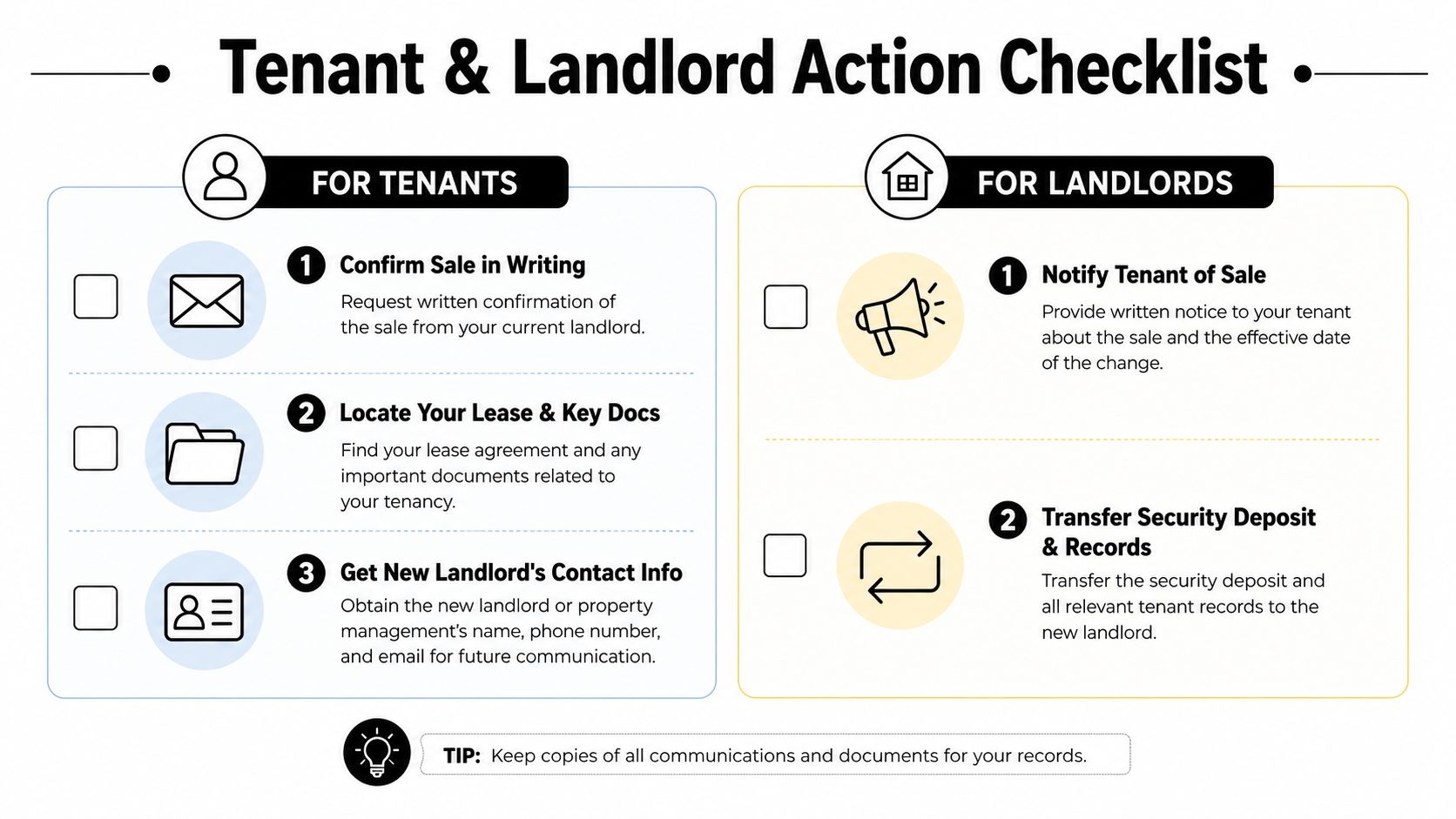
A Step-by-Step Checklist for Tenants and Landlords
When a sale is announced, don't improvise. Use a checklist and keep it in writing.
Tenant checklist
- Confirm the sale in writing. Ask who the new owner is, when the closing happens, and who will collect rent after the transfer.
- Read your lease for sale language. Look for any clause that says the lease ends on sale. If there isn't one, the default rule usually protects you.
- Get the new landlord's contact information. You need a name, mailing address, and a clear point of contact for repairs and rent.
- Document the unit's condition. Photos and videos help if the new owner tries to blame you for old damage.
- Follow up on the deposit in writing. Ask whether it was transferred or refunded.
- Don't sign a new lease under pressure. A new agreement should be reviewed before you give up existing rights.
If you need help reviewing the lease, one practical option is to contact a Texas tenant lawyer before signing anything that changes your move-out date, rent, or deposit rights.
Landlord checklist
- Review every lease for sale-termination language. A silent lease usually survives the sale.
- Notify the tenant clearly. Tell them who is buying, when closing is expected, and where rent should go after closing.
- Transfer the deposit and records. Section 92.105 matters, and the buyer needs the paperwork.
- Coordinate showings with notice. Don't let the process become a privacy complaint.
- Hand over repair histories and tenant communications. The buyer needs the full picture, not just the keys.
Sample notice language: “Your lease remains in effect after the sale. After closing, your rent should be paid to the new owner at the contact information below.”
Sample deposit language: “The tenant's security deposit was transferred to the buyer at closing, and the buyer is responsible for the deposit going forward.”
Get Help Protecting Your Texas Tenant Rights
A sale does not erase your lease. In Texas, the buyer generally steps into the seller's shoes, the lease keeps going if it doesn't say otherwise, and the security deposit has to be handled under Texas Property Code § 92.105. If someone starts using the sale as a reason to pressure you, change the terms, or lock you out, that's the point to stop guessing and get legal help.
You do not need to sort this out alone. The Law Office of Bryan Fagan, PLLC works with Texas tenants and landlords on lease disputes, deposit fights, showings, retaliation, and illegal entry issues across Houston, Dallas-Fort Worth, Austin, San Antonio, and surrounding counties.
If you're dealing with a rental sale and need straight answers about your lease, deposit, or next move, schedule a free consultation with The Law Office of Bryan Fagan, PLLC today. We can review your documents, explain your rights, and help you decide what to do before you sign, move, or give up rights you still have.