Dealing with a landlord dispute or eviction can be stressful, especially when your home no longer feels peaceful. Maybe a neighbor's noise continues late into the night, your landlord enters without warning, or an urgent repair remains unresolved while you wait for help. Understanding quiet enjoyment tenant Texas protections can help you identify what happened, preserve evidence, and choose a lawful next step.
Texas treats quiet enjoyment as an implied promise connected to your lease. The right works alongside written lease terms and parts of the Texas Property Code, including the repair remedies in Section 92.056. It can protect tenants from unreasonable landlord interference and, in some situations, disturbances caused by other tenants the landlord can control. It doesn't guarantee perfect silence or eliminate every ordinary inconvenience.
When the Apartment Next Door Never Feels Quiet
Marisol signed a one-year lease for a small Houston-area apartment near I-10. Within weeks, heavy footsteps from the upstairs unit began pounding through the ceiling past midnight. The property manager also let himself into her apartment without notice to “check on things.” Then the air-conditioning unit began leaking, and her written request for repairs went unanswered through three weeks of hot nights.
None of those events, viewed alone, automatically proves a legal violation. A neighbor's occasional footsteps may be an ordinary part of apartment living. A landlord may have a valid reason to enter, and a repair issue may require coordination with a contractor. But repeated noise, unexplained entries, and an ignored condition affecting health or safety can form a much more serious pattern.
Texas attorneys and courts generally evaluate these facts through the implied covenant of quiet enjoyment. The Texas State Law Library explains that Texas has no single state statute defining the covenant. Instead, the protection developed through case law and may also appear in the lease. It can reach landlord conduct and disturbances caused by other tenants, but it doesn't automatically make a landlord responsible for strangers or people who don't rent from the landlord. Read the Texas State Law Library's discussion of noise and quiet enjoyment for that Texas-specific framework.
The repair problem adds another layer. Under Texas Property Code Section 92.056, a landlord generally has a presumed reasonable period of 7 days after written notice to repair a condition materially affecting health or safety. If the landlord doesn't act diligently, possible remedies can include lease termination, repair-and-deduct remedies, or damages.
Marisol's situation shows why quiet enjoyment disputes rarely involve only one complaint. Noise, unauthorized entry, and repair failures can overlap as one pattern of interference with the tenant's use of the home.
What Quiet Enjoyment Actually Means in Texas
Quiet enjoyment is best understood as your right to peaceful possession and ordinary use of the rental property. The landlord doesn't promise a perfectly silent home. Instead, the implied covenant generally limits conduct that substantially interferes with your ability to live in and use the premises.
The Texas State Law Library notes that this right comes from common law rather than a single statute spelling out every rule. A written lease can reinforce the protection, while Texas Property Code Chapter 92 supplies related duties and remedies involving repairs, retaliation, utilities, and possession.
Substantial interference matters
The central question usually isn't whether something annoyed you. It's whether the conduct meaningfully deprived you of the ordinary use and value of the home.
Examples may include:
- Repeated, severe noise from another tenant when the landlord has authority to enforce lease rules but refuses to respond.
- Repeated landlord entries without permission or a reasonable purpose.
- Turning off utilities to pressure a tenant.
- Harassment, intimidation, or retaliation connected to repair complaints.
- Serious health-and-safety conditions that remain unresolved after proper written notice.
An isolated inconvenience may not meet that standard. A documented pattern that continues after the landlord receives notice presents a stronger argument.
The covenant generally protects current tenants and other lawful occupants whose possession comes through the lease. Subtenants may also have rights depending on the lease and their legal relationship to the property. Your lease still matters because it may define access procedures, noise rules, maintenance responsibilities, and notice methods.
Quiet enjoyment also differs from habitability. Habitability focuses on whether the property meets required health and safety standards. Quiet enjoyment focuses on interference with possession and use. In practice, the two often overlap. A leaking air conditioner, unsafe condition, or utility interruption can affect both the physical condition of the home and your ability to live peacefully there.
For a related explanation of disruptive conditions, review the legal definition of nuisance in Texas. The label matters less than the facts, evidence, notice, and effect on your home.
Everyday Actions That Can Cross the Line
Quiet enjoyment disputes usually turn on repetition, severity, notice, and the landlord's ability to correct the problem. A minor complaint can become more significant when the same conduct continues and the landlord does nothing.
Noise from another tenant
Suppose the tenant above you repeatedly plays amplified music and shouts in the hallway late at night. If the landlord controls the building and has lease rules or property policies that address disruptive conduct, your written complaints may create a record that the landlord knew about the problem.
The stronger facts are repeated incidents, recordings or witness statements where lawful, specific dates, and evidence that the disturbance interfered with sleep or ordinary use. A single dropped object or occasional conversation is more likely to be treated as a minor inconvenience.
Unreasonable entry
Texas doesn't impose one statewide statutory minimum notice period for ordinary landlord entry. The lease, reasonableness, and the purpose of the entry often control. Review the access clause and compare it with what occurred.
A scheduled repair entry may be defensible if the landlord follows the lease. Repeated unannounced entries, entry at intrusive times, or entry for a purpose not authorized by the lease may support a quiet-enjoyment claim. Texas Property Code Section 92.009 addresses particular entry-related circumstances, but it doesn't create one universal notice rule for every residential entry.
Utilities and services
A landlord who shuts off utilities or uses service interruptions to gain an advantage may seriously interfere with possession. For example, turning off water or electricity to force payment or pressure a tenant to leave is different from a documented outage caused by a utility provider or emergency repair.
Keep notices, service records, photographs, and messages. The reason for the interruption and the landlord's intent can matter.
Harassment and retaliation
Threatening texts, repeated intimidation, or punitive conduct after a tenant requests repairs can raise both quiet-enjoyment and retaliation concerns. Texas materials connect retaliation protections under Section 92.331 with actions such as eviction, rent increases, or service reductions taken because a tenant complained about repairs or conditions affecting the quiet enjoyment of others.
Landlords and tenants can also review Tenant Screening and Application Rules in Texas for information about what Texas law permits when screening applicants and handling application fees. That issue is separate from quiet enjoyment, but clear leasing practices can prevent later disputes.
Health-and-safety repairs
Under Section 92.056, written notice is essential when a condition materially affects health or safety. Seven days is presumed to be a reasonable repair period under the statute. If the landlord doesn't act diligently, the tenant may have statutory remedies, depending on the facts and compliance with the required steps.
Practical rule: Describe the condition, explain how it affects health or safety, request the repair in writing, and keep proof that the landlord received the notice.
Two Real-World Texas Scenarios
Marisol's story changes when the facts become more severe. Assume she is now renting in San Antonio, and the upstairs tenant's amplified music and hallway shouting continue after repeated written complaints. At the same time, the air conditioner fails during hot weather, and the landlord ignores her written repair request.
A court would likely examine the severity, duration, notice, and effect on possession. Marisol's dated records could show when the problems began, when she notified management, and whether the landlord had a meaningful opportunity to respond. Her Section 92.056 notice matters because the statute connects a serious repair condition to a specific notice and response framework.
She may consider statutory repair remedies, damages, or an argument that the combined conditions effectively forced her to leave. A constructive-eviction theory generally requires more than discomfort. The tenant would need evidence of substantial interference, landlord notice, and circumstances showing that a reasonable person would feel compelled to vacate.
David's position is different. He owns a Houston rental property where a tenant repeatedly violates written noise rules, harasses neighbors, and refuses reasonable access for repairs. David shouldn't respond by confronting the tenant, cutting services, or entering whenever he wants. He should preserve complaints, lease records, communications, and witness information, then follow the proper notice and eviction process.
Texas Property Code Section 92.332 and Section 94.253 use the phrase “quiet enjoyment” in the eviction context. They allow a landlord to terminate a holdover tenant when the landlord has a good-faith belief that the tenant, a family member, guest, or invitee might adversely affect the quiet enjoyment of other tenants or neighbors. The facts must be genuine and documented, not manufactured after the landlord decides to remove the tenant.
| Fact Pattern | Tenant's Argument | Landlord's Argument |
|---|---|---|
| Repeated amplified music | Management knew about severe noise and failed to enforce lease rules. | The complaints were isolated, disputed, or outside the landlord's control. |
| Unannounced entry | Entry invaded possession and violated the lease's access procedure. | The entry served a legitimate purpose and was reasonable under the lease. |
| Unresolved serious repair | Written notice triggered the Section 92.056 repair framework. | The condition didn't materially affect health or safety, or the landlord acted diligently. |
| Disruptive tenant conduct | The landlord is using quiet enjoyment as a pretext. | Documented conduct adversely affected neighbors and supports lawful termination. |
The same legal concept can protect a tenant from a landlord and protect neighbors from a disruptive tenant. Documentation determines which version of the story the evidence supports.
What Texas Tenants Can Do Step by Step
Start with facts, not accusations. A clear record gives a landlord a fair chance to correct the issue and gives a court something concrete to evaluate.
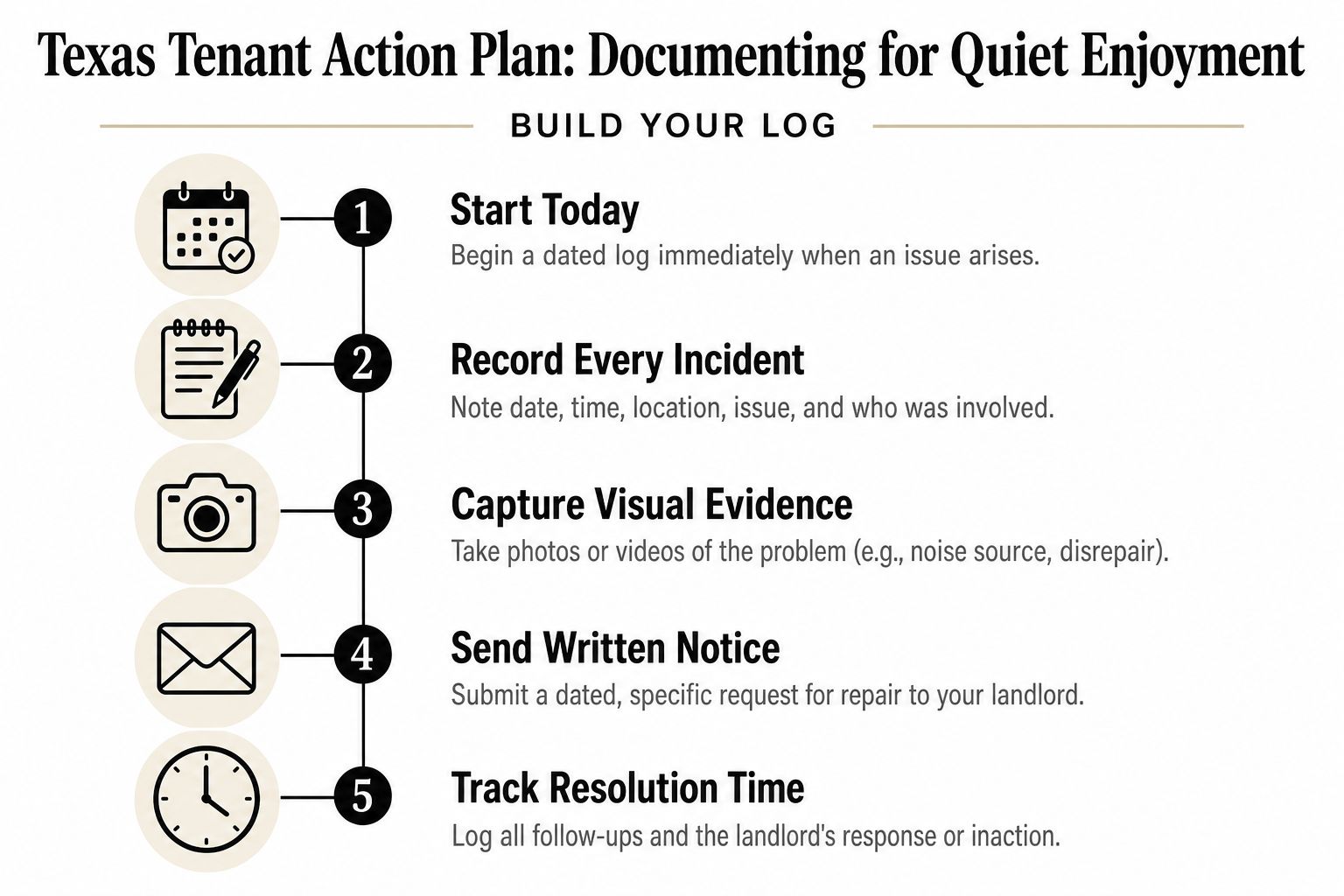
Create a dated incident log. Record the date, time, location, conduct, people involved, and effect on your use of the home. Note every noise event, entry, repair request, photograph, video, and witness. Save texts, emails, portal messages, and notices in one folder.
Read the lease carefully. Find the clauses covering entry, noise, repairs, utilities, notices, early termination, and dispute procedures. Texas doesn't have one statewide entry-notice period, so the lease may be especially important for determining whether an entry was authorized.
Send written notice. Describe the repair or interference specifically. For a condition materially affecting health or safety, identify the written notice date and explain that Section 92.056 presumes seven days to be a reasonable repair period, while understanding that the statute has additional requirements.
Track the response. Record whether the landlord acknowledges the complaint, schedules work, begins repairs, or does nothing. A landlord's diligent effort may matter even when a repair takes time, while silence and unexplained delay create a different record.
Choose a remedy carefully. Depending on the facts and statutory compliance, options may include repair-and-deduct, lease termination under Section 92.056, damages, or injunctive relief. Don't assume you can stop paying rent. Withholding rent without legal grounding can create an eviction risk.
A constructive-eviction claim requires careful proof that the interference was substantial, the landlord knew about it, and the conditions made continued occupancy unreasonable. A justice court case or another civil claim may involve actual damages, mental anguish, attorney's fees, or injunctive relief, but the available remedy depends on the facts and procedural rules.
If you receive a notice to vacate, eviction citation, or lease-termination notice, keep living safely and follow the deadlines stated in the papers unless an attorney advises otherwise. Legal rights are easier to protect when you preserve evidence before messages disappear and memories become uncertain.
How Texas Landlords Can Stay on the Right Side
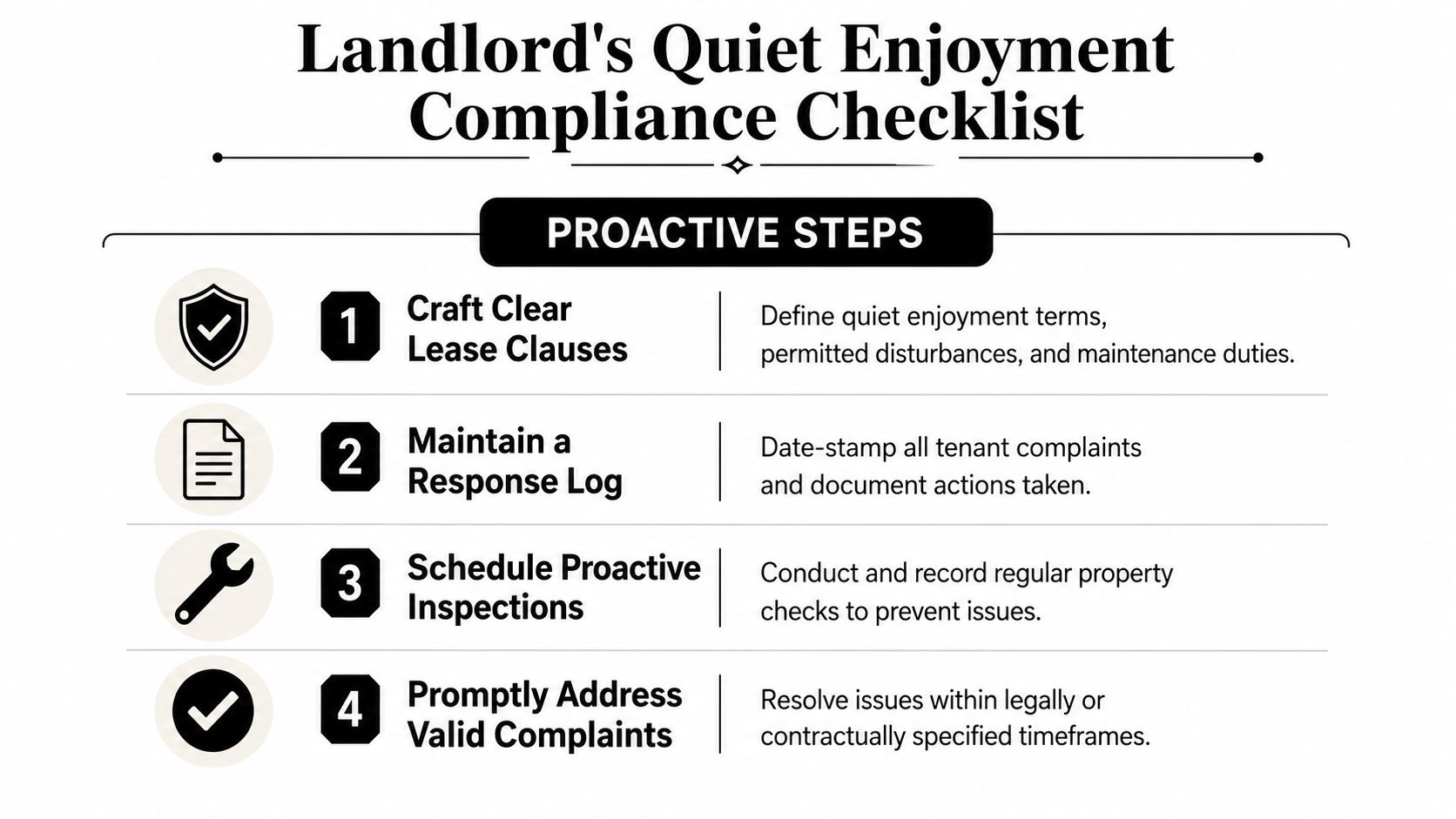
Landlords can reduce quiet-enjoyment disputes by treating possession as the tenant's home during the lease term. Entry should serve a legitimate purpose, follow the lease, and be handled with reasonable notice whenever feasible.
A well-drafted lease should explain permitted entry for repairs, inspections, showings, and emergencies. It should also define how notice is delivered and how the parties coordinate access. Because Texas has no single statewide statutory minimum notice period for ordinary entry, landlords should review Texas landlord right-of-entry and notice rules with the actual lease language in mind.
Build a response record
When a tenant reports a leak, failed air conditioning, unsafe condition, or recurring disturbance, create a dated ticket. Record the complaint, the person assigned, contractor communications, scheduled access, work performed, and follow-up with the tenant. That record can show diligence under Section 92.056 instead of leaving the landlord to rely on memory.
Managers should never use utility shutoffs, threats, or surprise entries to pressure a tenant. Those actions can create a new quiet-enjoyment problem even when the tenant may have violated the lease.
Address disruptive conduct lawfully
Section 92.332 or Section 94.253 should be used only when the landlord has a good-faith basis and contemporaneous documentation showing conduct that may adversely affect neighbors or other tenants. Neighbor statements, incident reports, lease provisions, and written notices are more useful than general claims that a tenant is “difficult.”
Landlords should also avoid timing a termination or service reduction in a way that appears retaliatory after a repair complaint. Review Section 92.331 before acting when the tenant recently reported conditions or asserted rights.
When It Is Time to Call a Texas Tenant Rights Attorney
You can often begin with a log, a lease review, and a specific written notice. A Texas landlord tenant lawyer becomes especially important when the dispute affects possession, creates an eviction risk, or involves multiple legal theories at once.
Consider getting legal advice promptly if you receive:
- A notice to vacate or eviction filing: Chapter 24 eviction procedures move quickly, and a tenant may need to raise defenses or counterclaims at the right stage.
- A Section 92.332 termination notice: The landlord may claim that your conduct or someone connected to you threatens another tenant's quiet enjoyment.
- A lockout or utility shutoff: These facts may support a constructive-eviction argument or another urgent claim.
- A retaliation allegation: Section 92.331 issues can arise when a landlord acts after repair requests or other protected complaints.
- A serious repair dispute: Section 92.056 remedies require attention to written notice, timing, diligence, and the tenant's chosen remedy.
- A security-deposit dispute or other damages claim: A lawyer can help assess available damages and procedural limits.
- Harassment, code violations, or fair-housing concerns: These issues may involve rules beyond the quiet-enjoyment covenant.
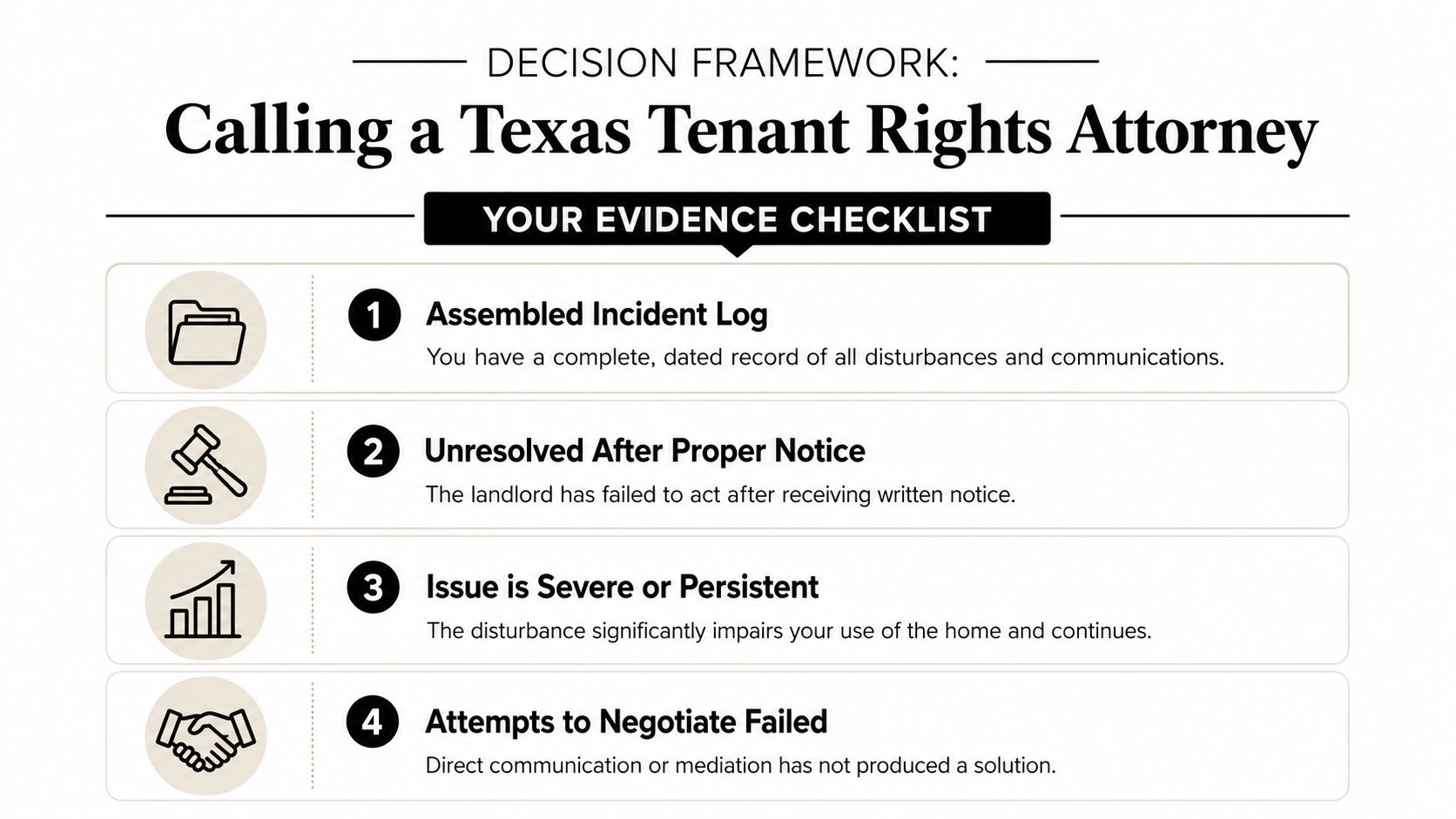
Use this decision test: do you have a dated record, did you provide proper written notice, did the landlord fail to respond, and does the problem substantially impair your use of the home? If the answer is yes, or if an eviction attorney should review a pending case, avoid signing a move-out agreement or admitting a lease violation before receiving advice.
This video provides additional general information about Texas landlord-tenant disputes:
You can also review constructive eviction in Texas when conditions have become so severe that remaining in the property may no longer be reasonable. A consultation can help separate a strong claim from a frustrating but legally minor inconvenience.
If you need help with an eviction, lease issue, unauthorized entry, repair dispute, or quiet-enjoyment claim, The Law Office of Bryan Fagan, PLLC can review your lease, notices, incident records, and available remedies. Visit The Law Office of Bryan Fagan, PLLC to schedule a free consultation and receive practical guidance about protecting your property rights in Texas.