Dealing with a landlord dispute or eviction can be stressful, especially when a rent increase appears without warning in your tenant portal. You may open your account expecting the usual charge and find that the amount has changed. Before you pay the new figure or assume the increase is automatically invalid, slow down and read your lease.
If your search begins with “landlord raised rent no notice Texas,” the answer usually turns on contract language first and statutory notice rules second. Texas doesn't use one statewide rent-increase notice period for most residential tenancies. The lease, the type of tenancy, the timing of renewal, and the way notice was delivered all matter.
When Your Landlord Raises Rent Without Warning in Texas
A Houston-area renter recently checks her tenant portal and sees a new monthly charge. The amount has changed from $1,450 to $1,595. She hasn't received an email, letter, or phone call. Her lease still appears active, and the portal gives her no explanation.
Her first question is understandable: “How many days' notice was my landlord required to give me?” The better first question is, “What does my signed lease say about rent, renewal, and notice?” Texas generally leaves those details to the written agreement, particularly when the dispute involves a renewal rather than a change during the current lease term. The Texas State Law Library's explanation of Texas rent rules confirms that Texas has no statewide statute setting a specific advance notice period for ordinary rent increases in most residential tenancies and no statewide cap on a renewal increase.
Start by identifying the tenancy
A fixed-term lease is a contract for a defined period. If the rent clause states a fixed amount and contains no adjustment provision, a landlord generally can't impose a new amount halfway through that term. A renewal offer is different. Once the current term ends, the landlord may offer different terms, subject to the lease's renewal and notice provisions.
Month-to-month arrangements require a separate analysis. Texas Property Code § 91.001 generally requires one month's written notice to terminate a month-to-month tenancy, as explained in this Texas month-to-month rental guidance. That termination rule often controls the practical timing of a rent change because the landlord can't rewrite the agreement in the middle of an ongoing rental period.
Avoid two costly mistakes
Landlords often post a new figure in a portal, send a casual text, or mention the increase verbally without following the delivery method required by the lease. Tenants make a different mistake: they pay the new amount without comment, which can create an argument that they accepted the revised terms.
Practical rule: Don't ignore the demand, but don't agree to it accidentally. Preserve the current lease, dispute unclear changes in writing, and keep paying the amount you believe is currently due while you obtain advice.
The rest of the analysis should be practical. Identify the lease type, locate the notice clause, document what happened, and respond before the next payment deadline.
What Texas Property Code Says About Rent Increases
Texas law gives landlords broad pricing freedom at renewal. The Texas State Law Library states that Texas has no statewide cap on how much rent may increase when a lease is renewed and no general statewide statute that supplies a specific advance notice period for ordinary increases in most residential tenancies. That doesn't mean a landlord can change a fixed contract whenever they want.
Fixed-term and periodic leases work differently
For a fixed-term lease, begin with the rent clause. If it states the rent for the entire term and doesn't authorize an adjustment, the landlord's attempt to raise rent before expiration is generally a contract problem. If the agreement contains an escalation clause, the landlord must follow that clause exactly.
For a month-to-month tenancy, read the agreement's notice language and compare it with Texas Property Code § 91.001. That section generally requires one full month's written notice to terminate the tenancy. A rent increase that takes effect only after the existing rental period and required notice can be treated differently from a demand for more money immediately.
The Texas Property Code tenant-rights overview can help renters identify other Chapter 92 protections that may become relevant, including retaliation and repair-related rights.
Legislative proposals provide a useful benchmark
Texas lawmakers have considered a more formal renewal-notice framework. In the 88th Legislature, House Bill 1048 proposed written renewal notice stating the new rent, the effective date, and improvements tied to the increase. It proposed delivery no later than the 7th day before the tenant had to give move-out notice. HB 1185 carried the same basic approach and proposed a $100 penalty for noncompliance. Those measures remained proposals, not a general statewide rule. The HB 1048 bill text and HB 1185 bill text show why timing, notice content, and proof of delivery matter in a dispute.
Local rules can also matter. Tenants in Austin, Dallas, San Antonio, and other cities should check whether a local ordinance or housing program adds protection to the lease analysis.
Rent Increase Rules by Lease Type in Texas
| Lease Type | Can Rent Be Raised Mid-Lease? | Default Notice Required | Where the Rule Comes From |
|---|---|---|---|
| Fixed-term lease | Generally no, unless the lease authorizes an adjustment | Follow the lease's notice and renewal terms | Written lease and contract principles |
| Renewal at lease end | Yes, if the tenant receives a valid renewal offer under the lease | The lease controls because Texas has no general statewide period for ordinary increases | Written lease and Texas rent law |
| Month-to-month tenancy | Not usually during the current rental period | The lease controls, with § 91.001 generally requiring one month's written notice to end the tenancy | Texas Property Code § 91.001 and the rental agreement |
Landlords who want fewer disputes should use clear drafting. Practical legal lease drafting tips can help identify the terms that should be stated plainly, including rent changes, renewal dates, and delivery methods.
Check Your Lease and Calculate the Notice Window
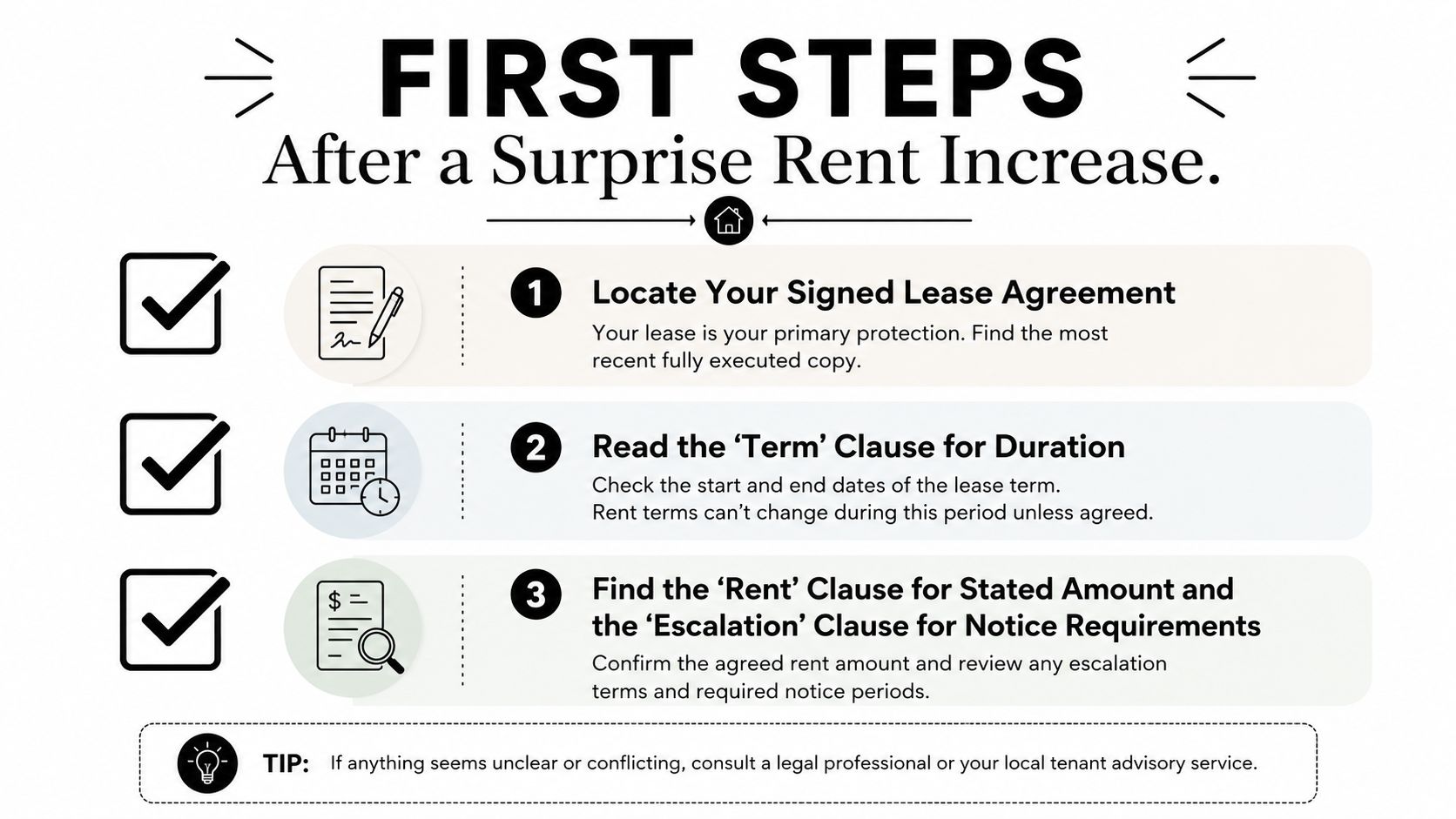
Your first move after a surprise increase is not a heated phone call. Pull out the signed lease and examine the provisions that answer three questions: How long does the tenancy last? What rent did you agree to? How must either party change or end the agreement?
Read these provisions in order
Term clause: Find the start date, end date, and language addressing renewal or automatic continuation. A fixed end date matters because a new amount may be a renewal term rather than a current obligation.
Rent clause: Confirm the stated amount, due date, late-fee language, and any provision allowing adjustments. Don't rely on the tenant portal if the signed agreement says something different.
Escalation or renewal clause: Look for the required notice period, delivery method, and content requirements. Your lease may require notice by mail, personal delivery, email, or another method. The clause controls if it provides a valid procedure.
Some leases use a stated notice period such as 30, 60, or 90 days. Those figures are lease examples, not a universal Texas rule. Count from the event identified by the agreement, often the rent-due date, lease expiration, or deadline for giving move-out notice. Don't assume the day the landlord posted a portal message is automatically the day the notice period began.
Build your record before you argue
A portal posting may not satisfy the lease if the agreement requires another delivery method. A text or email may help prove what the landlord communicated, but whether it counts as formal notice depends on the lease and the surrounding facts.
Use the Texas lease renewal notice requirements as a reference point while you compare your actual agreement. You can also review What a Texas Lease Should Include, which addresses key terms and required disclosures in a Texas residential lease.
Today, save the signed lease, highlight the three clauses, mark the relevant dates on a calendar, and capture screenshots of every portal message. Then email the landlord a calm written acknowledgment: “I received the updated rent amount. I'm reviewing the lease and request the notice and lease provision supporting the change.” That message preserves your position without escalating the dispute.
Real Scenarios Tenants Face After a Surprise Increase
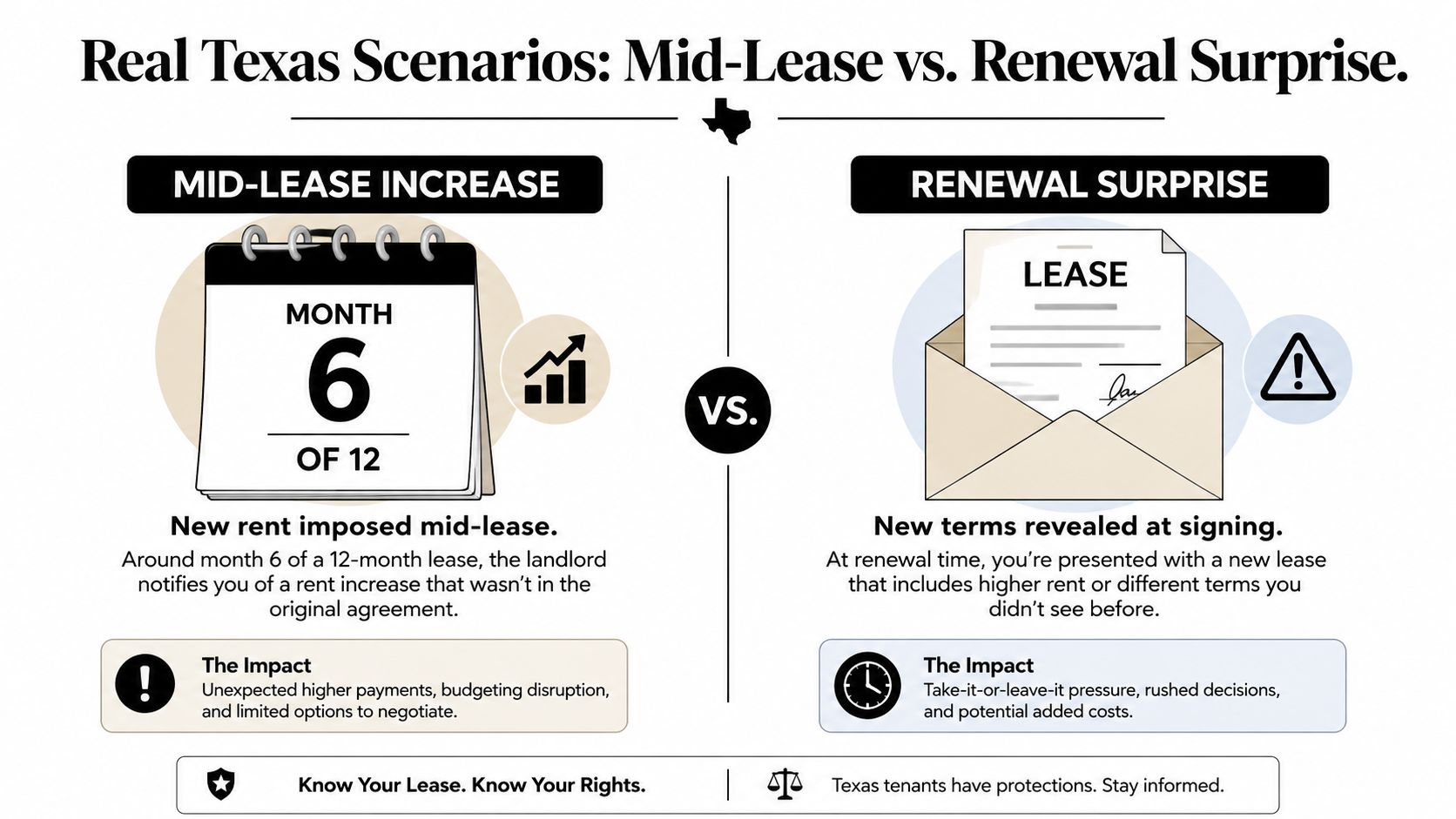
The same rent demand can produce different legal results depending on the tenancy. These examples show why a simple “30-day rule” answer can mislead both sides.
A mid-lease increase
A tenant signs a fixed-term agreement for a defined period. Partway through the term, the landlord announces that the rent will increase immediately because insurance and maintenance costs have changed. The rent clause states a fixed amount and contains no adjustment provision.
That increase is generally a contract problem. The landlord may be entitled to charge the agreed rent and pursue a different amount at renewal, but the landlord usually can't change the current bargain without a clause allowing it or the tenant's agreement. The tenant should reply in writing, attach the relevant lease language, and continue tendering the amount due under the existing agreement.
A renewal surprise
Another tenant reaches the end of the current term and receives new paperwork showing a higher rent. The landlord didn't give an earlier courtesy call, but the lease says the tenancy renews only if both sides sign a new agreement and gives a specific deadline for renewal notice.
This situation turns on the renewal clause. Texas doesn't impose a general statewide cap on the renewal amount, so the tenant's strongest arguments may concern timing, delivery, and compliance with the lease, not whether the increase feels excessive. The practical choice may be to negotiate, accept the new terms, or provide timely notice of move-out.
A month-to-month demand with no written notice
A month-to-month tenant gets a text saying the next payment must be higher. The lease has no special rent-change procedure. The tenant should compare the proposed effective date with the current rental period and the one-month written termination rule in § 91.001.
A landlord may be able to end the month-to-month arrangement and offer continued occupancy at a new amount after proper notice. But an immediate demand without the required timing creates a dispute over whether the increase can apply to the upcoming payment. The tenant should document the message, request formal written notice, and avoid treating the new amount as accepted.
The video explanation of Texas rent disputes offers another way to review the difference between a current lease term and a renewal decision.
How to Respond, Negotiate, or Dispute the Increase
Handle the issue quickly and in writing. Your goal isn't to win an argument with the property manager. Your goal is to create a clear record showing what was demanded, what the lease says, and what amount you believe is due.
Use this response path
Reply within seven days. Acknowledge the demand and ask the landlord to identify the lease provision supporting the increase. Ask when and how formal notice was delivered, and request a copy if you didn't receive it.
Check the effective date. Compare the notice with the lease's timing rules and, for a month-to-month tenancy, the framework under § 91.001. Keep paying the amount you believe is currently due on time. Do not stop paying rent, because a landlord may treat nonpayment as grounds for an eviction filing while the dispute is unresolved.
Make a concrete proposal. A reliable tenant can offer a longer renewal term, automatic payments, or agreement to minor improvements in exchange for a smaller increase or a delayed effective date. Put every agreement in a signed writing.
The guide on how to negotiate a rent increase provides useful preparation points, but your lease remains the controlling document.
Escalate when the record supports it
If the increase conflicts with the lease, send a formal dispute letter. State the current rent, identify the clause, explain the notice defect, and request written confirmation that the current amount remains accepted. Keep proof that you sent the letter and retain payment records.
If direct discussion fails, consider mediation or a complaint to the Texas Attorney General when appropriate. A Texas landlord tenant lawyer can review the lease and notice timeline before the matter turns into an eviction. The Law Office of Bryan Fagan, PLLC is one option for a case review involving lease enforcement, eviction defense, or a rental dispute.
Don't make your strongest argument verbally and leave no paper trail. A short, factual email is usually more useful than an angry call.
How Landlords Can Raise Rent the Right Way in Texas
Landlords should treat every increase as a document-control exercise. Before changing the amount, identify whether the tenant has a fixed-term lease, a month-to-month arrangement, or a renewal provision that changes the analysis.
Follow the lease before relying on a default rule
Read the rent, term, renewal, and notice clauses. If the agreement gives a notice window, use it. The lease may require 30, 60, or 90 days, but those are examples of contractual periods, not a single statewide mandate.
If the agreement is silent and the tenancy is month-to-month, use written notice consistent with the one-month termination framework in Texas Property Code § 91.001. Deliver the notice through the method the lease identifies. Include the property address, current rent, new rent, effective date, and the tenant's name. Sign and date the notice, then preserve proof of delivery.
Landlords evaluating market-based changes may find dynamic pricing for landlords useful as a general business resource. Pricing strategy doesn't replace lease compliance.
Texas Rent Increase Compliance Checklist for Landlords
| Step | Fixed-Term Lease | Month-to-Month Lease |
|---|---|---|
| Confirm authority | Check for an escalation or adjustment clause | Check the agreement and § 91.001 timing |
| Set the effective date | Use the renewal date or contractual adjustment date | Use a date after proper written notice |
| Prepare notice | Follow the lease's method and content requirements | State the new amount and effective date clearly |
| Preserve evidence | Save the signed notice and delivery record | Save the delivery record and tenant response |
| Avoid midstream changes | Don't demand a new amount without contractual authority | Don't apply the new amount before the notice period supports it |
Sample 60-day notice format
A landlord adapting a 60-day notice should include:
- Notice date
- Property address and unit
- Current rent
- New rent
- Effective date
- Lease provision or renewal basis
- Signature
- Delivery method and delivery certificate
A delivery certificate should identify when, where, and how the notice was delivered. If the lease requires a different method, follow that method instead of relying on a portal upload alone. Clear paperwork protects the landlord and gives the tenant a fair opportunity to decide whether to renew or move.
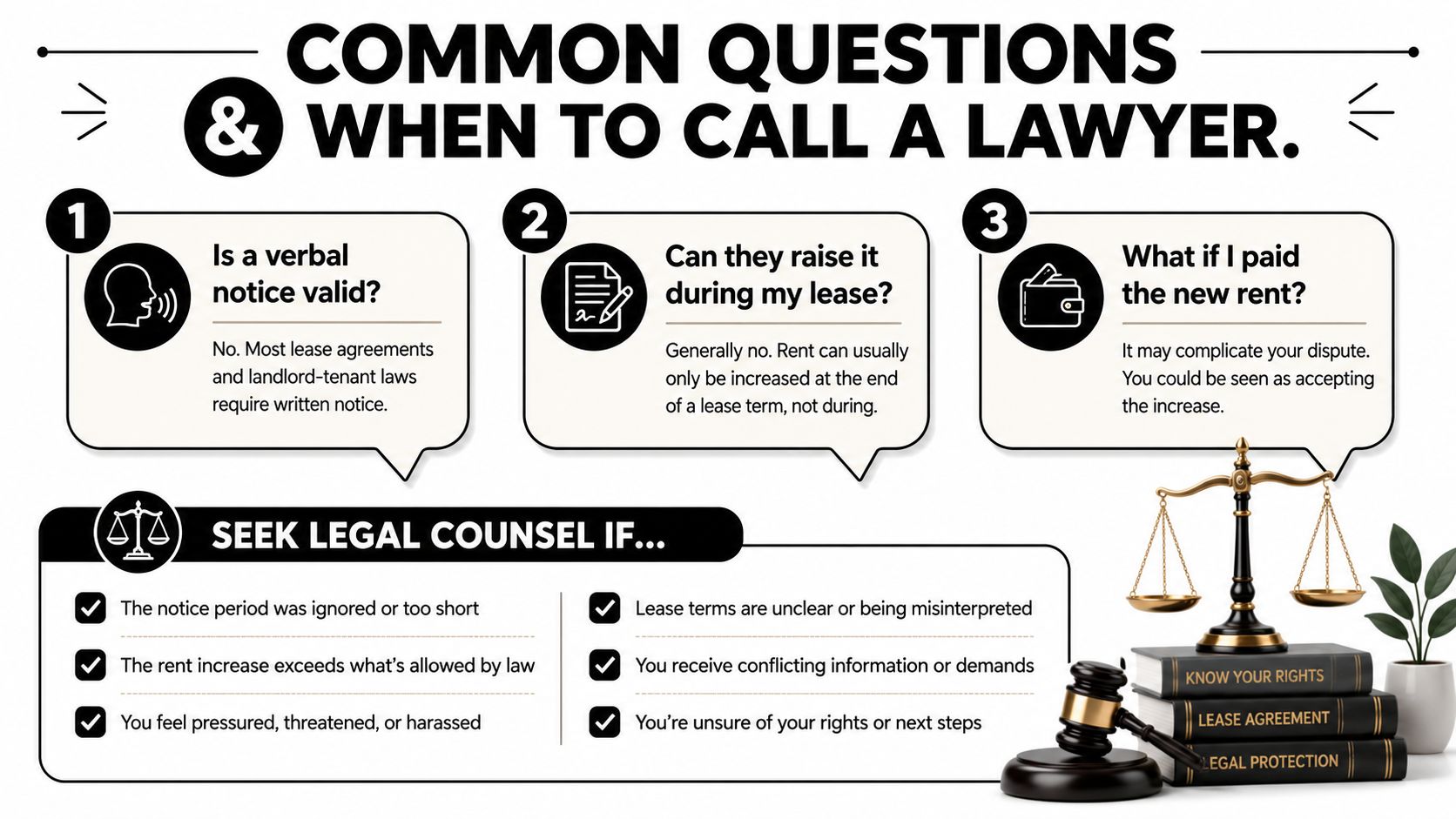
Common Questions and When to Call a Lawyer
Can I withhold the new amount?
Don't assume you can withhold rent. First determine whether the new amount is due under the lease and whether the notice was effective. Continue paying the amount you believe the current agreement requires, keep proof of payment, and obtain advice before making a decision that could trigger a nonpayment claim.
Does a text or email count as notice?
It depends on the lease and the facts. A message can prove that the landlord communicated a demand, but it may not satisfy a lease that requires a specific delivery method. Verbal notice is especially difficult to enforce because it creates a proof problem. Ask for formal written notice and preserve every message.
What if the increase is retaliation?
Texas Property Code Chapter 92 includes protections against retaliation for certain protected tenant conduct. A rent increase may deserve closer review if it follows a tenant's lawful complaint, repair request, or other protected action. Timing alone doesn't decide the case, so preserve the complaint, the landlord's response, and the rent-change notice.
Can I recover damages?
Potential remedies depend on the lease, the notice defect, retaliation or discrimination evidence, payment history, and resulting loss. Don't assume a penalty applies just because the landlord gave late notice. The proposed HB 1185 framework included a $100 tenant penalty, but that proposal isn't a general statewide rule.
How long will the dispute take?
A simple lease clarification may resolve quickly. A contested eviction, retaliation claim, or damages dispute can take longer because it may require court filings, evidence, and hearings. Move quickly if you receive a notice to vacate, court papers, a lockout threat, or unlawful fees.
Call an eviction attorney or Texas landlord tenant lawyer when the amount is substantial, the landlord repeatedly ignores notice rules, the lease is unclear, or your housing is at immediate risk. A consultation is also sensible when the disputed rent exceeds $5,000, when a lockout occurs, or when the landlord adds fees not authorized by the agreement. Bring the lease, payment ledger, notices, portal screenshots, texts, emails, and a timeline.
If your landlord raised rent with no notice in Texas, The Law Office of Bryan Fagan, PLLC can review your lease, notice timeline, payment records, and options involving negotiation or eviction defense. Schedule a free consultation by visiting The Law Office of Bryan Fagan, PLLC and take the next step with a clear plan for protecting your rental rights.