
Dealing with a landlord dispute or eviction can be stressful, especially when a missed rent payment has already turned into a notice on the door. If you're a landlord, you need possession without creating a defective case. If you're a tenant, you need to know whether the notice, filing, and service comply with the Texas Property Code. The answer to “how to evict a tenant in Texas” starts with precision, not force.
Texas eviction cases move quickly, and rules applying to suits filed on or after January 1, 2026, make older online guides unreliable. The practical risks are simple: a landlord can lose time and rent by using the wrong notice, while a tenant can lose important defenses by ignoring the citation. The safest approach is to document every step and get legal advice before the deadline, not after a judge has entered judgment.
Why Texas Evictions Move Faster Than You Think
A Houston landlord has unpaid rent, unanswered messages, and a failed payment plan. After months of frustration, the landlord tapes a written notice to the tenant's door and assumes there is time to organize the case. That assumption can cost weeks. Texas generally requires a three-day written notice to vacate before a landlord files a forcible detainer suit, unless the lease sets another period. The filing cannot begin until that notice step is completed correctly, as explained in Texas eviction guidance from the Texas State Law Library.
For suits filed on or after January 1, 2026, Senate Bill 38 changes important notice and writ procedures. The amendments include expanded notice-delivery methods and a minimum six-day delay before writ execution, unless a possession bond is posted. A pre-2026 checklist can therefore produce the wrong calendar. A tenant using an outdated defense guide can also misunderstand how soon possession may be enforced.
The practical rule is simple: calculate each deadline from the lease, the notice, the filing, and the judgment. Keep the signed lease, rent ledger, notice, delivery evidence, court citation, and hearing record together. Missing proof at any point gives the other side a defect to attack.
Texas courts decide possession on a compressed schedule. Hearings are often set within 10 to 21 days after filing, and the appeal window is only five days after judgment, according to the eviction-process information linked above. In Travis County, a 2024 dashboard presentation reported 13,210 filings, a median duration of about 20 days from filing to judgment, and 99% disposed within 60 days. Texas rental eviction reporting places that local result within wider Texas rental-market pressure.
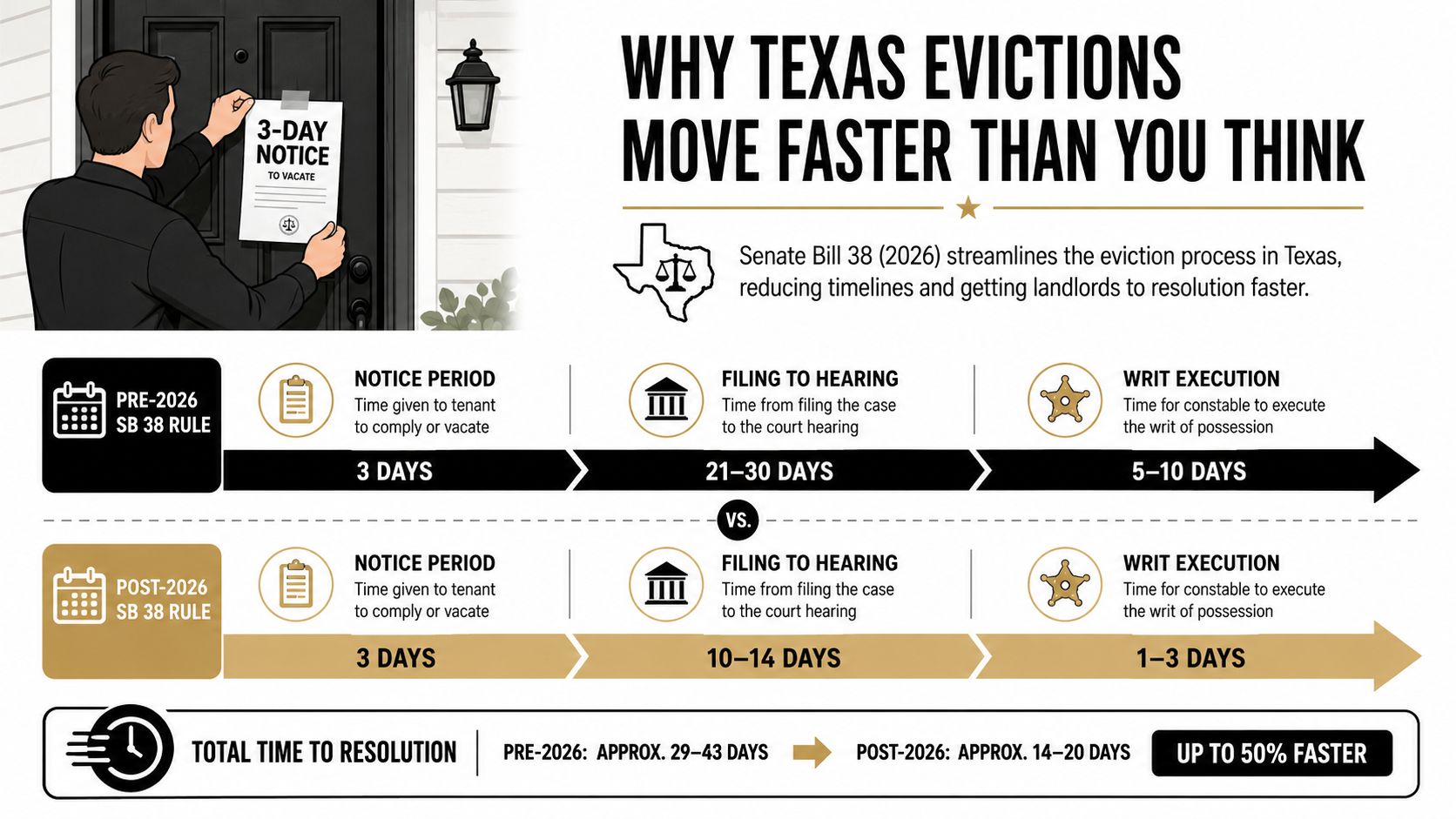
A landlord with a complete lease, accurate ledger, valid notice, and reliable service proof can move efficiently. A tenant with dated repair records or payment evidence may defeat a defective case. Investors should review BatchData rental property data for investors and include notice, service, and recordkeeping controls in the property's operating plan, rather than treating eviction as an emergency repair.
Choosing the Right Notice to Vacate in Texas
The notice is the foundation of the case. If the foundation is wrong, the landlord may have to start over, even when rent is unpaid or the lease violation is real. Texas Property Code Section 24.005 provides the default rule: at least three days' written notice before filing, unless the written lease or rental agreement sets a shorter or longer period. Texas Property Code Section 24.005 is the starting point, but the lease must be read before anyone counts days.
Match the notice to the problem
For nonpayment or a lease violation, begin with the lease's notice clause. If it doesn't change the statutory rule, the default is a three-day written notice. The notice should identify the property, state the reason for termination or demand for possession, and give a specific date by which the tenant must vacate. A vague demand such as “leave immediately” creates avoidable problems.
For a month-to-month tenancy, the termination notice is generally tied to the rental period and commonly requires 30 days. Don't use a three-day nonpayment notice to end a month-to-month tenancy when the issue is termination. A holdover after the lease term ends is different. The landlord should examine the lease's holdover language and serve the notice required by the agreement and applicable law before filing.
A lease can change the notice period, but it doesn't give the landlord unlimited power. The lease override must be legally effective for the situation, and the landlord still has to honor any mandatory statutory protection. A tenant should compare the notice date, the lease clause, and the alleged breach before assuming the case is valid.
Serve it in a provable way
Texas law recognizes delivery methods that can include personal delivery, mailing, and posting in the manner authorized by the statute and applicable rules. For a 2026 filing, review the expanded service options under the updated rules rather than copying an older form. Keep the notice itself, the date and time of delivery, the person who delivered it, photographs of posting when used, mailing records, and any required supporting authorization.
The notice should be understandable to the tenant. Where language-access requirements apply, prepare the required information in English and Spanish rather than assuming one version will work for everyone. For a focused explanation of what a notice must contain, see The Notice to Vacate: Requirements and Timing. A related example of the three-day issue is the Texas three-day eviction notice guide.
| Situation | Starting point |
|---|---|
| Nonpayment or lease breach | Three-day written notice unless the lease lawfully changes the period |
| Month-to-month termination | Commonly 30 days, tied to the rental period and applicable agreement |
| Holdover | Review the lease and serve the legally required termination notice |
| Cure opportunity | Follow the lease and applicable law before filing |
Practical rule: Never file from memory. Compare the notice period, delivery method, and exact termination date against the signed lease.
Filing the Forcible Detainer Suit Step by Step
Once the notice period expires, the landlord files a forcible detainer suit in Justice Court. The court must be in the precinct where the rental property is located. Filing in the wrong precinct is one of the clearest ways to lose time, so confirm the property address and precinct before preparing the petition.
A useful file sequence looks like this:
- Confirm venue. Identify the Justice Court precinct containing the property.
- Prepare the sworn petition. Use the correct case caption, such as “Smith v. Jones,” and leave the cause-number field for the clerk if required.
- State the grounds. Explain the lease default, holdover, or other basis for possession.
- Attach the proof file. Include the lease, notice to vacate, delivery evidence, rent ledger, payment records, and relevant photographs or incident logs.
- Request the relief supported by the pleadings. Possession, allowable costs, and any rent claim should be stated accurately.
- Arrange service. The tenant must receive the citation through an authorized officer or process recognized by the court.
County filing fees vary, and the provided Texas eviction materials describe current filing fees generally ranging from $46 to $54, with service costs commonly around $75 to $100. Confirm the amount with the specific Justice Court before filing. A landlord should also review a practical explanation of the unlawful detainer process from VerticalRent, while remembering that a Texas case is filed as a forcible detainer action in Justice Court.
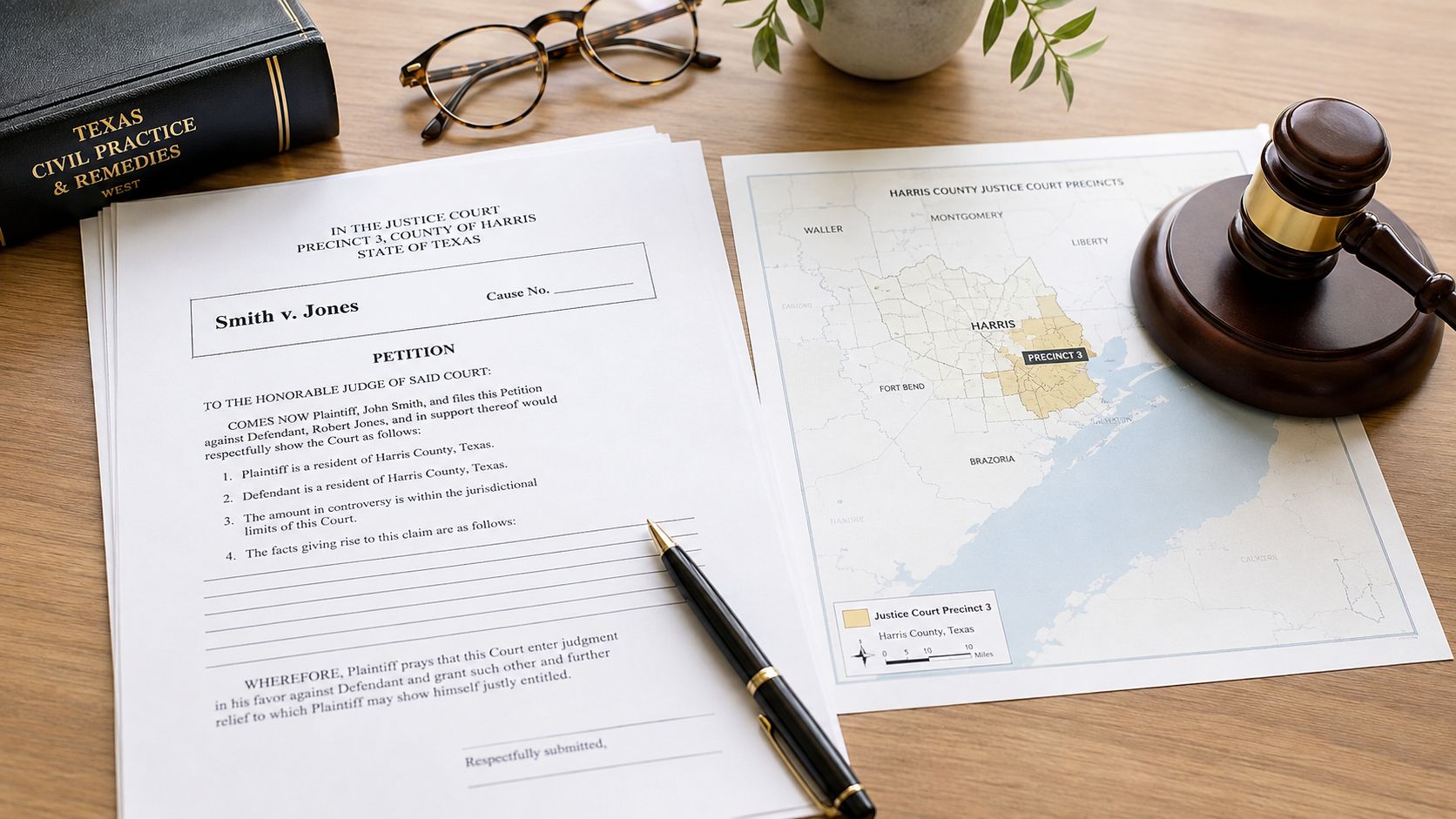
The citation generally sets the hearing within 10 to 21 days after filing, according to Texas eviction procedure guidance. Service may involve personal delivery by a constable or process server, substitute service when authorized, or posting after failed attempts under the applicable court rules. Don't assume a private courier can replace the officer responsible for serving the citation.
Discovery is limited compared with larger civil lawsuits. At the first docket call, expect the court to determine whether the parties are ready, whether service is complete, whether a continuance is requested, and whether settlement is possible. Bring the original lease and organized copies. A landlord who arrives with screenshots but no ledger or service affidavit makes the judge's job harder and the case weaker.
Hearing Day, Default Risk, and the 2026 SB 38 Update
On hearing day, the landlord and tenant usually check in with the Justice Court and wait for the docket to be called. The judge may handle several cases in the same session, so both sides should arrive early with identification, documents, and a clear explanation of what happened. The landlord typically presents the lease, the default, the notice, and proof that the tenant received it. The tenant can respond with payment proof, notice defects, repair records, or other defenses.
A rent ledger carries more weight when it matches bank records, receipts, and the lease's due dates. Photos and incident logs can support a lease-violation claim, but they don't replace proof that the tenant received the required notice. The judge's central possession question is usually narrow: does the landlord have the present right to possession under the lease and applicable law?
The most avoidable danger is nonappearance. In one Harris County eviction court, nearly one-third of cases from January 2021 through December 2023 ended in default judgment because the tenant didn't appear. That rate fell to 19% over the past year after an eviction diversion program and related court practices, according to Texas Tribune reporting on Harris County eviction court. A default can allow the petition's allegations to control the outcome, subject to the court's requirements.
For tenants: A notice is not a court judgment. But ignoring the citation can remove your chance to challenge the landlord's evidence before judgment.
A judgment may address possession, court costs, delinquent rent, and attorney fees when legally recoverable. If the tenant loses, the appeal deadline is only five days after judgment. An appeal generally requires a bond, cash deposit, or a qualifying statement of inability to afford court costs. The tenant should ask the clerk immediately about the exact local filing procedure because the deadline is short.
SB 38 affects the post-judgment calendar for suits filed on or after January 1, 2026. The verified change is a minimum six-day delay before writ execution, unless a possession bond is posted. The updated process also involves written warning and review procedures before enforcement. Landlords should price the calendar from judgment through the writ stage, not promise an immediate lockout after winning. Tenants should treat every day after judgment as urgent because appeal and possession deadlines run quickly.
Lawful Lockout After the Writ of Possession
A landlord can't lawfully change the locks, remove a tenant's belongings, or shut off utilities because rent is late. Possession changes only through the court process or a narrowly authorized statutory procedure. Texas Property Code Chapter 24 and the updated rules matter most after the judge signs the judgment and the writ moves to the constable.
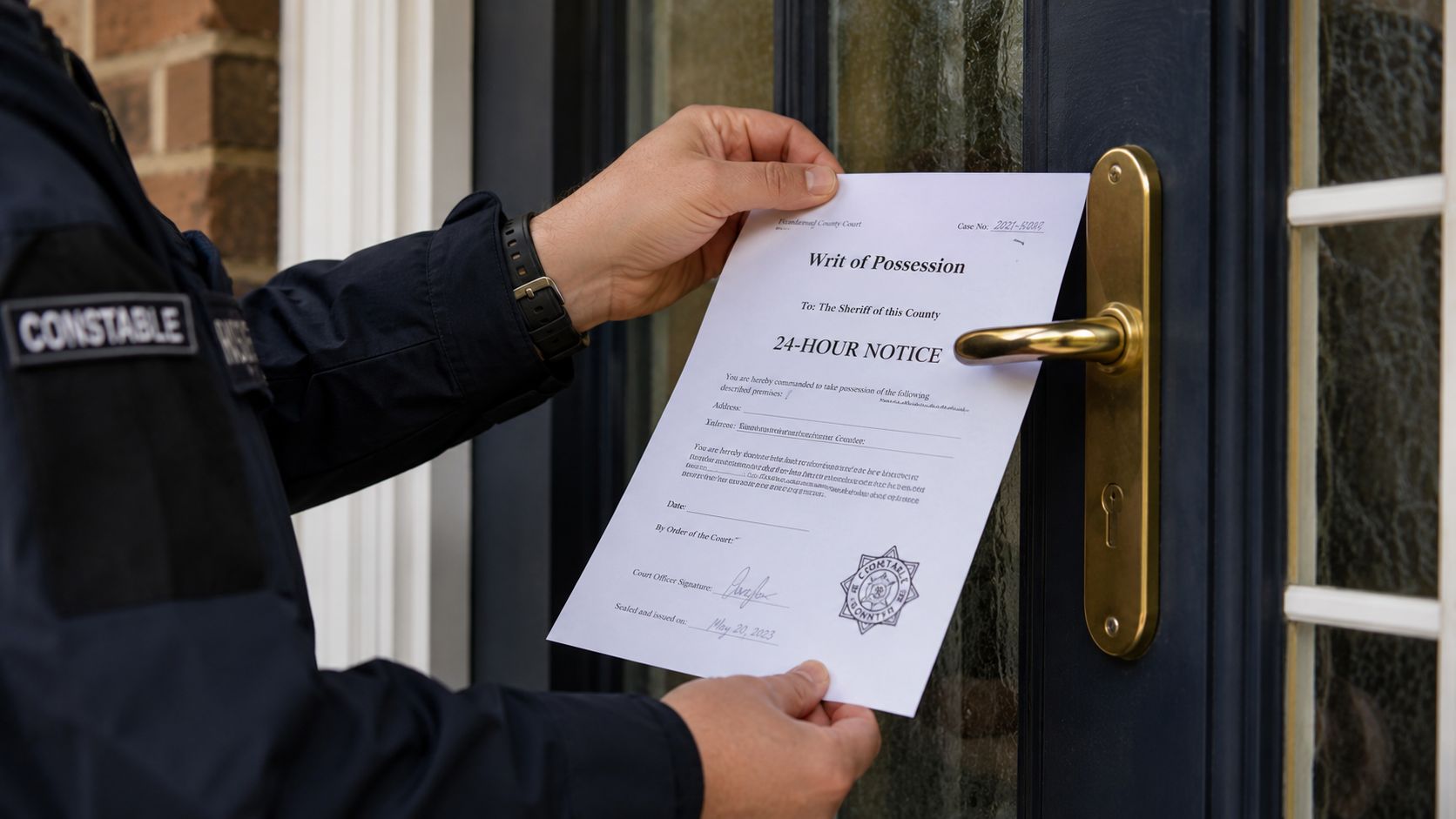
The constable, not the landlord's moving crew, controls the physical execution of the writ. The officer posts the required written warning on the exterior front door, including a date when execution may occur. The warning period is at least 24 hours, and the updated post-judgment delay must also be satisfied for suits governed by the 2026 rules. Review the Texas writ of possession information before scheduling labor or changing access.
The moving crew may assist when the constable executes the writ, but it can't act independently. The landlord shouldn't remove doors, disconnect utilities, threaten the tenant, or place property at the curb before the officer's lawful execution. Those actions can create liability under the Texas Property Code and potentially the Deceptive Trade Practices Act.
The constable handles removal of the occupants and directs what happens at the property. Personal property left behind may be placed outside or handled under the governing procedure. Don't assume you can discard everything immediately. Photograph the condition and inventory what remains, then obtain current legal advice about storage, notice, and disposition before touching valuable or disputed property.
After possession is returned, use a written handover checklist:
- Rekey the property: Change access credentials only after lawful possession is confirmed.
- Document condition: Photograph every room, fixture, wall, appliance, and exterior area.
- Separate damage from wear: Compare the condition against the move-in documentation and lease terms.
- Protect personal property: Preserve an inventory and follow the current statutory process.
- Confirm insurance: Verify coverage is active before a new tenant receives possession.
Tenant Defenses That Can Stop an Eviction in Texas
Losing a notice doesn't mean automatic removal. A forcible detainer case can fail because the landlord proved a lease breach but didn't prove a valid right to possession through the required procedure. Tenants should examine both the paperwork and the underlying dispute.
Procedural defects often decide the case
The strongest challenges are frequently technical:
- Defective notice language: The notice doesn't identify a clear move-out date or doesn't match the lease.
- Wrong venue: The landlord filed outside the Justice Court precinct where the property sits.
- Improper delivery: The landlord can't prove that the notice or citation was served lawfully.
- Missing termination date: The document demands possession without telling the tenant exactly when to leave.
A landlord may have a legitimate rent claim and still lose the possession case if the notice was premature or service can't be proven. Read the Texas eviction court defenses guide with the actual notice and lease in front of you, not as a substitute for reviewing your file.
Substantive defenses require evidence
A tenant may raise habitability or repair issues when the facts satisfy Texas law. Section 92.056 addresses repair remedies in qualifying circumstances, and the tenant should preserve written repair requests, photographs, inspection records, and communications. A tenant can't just stop paying rent and assume poor conditions automatically defeat possession. The defense must connect the repair problem to the legal requirements and the landlord's response.
Retaliation may matter when an eviction follows protected complaints about repairs or code conditions. Discrimination claims may arise under the federal Fair Housing Act and the Texas Fair Housing Act, but they require facts connecting the landlord's conduct to a protected basis. A security-deposit dispute can support a separate claim, but it doesn't automatically erase a valid possession claim.
Prepare before the courtroom opens
Texas court guidance permits a general denial, and the provided rule summary states that a written answer isn't required to preserve defenses at trial. Still, filing a written answer at least 24 hours before the hearing gives the court and landlord clearer notice of the tenant's position when local practice permits it. Bring dated repair-request texts, photographs, rent receipts, bank records, the lease, and the original notice.
A defense raised at the Justice Court level can be evaluated with live evidence. An appeal isn't a chance to create an entirely new factual record from scratch. Tenants lose cases by missing the hearing, failing to bring documents, confusing a landlord's repair duty with an automatic rent waiver, or waiting until after judgment to seek help.
When to Hire a Texas Landlord-Tenant Attorney
A single legal review before the notice is drafted can prevent the defects that derail an eviction. The first 24 hours often determine whether the landlord identifies the correct lease clause, calculates the right notice period, preserves service proof, and files in the proper precinct. A tenant also benefits from early review because a defective notice or strong retaliation record is more useful before the court enters judgment.
Counsel is especially sensible when the file involves:
- Rent above one month: Large arrears create more room for ledger disputes, payment applications, and counterclaims.
- Section 8 or HUD housing: Subsidy paperwork and program rules can affect notices and payment records.
- Repair-related retaliation: A termination following repair complaints needs careful chronology.
- Military service: The Servicemembers Civil Relief Act can create protections that affect the case.
- An LLC or trust owner: Ownership and authority documents must match the person filing and the property records.
The filing fee is only one part of the financial calculation. County Justice Court filing fees can vary, and the provided planning materials describe a typical range of $46 to $121 in some comparisons, while a writ mistake can cause 30 to 60 additional days of lost rent, appeal-related attorney fees, and a damaged possession record. Those figures should be confirmed for the specific court and case. A clean, properly documented file may close in about 45 days, but no landlord should promise that result without reviewing the notice, service, court schedule, and any defenses.
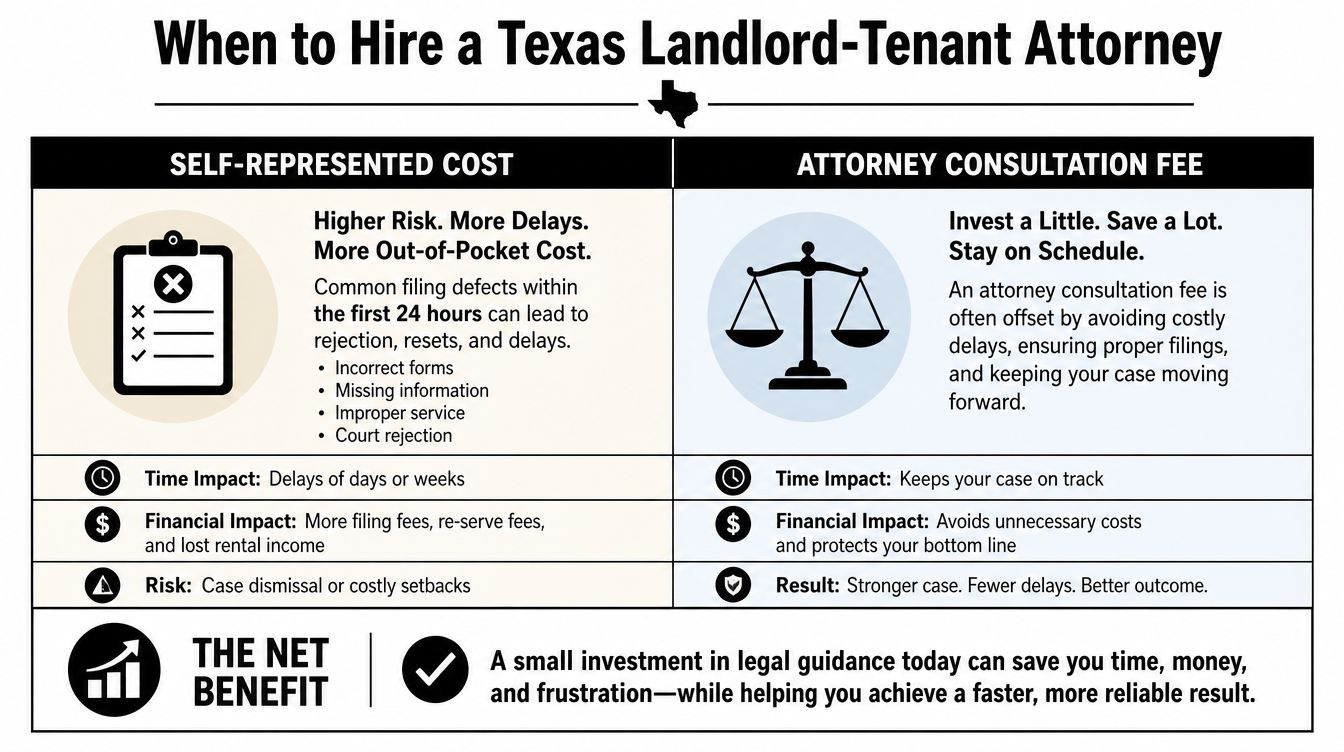
A Texas landlord-tenant lawyer can review the lease, notice, ledger, delivery records, and demand letters before filing. An eviction attorney can also help a tenant assess defenses, prepare evidence, address repairs or retaliation claims, and protect the short appeal deadline. The Law Office of Bryan Fagan, PLLC offers a free 30-minute consultation to evaluate these materials and explain practical options in plain English.
If you need help with an eviction, lease issue, or rental dispute, contact The Law Office of Bryan Fagan, PLLC for a free consultation today. Bring your lease, notice, payment records, service documents, and hearing information so the firm can help you protect your rights and choose a lawful next step.