Dealing with rent trouble is stressful, especially when you're trying to figure out whether you're already in eviction territory or just facing a late fee. In Texas, those are not the same thing, and the distinction is often underestimated. If you're asking how late can you be on rent before eviction Texas, the short answer is that the clock moves fast, but eviction is still a legal process with specific notice rules, deadlines, and defenses.
A tenant can be late the day after rent is due, but that does not mean a landlord can instantly file an eviction case. Texas law also separates the timing for late fees from the timing for eviction notices, and that distinction is where many renters get confused. If you understand that line, you can make better decisions about whether to pay, communicate, document, or get legal help right away.
Understanding Your Rights When Facing an Eviction in Texas
A tenant calls because the rent was due on Friday, the payment didn't go through, and now the landlord has sent a message that sounds serious. That panic is common. The important thing is not to guess, but to understand what Texas law permits, because the legal process has steps and not every missed payment leads to immediate removal.
Texas landlord-tenant law does not treat a missed due date and an eviction filing as the same event. Rent becomes late the day after it is due, but the landlord still has to follow the notice process before filing most nonpayment eviction cases. Under Texas Property Code § 24.005, the usual starting point is a written notice to vacate, not same-day court action.
That matters because a lot can happen in the space between “late” and “legally evictable.” A landlord may talk about fees, request payment, or serve notice, but the timing rules determine what is legally valid. If you're a tenant, that timeline can buy you time to fix the problem. If you're a landlord, it keeps you from making an avoidable mistake that could weaken your case later.
The firm's role is to help people see the process clearly, then act fast. Texas eviction disputes move quickly once notice is served, so the practical question is not just whether you're behind. It's what step the landlord has already taken and whether the lease changes the default rules.
The First 72 Hours After Rent Is Due
The first three days after a rent deadline are where the most confusion happens. Texas treats rent as late the day after it is due, but the law gives landlords a 2-full-day cushion before they may charge a late fee on residential rent, and that fee has to be authorized in a written lease (Paying Rent Late in Texas). That means the date rent becomes late and the date a late fee may be charged are not the same.

The distinction is practical, not academic. A landlord can sometimes begin the eviction notice process before a late fee is even allowed, because late fees and eviction follow different rules and different timelines. That's why a renter can be one day behind and still be in legal danger, even if the late-fee window has not fully opened yet.
What happens on day one
On the day after rent is due, the account is already late. The landlord may start documenting the nonpayment, send a reminder, or prepare formal notice depending on the lease and the tenant's payment history. If you are reading Late Fees and Rent Rules in Texas, the useful takeaway is simple, Texas law allows late-fee collection only under the lease terms and only after the statutory cushion for residential rent.
What happens by day two and day three
By the second day, many landlords are already deciding whether to treat the situation as a one-off problem or a pattern. By the third day, the legal stakes rise because the notice process can be underway. If the lease is silent on timing, the landlord still has to work within the Texas Property Code and the lease language, not a personal house rule.
Practical rule: don't assume silence from the landlord means the problem has gone away. In Texas, the formal process can move even when the conversation is still informal.
If you want a plain-English breakdown of how these deadlines work in real life, review this late rent payment guide for Texas tenants. It helps separate a payment problem from a legal eviction problem before the situation escalates.
The Notice to Vacate The Official Start of the Eviction Process
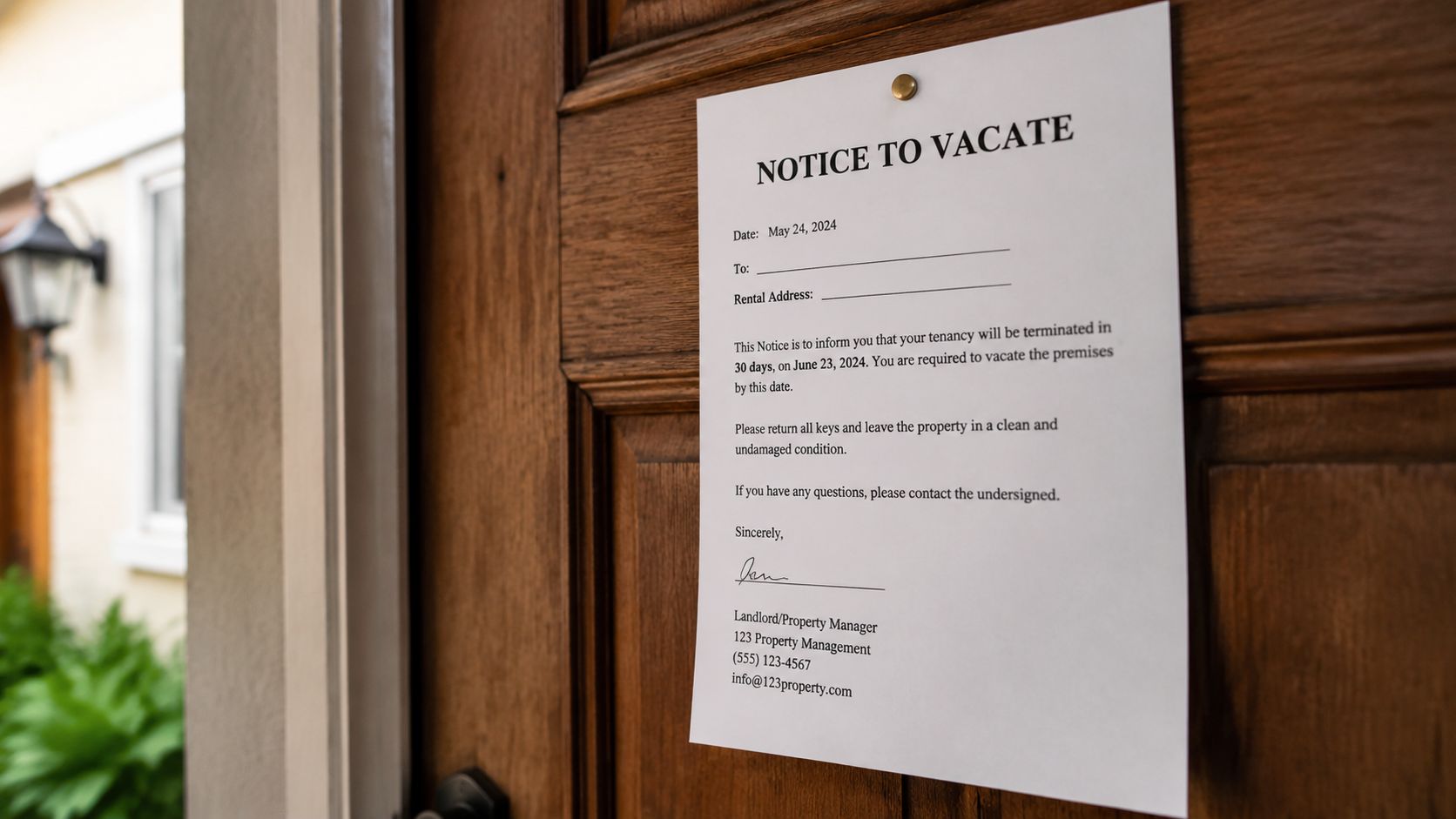
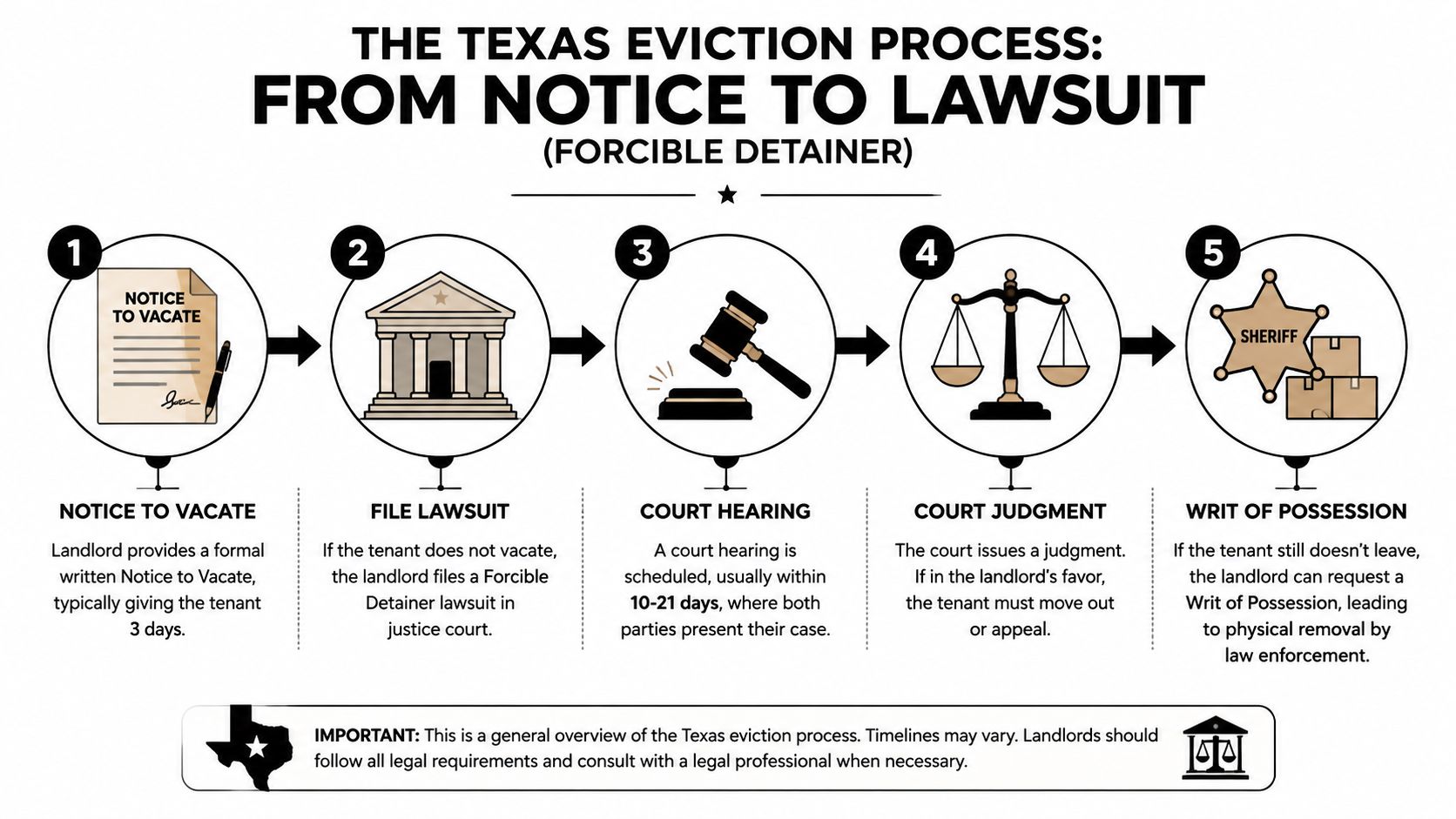
Once the landlord moves from reminders to a written Notice to Vacate, the case becomes much more serious. Under Texas Property Code § 24.005, a landlord generally must give at least 3 days' written notice to vacate before filing an eviction case, unless the lease sets a different notice period (Texas eviction process overview). That notice period is the legal doorway to a forcible detainer case.
A valid notice should clearly tell you that the landlord wants possession of the property back. It should not be vague, and it should not leave you guessing about whether the landlord is demanding payment, move-out, or both. Delivery also matters. In Texas practice, the notice may be delivered in person, by mail, or posted in the manner allowed by the law and the lease, and a bad notice can create a defense later.
Why notice errors matter
If the landlord skips a required step, the tenant may have a procedural defense. That does not guarantee the tenant will win, but it can affect the timing and strength of the landlord's case. A Texas landlord tenant lawyer will usually look closely at the dates, delivery method, and wording before advising what to do next.
The internal guide on what a notice to vacate means in Texas is useful because it explains the document commonly encountered before a lawsuit ever starts. If the notice is defective, the landlord may need to correct it before moving forward.
After the notice period runs, the landlord can file suit if the tenant is still in the property. The hearing itself doesn't happen instantly, and that delay matters. I've seen many renters think they have days, only to learn the case is already on a court calendar.
From Notice to Lawsuit The Texas Forcible Detainer Process
If the tenant doesn't leave during the notice window, the landlord usually files a forcible detainer case in Justice of the Peace court. That is the formal eviction lawsuit in Texas. The court is focused on possession of the property, not every possible side issue between the parties.
The practical timeline is fast compared with many other civil cases. Texas tenant guidance and landlord resources estimate that a straightforward, uncontested eviction can take about 21 days from notice to physical removal, while more typical cases may take 3–6 weeks and contested cases or appeals can stretch to 6–10 weeks or longer (Texas eviction timeline). That is why waiting too long after a notice arrives can be a costly mistake.
What the court process usually looks like
The landlord files the petition in JP court, then the constable or other authorized officer serves the citation and notice of the hearing. After that, the court sets a hearing date and both sides get a chance to present their side. If the court rules for the landlord, the tenant may have to move or appeal quickly.
A judgment for possession is not the final physical removal step by itself. If the tenant still doesn't leave, the landlord can ask for a Writ of Possession, which allows law enforcement to carry out removal. That's the part many people are trying to avoid by acting early.
A short delay after rent is due can become a court case faster than people expect, especially if the landlord already has a paper trail.
A tenant or landlord who wants help evaluating the filing, service, or hearing process can also use the firm's consultation page, When to Consult a Texas Landlord-Tenant Attorney. In a possession case, timing usually matters more than arguments made after the deadline has passed.
Can Paying Rent Late Stop an Eviction
A common mistake is assuming late payment automatically fixes everything. It doesn't. TexasLawHelp says tenants have a limited right to cure only if it is the first month they have been late during the current lease term and they are only behind on one month of rent; otherwise, paying late does not automatically prevent eviction (TexasLawHelp on paying late rent).
That rule is narrow for a reason. A landlord is not always required to accept money after the notice period has started, especially when the lease and the payment history point the other way. If the landlord has already served a proper notice to vacate, you should not assume a late payment will erase the case.
What this means in real life
If this is the first time you've been late in the lease term and you only owe one month, you may have a path to cure, depending on the notice language and timing. If this is a repeat issue, or you owe more than one month, the safe assumption is that the landlord can still proceed. That's the point where a tenant rights review becomes urgent.
A useful companion resource is the internal page on stopping eviction by paying rent in Texas. It helps separate situations where payment may help from situations where it's already too late to rely on payment alone.
This is also where good communication can matter. Some landlords will accept a payment arrangement if the lease and facts support it. Others will not. The law gives you limited bargaining power, but it does not guarantee a second chance.
Protecting Yourself Practical Steps and Legal Defenses
If you've received a notice, start with the paper itself. Read the date, the deadline, and the reason for the demand. If the landlord skipped required notice language, used the wrong timeline, or filed too early, that may matter later under Texas Property Code § 24.005, which normally requires a 3-day notice to vacate unless the lease says otherwise (Texas eviction process timelines).

What to do immediately
- Save every notice and text: Keep the landlord's letter, emails, portal messages, and screenshots in one folder.
- Track the calendar carefully: Write down when rent was due, when the notice was delivered, and when the notice period ends.
- Keep payment records: Receipts, bank statements, and money order stubs can matter if the landlord claims nonpayment.
- Attend every court setting: Missing the hearing can make the landlord's case much easier.
- Get legal review fast: A tenant rights attorney can check whether the notice, lease, and timeline line up.
Texas law also recognizes retaliation rules in the Property Code, and in some cases a tenant may have a defense if the eviction follows a protected complaint or repair request. That issue is fact-specific, so it should be reviewed carefully. If habitability or retaliation is part of your situation, talk to counsel before you assume the landlord's explanation is the whole story.
Action item: if you're weighing debt, bankruptcy, and eviction together, an outside resource like LifeBack Law Firm, P.A.’s expert guide to eviction and bankruptcy can help you understand how those issues may intersect before you make a rushed decision.
There are also times when an appeal or related post-judgment step may matter, especially if the landlord rushed the process or the court deadline passed unfairly. A Texas landlord tenant lawyer can look at the judgment, the notice, and the lease to decide whether appealing, negotiating, or settling is the better move.
If you're dealing with a lease dispute, a notice to vacate, or a filed eviction case, don't wait for the constable to show up before getting help. Contact The Law Office of Bryan Fagan, PLLC for a free consultation today.