In Texas, a landlord can't shut off utilities because you're behind on rent. The law allows interruption only in narrow situations, such as bona fide repairs, construction, emergencies, and a limited electricity exception when the landlord pays the electric bill and follows strict notice rules, including waiting until the bill is unpaid by the 12th day after issuance.
Coming home to a dark apartment, no running water, or no air conditioning can feel like a crisis. Most tenants immediately worry that they have no effective power, especially if rent is late. Many landlords also make a costly mistake here by thinking a utility shutoff is a faster way to push a tenant out than filing an eviction.
Texas law treats that tactic seriously. If you're asking can a landlord turn off utilities in Texas, the practical answer is usually no. For tenants, that means you have tools to get service restored quickly. For landlords, it means the safer path is careful lease drafting, proper notices, and using the court process instead of self-help.
Your Rights When Facing a Utility Shutoff
You open your door after work, flip the light switch, and nothing happens. Then you check the faucet. Still nothing. Maybe your landlord sent a text earlier saying payment was overdue. Maybe there was no warning at all. Either way, the shock is real because utility service isn't a minor inconvenience. It affects food, medicine, sleep, and basic safety.
Texas gives tenants strong tenant rights in this situation. A landlord isn't allowed to use utility shutoffs as pressure to collect rent or force a move-out. That matters because many renters assume they must choose between paying immediately or living without essential services. That's not how the Texas Property Code works.
A useful starting point is understanding basic tenant electricity rights, especially if you're trying to sort out whether the problem came from the utility provider, the property owner, or a master-meter setup. For a broader look at state protections, this guide on Texas Property Code 92 tenant rights helps frame where utility disputes fit into the larger landlord-tenant relationship.
If the shutoff was meant to make you pay rent or move out, treat it like a legal problem, not just a billing problem.
Landlords should read the situation just as carefully. Even when a tenant owes money, cutting off power or water usually creates more liability than advantage. A rushed decision can turn a rent dispute into a court case involving damages, attorney's fees, and an order to restore service.
The Core Rule Texas Landlords Must Follow
Texas Property Code § 92.008 sets the baseline rule.
Main rule: Under Texas Property Code § 92.008, landlords in Texas are legally barred from interrupting utility services, including electricity, water, gas, or wastewater, to force a tenant out or pressure them for unpaid rent, regardless of the tenant's rent payment status, as explained by Eviction Intervention Services on Texas utility shutoff law.
That rule exists because Texas does not allow self-help eviction through utility deprivation. If a tenant is late on rent, the landlord's remedy is the eviction process under Chapter 24, not a shutoff threat. If you're comparing state approaches, these 2026 state rental laws can give useful context, but Texas has its own specific rules and they matter here.

What this means in plain English
If the tenant pays the utility company directly, the landlord doesn't get to interfere with that service because rent is unpaid. If the landlord threatens, “Pay by tonight or I'll shut off the water,” that threat points in the wrong legal direction.
This is one reason habitability rules and utility rules often overlap in practice. A landlord who controls essential services also has to respect the basic conditions required for a rental to function. This overview of habitability laws in Texas and what landlords must provide is useful if the shutoff is part of a larger problem with the property.
A common real-world example
Suppose a tenant is late on rent. The landlord is frustrated, doesn't want to wait for court, and tells the property manager to have the water disconnected. That approach doesn't strengthen the landlord's case. It usually weakens it.
The better legal frame comes from Texas Landlord-Tenant Law: An Overview, which explains how Texas Property Code Chapters 91-94 and Chapter 24 govern the rental relationship. The short version is simple. Rent disputes go through notices, filings, hearings, and, if necessary, a writ of possession carried out by a constable. Utilities are not a shortcut.
A landlord can be right about unpaid rent and still be wrong about how to respond to it.
When consulting a Texas landlord tenant lawyer or eviction attorney, this is often the primary issue to clarify. Before arguing about what is owed, first determine whether the landlord crossed a line by interfering with essential services.
When Can Utilities Be Legally Interrupted
The rule is strict, but it isn't absolute. Texas law recognizes a few narrow exceptions, and landlords need to follow them carefully.
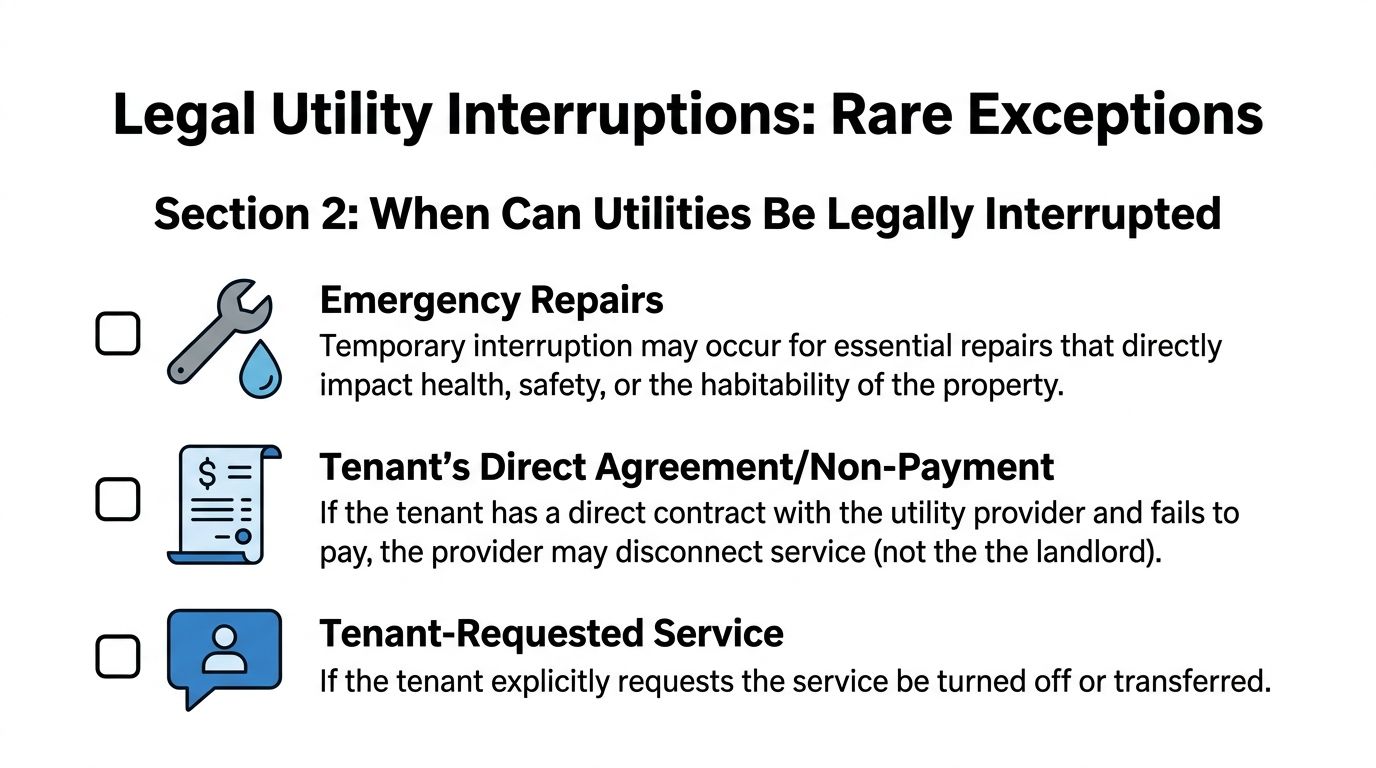
Repairs construction and emergencies
A temporary interruption can be lawful when it is tied to bona fide repairs, construction activities, or an emergency. The key word is bona fide. The interruption has to be for the actual work or emergency, not a pretext to pressure the tenant.
For example, a water line repair may require a temporary shutdown. A dangerous electrical condition might require immediate action. In those situations, the interruption should be limited to what is reasonably necessary, and service should be restored promptly once the work or emergency allows.
Direct-pay utilities
When the tenant pays the utility company directly, the provider may disconnect service for nonpayment under its own rules. That is different from a landlord-caused shutoff. The landlord still can't step in and use the utility as a rent collection tool.
That distinction matters in practice. Tenants should find out who caused the interruption before accusing the landlord. Landlords should avoid making statements that blur the issue or imply they influenced a provider to cut service.
The master-meter electricity exception
The most misunderstood exception involves electricity in a master-meter or submeter arrangement. Texas law permits electricity interruption only if the lease explicitly grants the right, the tenant is past due on the electric bill by the 12th day after issuance, and the landlord delivers a separate, hand-delivered or mailed “ELECTRICITY TERMINATION NOTICE,” as described by Texas Tenant Advisor on utilities.
This exception is narrow. It does not mean a landlord can cut electricity because rent is unpaid. It applies to the electric bill the tenant owes to the landlord in that specific billing arrangement.
What landlords must check before acting
- Lease language matters: The lease must expressly give the landlord the right to interrupt electricity in that setup.
- The unpaid charge must be the electric bill: Nonpayment of rent alone doesn't trigger this exception.
- Timing matters: The bill must remain unpaid by the 12th day after issuance.
- Notice format matters: The landlord must give a separate notice titled “ELECTRICITY TERMINATION NOTICE.”
A landlord who misses any part of that sequence risks turning a claimed exception into an illegal shutoff. A tenant who receives a notice like this should read it closely and compare it to the lease and the bill itself.
The exception is technical by design. Texas law does not treat electricity cutoff as an ordinary collection method.
Your Emergency Action Plan if Utilities Are Cut Off
When utilities go out, speed matters. Tenants often lose time arguing over texts when they should be gathering proof and getting in front of a judge.
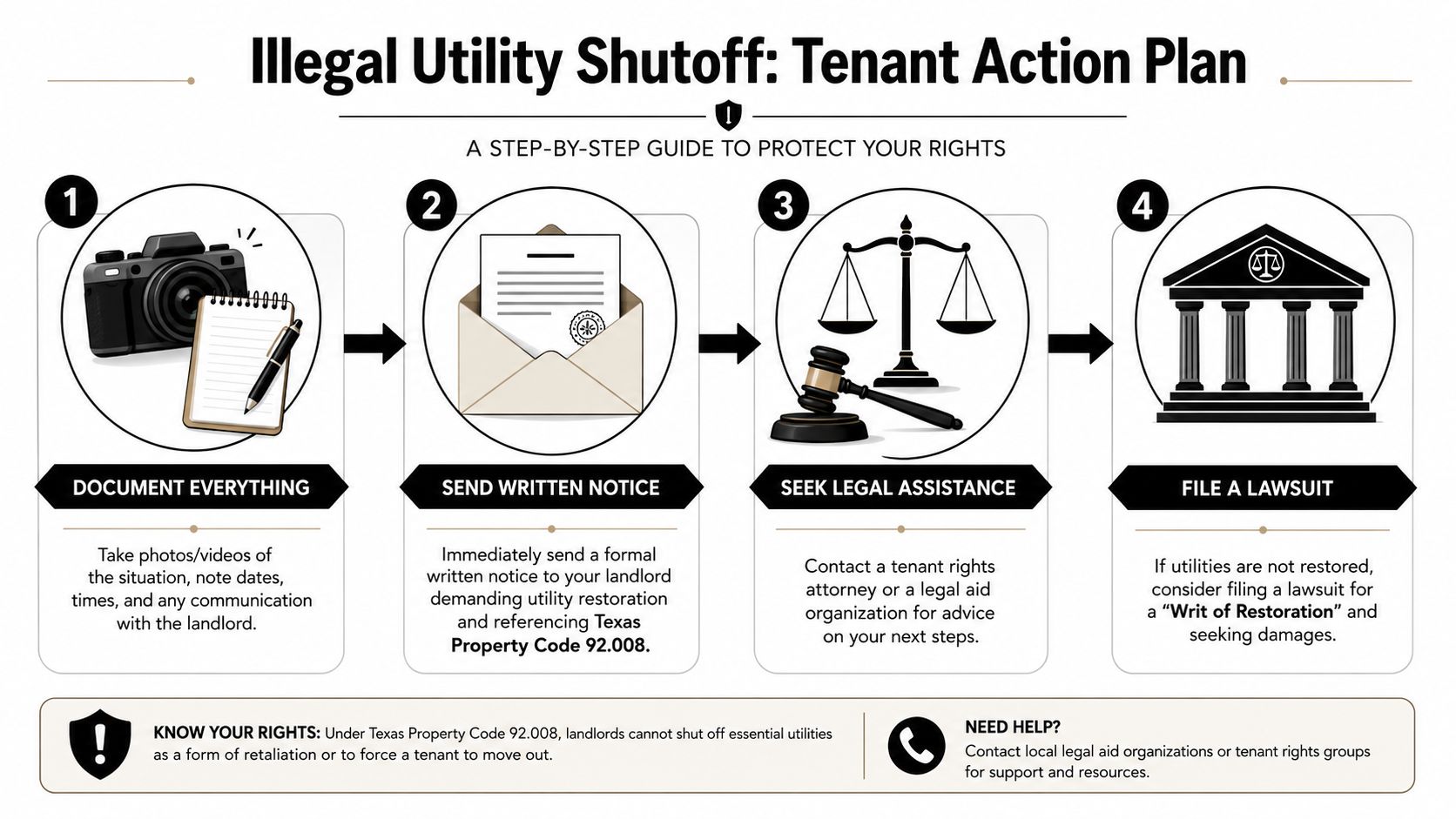
Start with proof
Document the shutoff immediately.
Take photos of dark rooms, nonworking thermostats, dead appliances, and anything else that shows the loss of service. If food spoils or you need to stay elsewhere, keep receipts and make a simple timeline.Save every communication.
Screenshots of texts, emails, portal messages, and voicemails can matter later. Write down the date and time you discovered the problem, who you spoke with, and what they said.Confirm who caused it.
Call the utility provider and ask whether the interruption came from provider action, account nonpayment, maintenance, or a landlord-controlled setup. That answer shapes what you do next.
A lot of cases become easier once the paper trail is clean. If the landlord says it was a repair, your records may show there was no notice, no repair crew, and no restoration effort.
Later in the process, tenants often need guidance on where to complain and how to organize a record. This resource on how to file a complaint against a landlord can help you prepare that file.
Send a written demand
Give written notice right away.
Tell the landlord that utility service is off, demand restoration, and reference Texas Property Code § 92.008. Keep the message direct and professional. Ask for a prompt response in writing.Mention any health issue immediately.
If someone in the home will become seriously ill or more seriously ill if electricity is cut, provide written medical documentation as quickly as possible. In certain electricity situations involving landlord billing, that documentation can stop a shutoff when paired with a deferred payment plan.
Here is a practical explainer that many clients find helpful before they go to court:
Use the court process fast
File in Justice Court if service isn't restored.
Tenants facing an illegal utility shutoff can file a “Plaintiff/Tenant's Request to Restore Utility Service” with the Justice Court to obtain a court order forcing the landlord to reinstate service immediately, according to the TRLA Utility Shutoff Toolkit.Ask for the right relief.
Restoration is the urgent issue. Damages come next. Don't let the landlord turn the hearing into a side argument about general lease disputes if the immediate problem is a shutoff.Get legal help when the facts are messy.
If the lease has submeter language, the landlord claims a repair exception, or there are competing stories about who caused the interruption, legal advice can prevent a bad procedural step. One option is The Law Office of Bryan Fagan, PLLC, which handles Texas landlord-tenant disputes for both tenants and landlords.
For landlords, the lesson is just as practical. If there is any doubt about whether a shutoff is lawful, stop and get advice before acting. A rushed decision can create a restoration order and a damages claim that outweigh the original billing issue.
Penalties for Landlords Who Violate the Law
Illegal utility shutoffs expose landlords to more than a stern warning. Texas gives tenants a real damages remedy because the harm is immediate and personal. No power can mean hotel costs, lost groceries, missed medication refrigeration, and unsafe living conditions.
Texas tenants can sue landlords for illegal utility shutoffs and recover one month's rent plus a statutory penalty of $1,000, actual damages, reasonable attorney's fees, and court costs, as noted by Rent In SA on illegal lockouts and utility shutoffs.
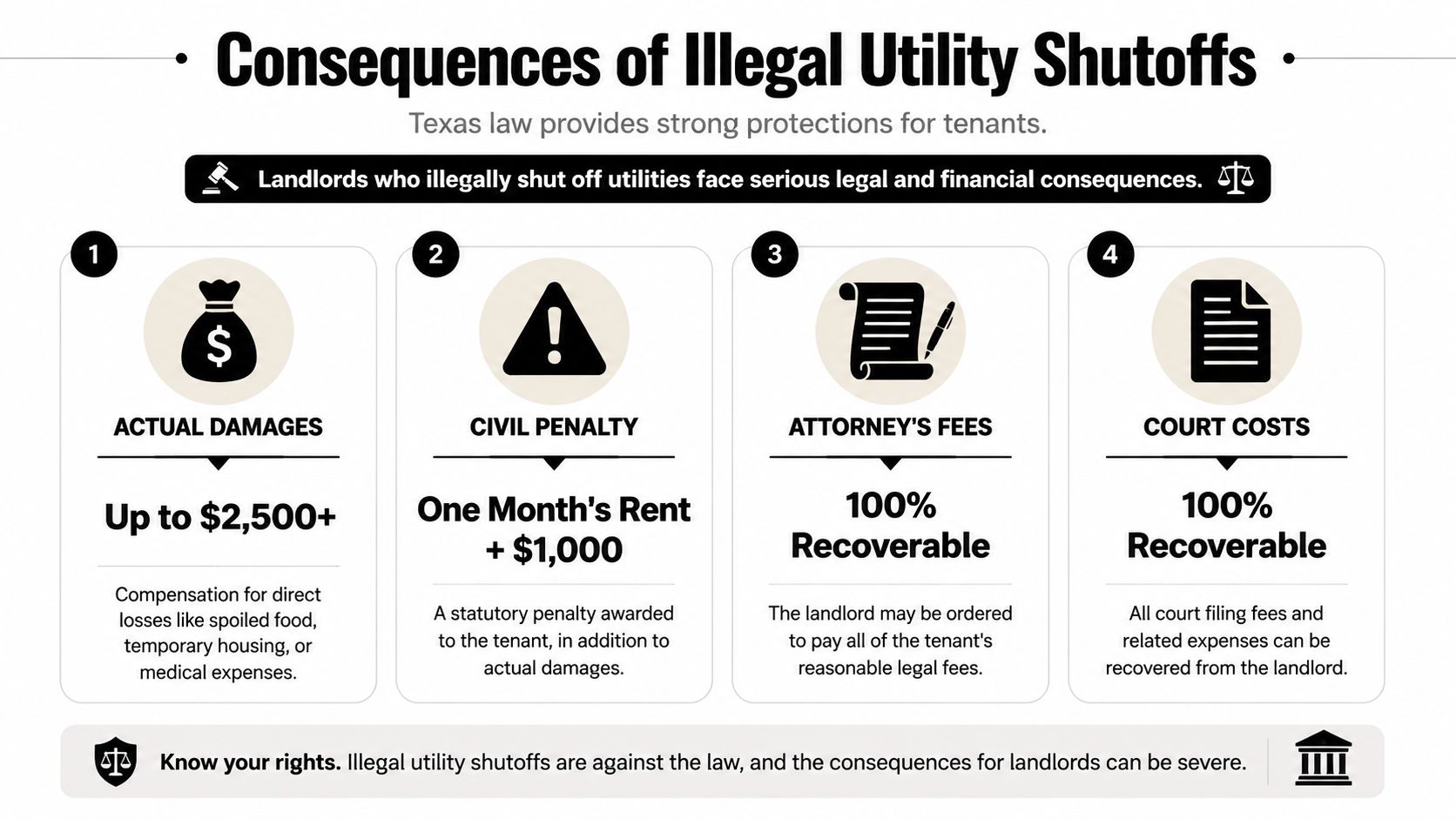
What those remedies usually mean
| Remedy | What it covers |
|---|---|
| One month's rent | A statutory recovery tied to the rental amount |
| $1,000 penalty | A fixed statutory penalty for the violation |
| Actual damages | Out-of-pocket losses such as spoiled food or temporary lodging |
| Attorney's fees | Reasonable legal fees the court may award |
| Court costs | Filing fees and related court expenses |
That structure is meant to discourage self-help. If the only consequence were “turn it back on,” some landlords would still take the risk. Adding rent-based recovery, the $1,000 penalty, and litigation costs changes the calculation.
Why self-help usually backfires
Landlords often ask whether a utility shutoff gives them bargaining power with a difficult tenant. In practice, it often does the opposite. A cleaner approach is documented lease enforcement, careful notices, and, when needed, formal eviction. If you're looking for broader property management ideas, these effective strategies for tenant issues may help with communication and documentation, but they don't replace Texas legal requirements.
Courts tend to look hard at actions that deprive a tenant of essentials before any judge has ordered them to leave.
For tenants, these remedies also answer a common fear: “If I fight this, what can the court do?” The answer is that the law allows both restoration and money damages when the landlord used an unlawful shutoff.
How to Prevent Utility Disputes in Your Lease
Most utility shutoff disputes start long before the service goes out. They begin with vague lease language, poor billing records, or a landlord trying to solve a rent problem with the wrong tool.
For tenants, read the utility section before signing. Find out whether you pay the provider directly, whether the property uses a master meter or submeter, how charges are calculated, and what notices the lease says you will receive. Keep copies of bills, payment confirmations, and maintenance requests in one folder. If a dispute starts, organized records usually matter more than angry messages.
What landlords should build into their process
Landlords should use lease language that clearly explains utility responsibility and matches Texas law. If the property uses landlord-billed electricity, the lease should be reviewed carefully before anyone relies on an interruption clause. Even then, utility action is not a substitute for eviction when the underlying problem is unpaid rent.
A practical risk-mitigation checklist looks like this:
- Separate rent from utility collections: Treat them as different issues with different rules.
- Use written notices consistently: Verbal warnings create confusion and bad evidence.
- Document repairs carefully: If service is interrupted for work or an emergency, keep records showing why.
- Use court process for possession disputes: If you want the tenant out, file the eviction case.
Tenants and landlords both benefit from one habit above all others. Slow down before acting. Many cases could be avoided if one side verified the lease and the other side confirmed the source of the interruption before escalating.
If you need help with an eviction, lease issue, or rental dispute, contact The Law Office of Bryan Fagan, PLLC for a free consultation today. Whether you're a tenant dealing with an illegal utility shutoff or a landlord trying to comply with the Texas Property Code, getting clear advice early can protect your rights and help you take the next step with confidence.