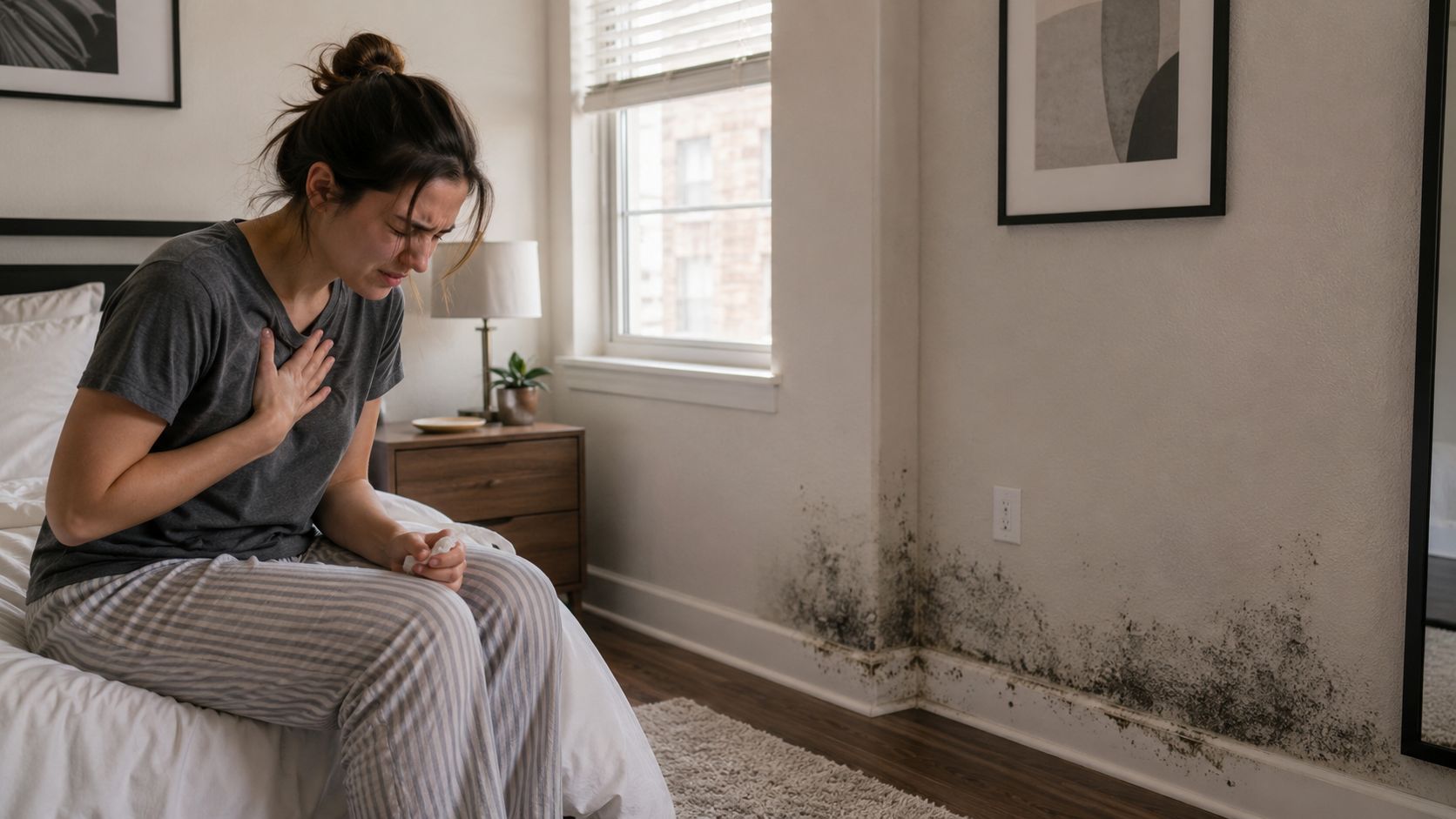
A water stain spreads across your apartment ceiling. The room smells musty, dark spots appear near the wall, and your breathing feels worse after you spend time inside. You report the problem, but a worker wipes the visible area without fixing the leak. If you're searching for an apartment black mold lawsuit in Texas, the most important question usually isn't the color of the mold. It's whether a dangerous condition existed, whether the landlord knew or received proper notice, and whether the landlord made a diligent effort to correct the underlying moisture problem.
Texas law gives tenants a repair-and-remedy process, but the process has rules. Your photos, written notice, delivery proof, medical records, repair documents, and remediation certificate can determine whether a dispute becomes a strong claim or a difficult argument. Landlords and property managers also benefit from understanding these duties early, because ignoring a leak can create greater legal and insurance problems later.
When Apartment Black Mold Becomes a Texas Legal Issue
Consider a tenant named Maria. A pipe behind her bedroom wall leaks for weeks. She notices a musty smell, then dark patches along the baseboard. Her child begins coughing more often, and Maria sends maintenance requests through the apartment portal. A worker paints over the spots, but the wall stays damp. The visible mold is only part of the problem. The continuing leak may be the condition that materially affects health or safety.
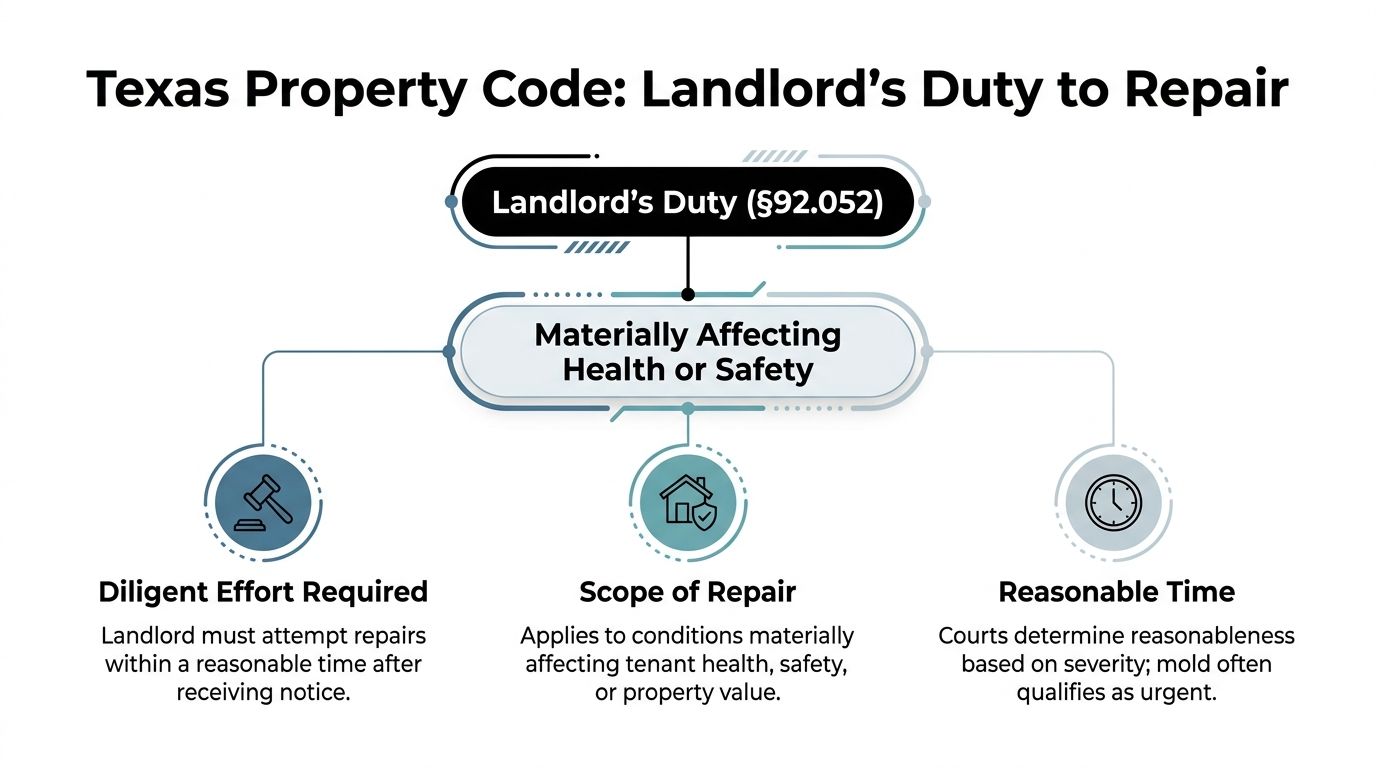
Texas generally handles apartment mold disputes through the ordinary repair duty in Texas Property Code § 92.052, not through a separate mold-specific landlord-tenant statute. That provision requires a landlord to make a diligent effort to repair a condition that materially affects the physical health or safety of an ordinary tenant. Texas landlord-tenant guidance on mold and repair rights explains why the source of the moisture matters so much.
The leak often matters more than the label
“Black mold” sounds specific, but dark color alone doesn't establish what species is present or prove a legal claim. A court may focus on the persistent roof leak, plumbing failure, flooding, ventilation issue, or other condition that allowed mold to grow. A landlord who only removes surface spots without correcting the water intrusion may not have solved the actual repair problem.
A small amount of surface discoloration caused by a tenant's own cleaning issue may be treated differently from mold growing after a landlord ignores a leaking wall. The legal question is fact-specific. You'll need evidence showing the condition, its effect on the apartment, the landlord's notice, and the response.
Practical rule: Treat every recurring mold problem as a moisture problem first. Document where the water comes from, not just where the spots appear.
Habitability doesn't require a perfect apartment. It does require attention to conditions that materially affect the health or safety of an ordinary tenant when the tenant didn't cause the condition and satisfies the legal notice requirements. Your first goal should be a clear record, not an immediate threat of litigation. The Texas apartment mold tenant rights guide can help you organize the basic issues before you choose a remedy.
What Texas Property Code Says About Mold and Repairs
Texas doesn't use one special statute titled “apartment mold law.” Instead, tenants usually rely on the general repair duties found in the Texas Property Code. That matters because a mold complaint should connect the visible growth to a condition that affects health or safety, such as ongoing water intrusion, rather than just demanding cosmetic cleaning.
The basic habitability test
Ask four questions:
- What is the underlying condition? Look for a roof leak, plumbing failure, wet drywall, defective air-conditioning drainage, or another source of moisture.
- Does it materially affect health or safety? A persistent damp wall with visible growth may raise a stronger repair issue than an isolated mark that has no continuing source.
- Did the tenant cause it? Texas repair remedies can be limited if the condition resulted from the tenant, the tenant's family, or guests.
- Was the landlord properly notified, and was rent current? Written notice and rent status can determine whether statutory remedies are available.
Under § 92.052, the landlord must make a diligent effort to repair a qualifying condition after receiving notice. The landlord doesn't necessarily have to accept the tenant's preferred contractor or method, but a quick cover-up may not address the duty if moisture continues behind the wall.
Texas Property Code § 92.056 supplies the notice and timing framework. A tenant generally must give notice and allow a reasonable time for repair. Texas guidance commonly treats seven days as a reasonable repair period, although the appropriate time can depend on the seriousness of the condition, the date the landlord received notice, and the availability of workers or materials. The Texas Property Code repair-rights overview provides broader context for these tenant protections.
Why rent status and tenant conduct matter
A tenant who is behind on rent when notice is given may lose the statutory repair remedy. The same problem can occur if the tenant caused the condition, such as by failing to report a spill or creating an avoidable moisture source. That doesn't mean every landlord accusation ends the dispute. It means you should preserve evidence showing when the problem began, what caused it, and whether you reported it promptly.
The size of the mold area can also affect who may perform the work. In a residential property with 10 or more units, visible mold growth covering 25 contiguous square feet or more must be addressed by a licensed Mold Remediator under Texas Department of Licensing and Regulation guidance. Smaller visible areas below that threshold may be cleaned without a licensed remediator, but the moisture source still needs attention. Texas TDLR mold guidance describes this distinction.
Commercial tenants shouldn't automatically apply residential rules to a business lease. Commercial Lease Disputes in Texas explains that Texas treats commercial tenancies differently under Chapter 93. Residential apartment claims usually involve Chapters 91 through 94 and the lease terms, while commercial disputes require a separate analysis.
The safest working question is simple: what caused the mold, who controlled that condition, and what did the landlord do after receiving notice? Those answers shape the repair claim more than the phrase “black mold” by itself.
How to Document Mold and Notify Your Landlord the Right Way
A phone call may get attention, but it may not prove notice. Texas tenants should build a written record that shows the condition, the delivery of notice, the landlord's response, and the effect on the home.
Start with evidence before the wall changes
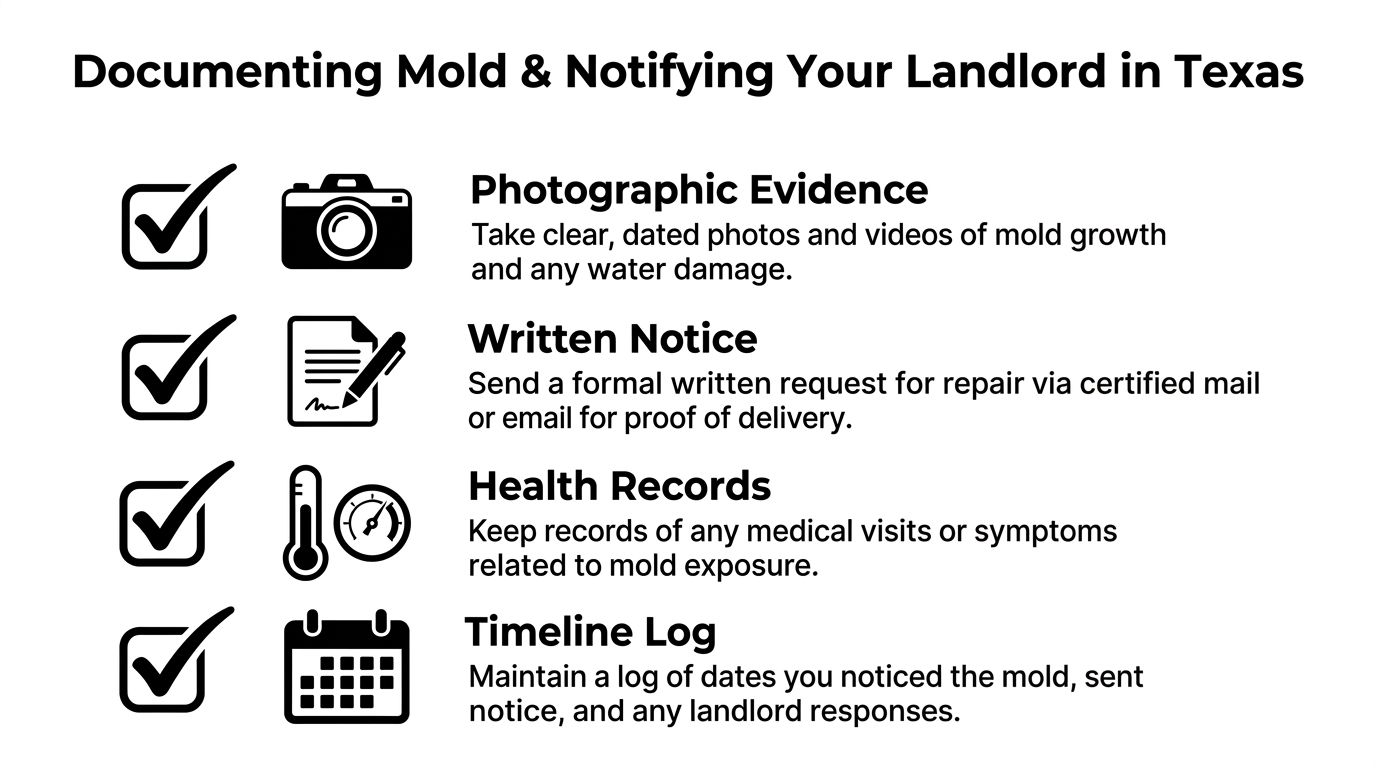
Take clear photographs and videos of the mold, water stains, bubbling paint, wet flooring, damaged belongings, and nearby fixtures. Include wide shots that show the room and close shots that show the condition. Save the original files, and keep a dated log describing what you saw and when.
Your record should include:
- Photos and video: Capture the growth and moisture damage from several angles.
- Maintenance requests: Save portal submissions, emails, texts, work orders, and replies.
- Timeline: Write down when you first noticed the odor, leak, spots, symptoms, visits, and attempted repairs.
- Health records: Keep medical notes, appointment records, prescriptions, and information about symptoms. Don't ask a doctor to make a legal conclusion. Ask for accurate medical documentation.
- Financial records: Preserve contractor estimates, temporary housing costs, damaged-property records, and bills connected to the condition.
If you're cleaning unaffected parts of the home while preserving evidence, a practical household resource such as home cleaning for busy families may help with ordinary cleaning needs. Don't scrub, paint, discard, or disturb contaminated materials before you've documented them if doing so could erase important proof.
Send a notice that proves delivery
Your written notice should identify the apartment, describe the leak or moisture source, describe the visible mold, explain any health or safety concern, and request inspection and repair. Ask the landlord to correct the source and properly address the affected materials, not merely wipe or paint the visible surface.
Send the notice using certified mail with return receipt requested, registered mail, or another trackable delivery method. Under the expedited process described in Texas Property Code § 92.056, a trackable first notice can eliminate the need for a second written notice. Keep the letter, receipt, tracking history, and delivery confirmation together.
You can also report the issue through the landlord's normal maintenance system, but don't rely on an informal conversation alone. The Texas repair request guidance for tenants can help you think through what your notice should contain.
Wait for a diligent repair effort, not an empty promise
Texas guidance commonly treats seven days as a reasonable time for repair, but the actual period can vary. An active leak, unsafe electrical condition, or spreading contamination may require faster action than a minor repair that doesn't affect health or safety.
Don't stop paying rent on your own. Don't hire a contractor and subtract the bill automatically. Repair-and-deduct has specific requirements, including a qualifying landlord duty, proper notice, current rent status, use of a licensed or listed contractor where required, and furnishing bills to the landlord. A technical mistake can expose you to an eviction case or weaken your defense.
Keep one folder, digital or paper, with every notice, receipt, image, response, report, and bill. A clean timeline often tells the story better than a long argument.
Your Three Legal Remedies After Proper Notice in Texas
After proper notice and a reasonable opportunity to repair, Texas tenants may have three primary paths. The right choice depends on whether you can remain in the unit, whether you can front repair costs, and whether you need a court order or damages.
| Remedy Option | When It Fits Best | Key Requirements and Risks |
|---|---|---|
| Terminate the lease | The condition materially affects health or safety and continuing to live there isn't reasonable | Follow the notice rules carefully. Moving too soon or without proper documentation can lead to a lease dispute. |
| Repair and deduct | The repair is necessary, you can manage the process, and the landlord failed to act | The remedy is limited and technical. You generally need to be current on rent, use a qualified contractor, provide bills, and follow the statutory requirements. |
| Sue for court-ordered repairs and damages | You need the landlord to act, need compensation, or dispute the landlord's version of events | You must prove notice, a qualifying condition, landlord responsibility, causation, and actual damages. Litigation takes preparation and carries uncertainty. |
Ending the lease
Lease termination may fit when the apartment remains unsafe or materially affects health after the landlord has had a proper chance to respond. Don't assume that a text message or a single maintenance visit automatically gives you the right to leave without further obligations. Review the lease, your notice, the landlord's response, and the condition before moving out.
Repairing and deducting
Repair-and-deduct is not a general permission to hire anyone and reduce rent. Texas guidance states that the work should be performed by a licensed or listed contractor, the bills should be provided to the landlord, and you should be current on rent. You may also need official involvement or other statutory steps, depending on the repair and the remedy you pursue.
The financial risk is significant. If the deduction is unauthorized, the landlord may treat the rent as unpaid and begin eviction proceedings. Get legal advice before using this option, especially when the work involves mold assessment, demolition, or remediation.
Filing for court relief
A lawsuit can ask a court to order repairs and may seek damages supported by evidence. That route can make sense when the landlord denies the condition, refuses to correct the leak, or blames you without proof. The court will focus on facts and documents, not just the label attached to the mold.
Filing Your Lawsuit Damages Defenses and What Texas Juries Actually Award
An apartment black mold lawsuit in Texas succeeds or fails on proof. You need to connect the condition to the landlord's duty, the landlord's knowledge or notice, the failure to respond properly, and the harm you claim.
Texas mold litigation became a major legal and insurance flashpoint after a wave of claims in the early 2000s. In the Melinda Ballard case in Austin, a jury awarded $32 million on June 1, 2001, and around that period, Texas' three largest insurers reported mold claims rising from 883 in the first quarter of 2000 to 5,722 in the second quarter of 2001, an increase of roughly 549%. The historical Texas apartment mold litigation account describes how mold moved from a nuisance concern into a high-stakes category involving insurance, apartments, and habitability.
Recent verdicts show why facts matter
In a Williamson County case involving a Cedar Park apartment, a jury awarded $1,061,500 in December 2024 to a family that alleged the landlord failed to address water leaks, mold, and pest problems. The lawsuit was filed in 2022, and the verdict followed a three-day trial. Reporters noted that it may have been the first Texas jury trial in more than ten years to recognize injuries linked to toxic mold. The Cedar Park verdict report also underscores that major plaintiff verdicts remain unusual and highly fact-specific.
What damages and defenses look like
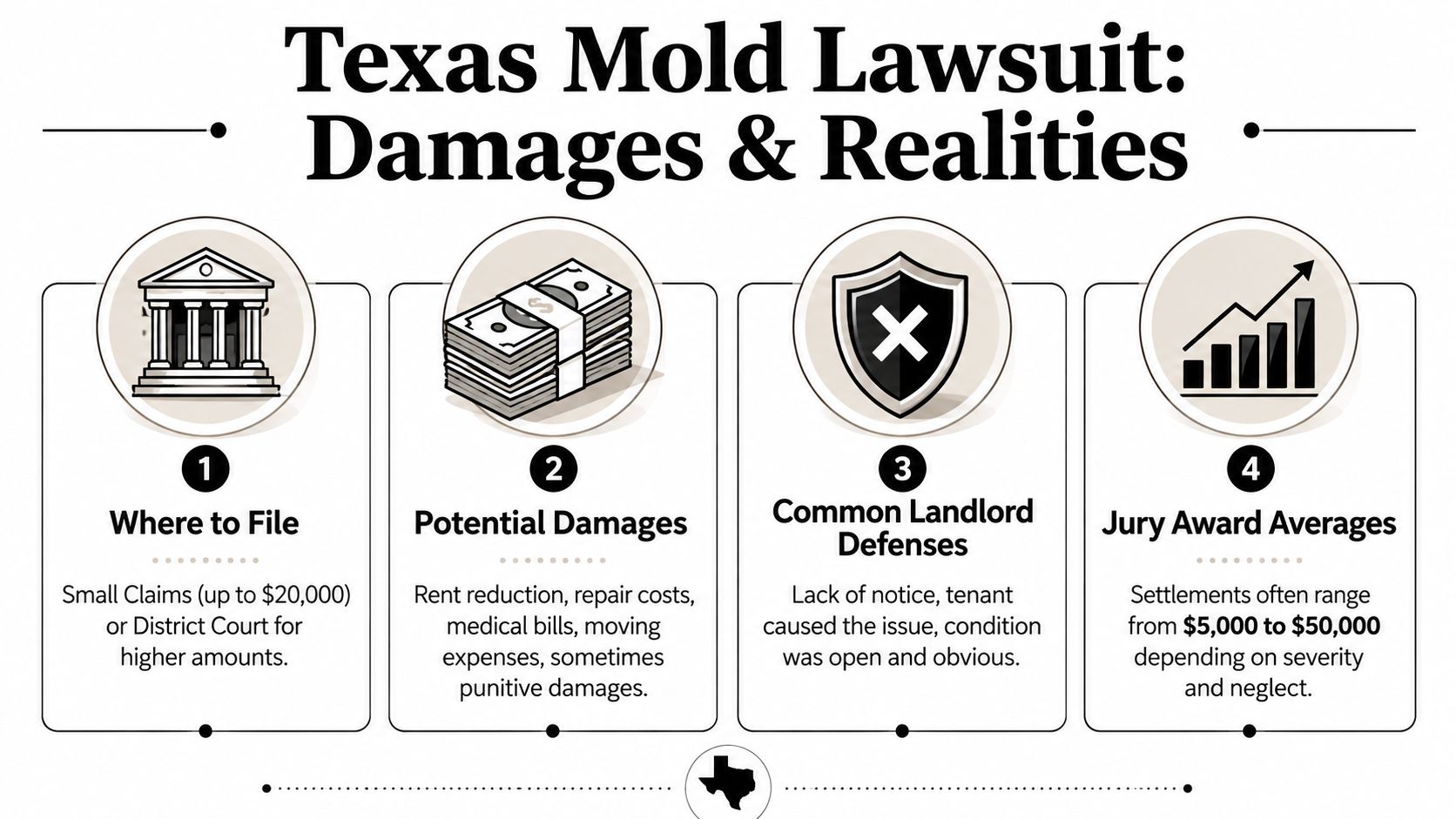
Depending on the facts and legal theory, claimed losses may include repair costs, damaged personal property, medical expenses, moving or temporary housing costs, reduced use of the apartment, and other provable harm. You must support each category with records and show that the landlord's conduct caused it.
Common defenses include:
- No proper notice: The landlord may argue the tenant never sent legally sufficient written notice.
- Tenant caused the condition: The defense may claim the tenant created or worsened the moisture problem.
- Rent was delinquent: The landlord may argue the tenant wasn't current when notice was given.
- No material health or safety effect: The landlord may dispute the seriousness or extent of the condition.
- No causation: The landlord may accept that mold existed but dispute that it caused the claimed illness or financial loss.
Small claims court may be considered for qualifying money disputes, while larger or more complex claims may require a different court. The correct filing location and procedure depend on the parties, the damages claimed, and the legal causes of action. A Texas landlord tenant lawyer can help assess whether settlement, a repair action, or a broader lawsuit fits the evidence.
Don't overlook remediation paperwork
Texas law requires a certificate of mold remediation within 10 days after a licensed remediator finishes the work. The certificate can matter if the property is sold within five years, and it can also help establish what work was or wasn't completed in a later dispute. The Texas remediation certificate rule provides the legal reference.
Ask for the certificate, scope of work, invoices, assessment records, photographs, and records showing that the moisture source was corrected. A landlord isn't broadly required to inspect for or clean mold without the circumstances that trigger the repair duty, so written tenant notice and careful recordkeeping remain important.
Protect Your Health Home and Rights With Trusted Texas Help
You don't need to decide on a lawsuit the day you see a dark spot. You do need to act carefully. Photograph the condition, identify the moisture source, send written notice through a trackable method, keep rent status and lease records current, and save every response from management.
Landlords should investigate reported leaks, preserve work orders, identify whether licensed remediation is required, and keep completion records. Tenants should avoid self-help steps that could create an eviction defense problem, especially withholding rent or deducting repair costs without following the statute.
A lawyer can help you evaluate whether the condition materially affects health or safety, whether notice was sufficient, whether the landlord's response was diligent, and what remedy matches your goals. The Law Office of Bryan Fagan, PLLC handles Texas landlord-tenant disputes involving repairs, habitability, evictions, lease issues, and property rights. The firm serves clients across Texas, including Houston, Dallas–Fort Worth, Austin, and San Antonio, and begins with a free 30-minute consultation.
You can also review the firm's broader Texas landlord-tenant law overview to understand how the Property Code fits into rental disputes. Clear documentation and early legal guidance can help you protect your health, housing, and legal position.
If mold, water intrusion, or a landlord's failed repair effort is affecting your apartment, The Law Office of Bryan Fagan, PLLC can review your notices, evidence, lease, and available remedies. Schedule a free consultation to discuss whether you should pursue repairs, lease termination, settlement, or an apartment black mold lawsuit in Texas.